

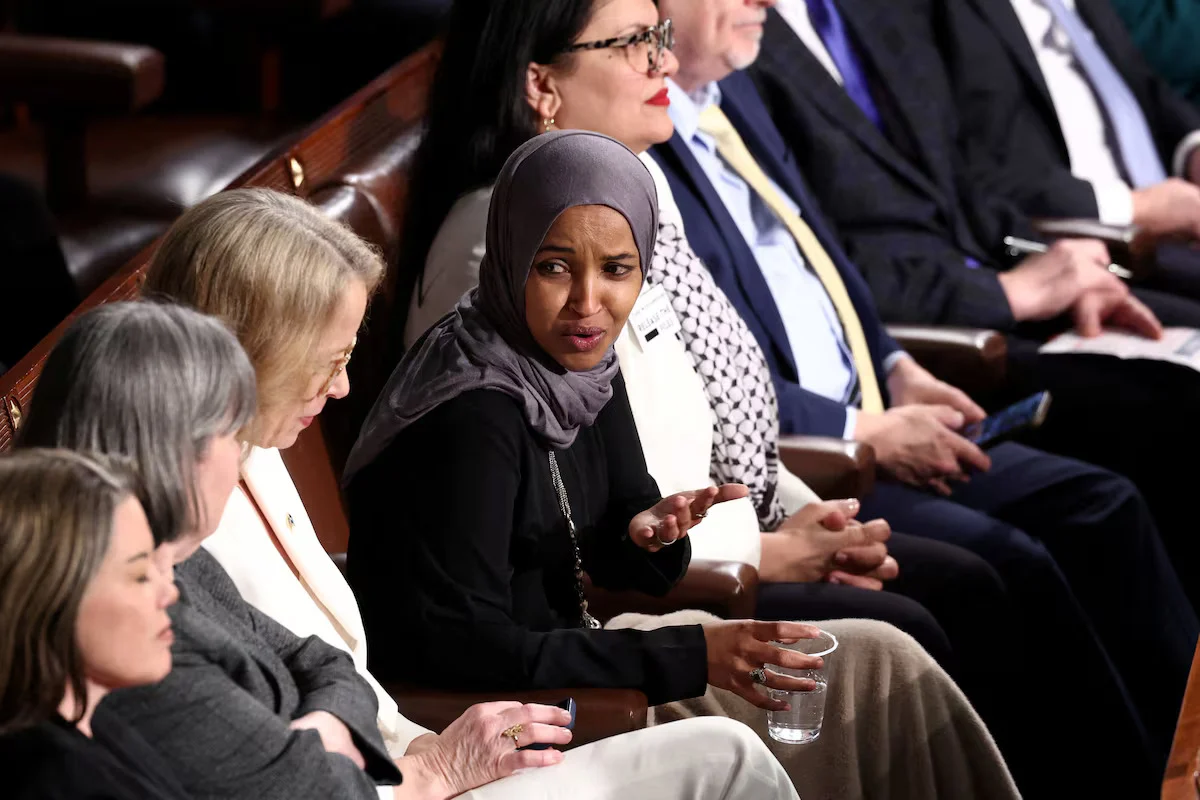
Remarks targeting Ilhan Omar and Rashida Tlaib spark accusations of racism and xenophobia
Washington, D.C. – U.S. President Donald Trump has ignited fresh political controversy after suggesting that Democratic Representatives Ilhan Omar and Rashida Tlaib should be removed from the United States following a tense exchange during his State of the Union address.
The remarks, made a day after the speech, have drawn sharp criticism from Democratic leaders and Muslim advocacy groups, who described the language as inflammatory and discriminatory.
Heated Moment During Address
During Tuesday’s State of the Union speech, Representatives Omar of Minnesota and Tlaib of Michigan interrupted the president, shouting “you’re killing Americans.” Omar also called Trump a “liar” as he outlined his administration’s immigration policies.
The confrontation followed mounting criticism of federal immigration enforcement actions, particularly after recent fatal shootings involving U.S. citizens and reported deaths in Immigration and Customs Enforcement (ICE) detention facilities.
Trump’s Social Media Response
On Wednesday, Trump escalated the rhetoric in a social media post, calling the two lawmakers “lunatics” and suggesting they should be “institutionalized.” He further stated they should be sent back “where they came from,” despite both Omar and Tlaib being U.S. citizens.
The president’s comments immediately triggered backlash across political and civil rights circles.
Democratic and Civil Rights Reaction
House Minority Leader Hakeem Jeffries described the president’s remarks as “xenophobic” and “disgraceful.”
Tlaib responded publicly, saying Trump’s comments demonstrated that “he is crashing out.”
The Council on American-Islamic Relations (CAIR), a prominent Muslim advocacy organization, condemned the statements as racist and bigoted. The group argued that criticizing government policies does not justify questioning the citizenship or belonging of elected officials.
The White House did not issue an immediate formal clarification, though Press Secretary Karoline Leavitt recently maintained that accusations of racism against the president are politically motivated.
Immigration Policy at the Center
The clash unfolded against the backdrop of heightened immigration enforcement measures. The administration has defended its actions as necessary to combat fraud and enhance domestic security.
However, rights groups argue that recent enforcement operations have created fear within immigrant communities. They have also questioned the administration’s handling of immigration-related investigations and detention conditions.
During his address, Trump reiterated claims of fraud involving Somali communities and referenced criminal activity in Minnesota — statements that critics say risk stigmatizing entire communities.
Renewed Political Polarization
The episode underscores the deep political divisions in Washington, particularly on immigration, national security, and civil rights issues.
With the 2026 political landscape already intensifying, the exchange between the president and two high-profile lawmakers is likely to further energize partisan debate and mobilize advocacy groups on both sides.
As tensions continue, observers say the broader question remains whether such confrontations will shape legislative priorities — or deepen the country’s already polarized political climate.