

Ottawa emphasizes “robust safeguards” and renewed engagement as both nations seek economic reset
Ottawa – In a notable diplomatic shift, Canadian officials appear to be recalibrating their stance on previous allegations of Indian interference, just as Prime Minister Mark Carney prepares for a significant visit to India aimed at restoring and strengthening bilateral ties.
Ahead of the trip, senior government representatives indicated that the Prime Minister would not be travelling to New Delhi if Canada believed that India was actively interfering in its democratic institutions. The remarks suggest a more measured and pragmatic approach compared to earlier public accusations.
“We have a mature and robust dialogue with the Government of India on these issues, and strong safeguards are in place to protect against foreign interference,” a senior official stated in comments reported by Canadian media.
Officials noted that discussions between the two governments have continued at multiple levels — including senior bureaucrats, cabinet ministers, and political leaders — describing the engagement as “systematic” and ongoing.
A Departure from Earlier Allegations
The tone contrasts sharply with statements made last year by the Canadian Security Intelligence Service (CSIS), which had identified India as a key actor in foreign interference activities.
Those allegations intensified following the 2023 killing of Sikh activist Hardeep Singh Nijjar in British Columbia. Ottawa had linked the incident to India, calling it a serious escalation. India strongly denied the accusations, and the dispute led to diplomatic expulsions on both sides.
While Canadian officials are not formally retracting past claims, the current messaging suggests a strategic de-escalation, emphasizing dialogue and safeguards rather than confrontation.
A second official reiterated that Canada maintains “zero tolerance” for foreign interference but indicated that continued high-level engagement reflects confidence in diplomatic channels.
Carney’s Mission: Reset and Rebuild
Prime Minister Carney’s visit to India marks the most visible attempt yet to repair relations after nearly two years of strained diplomacy.
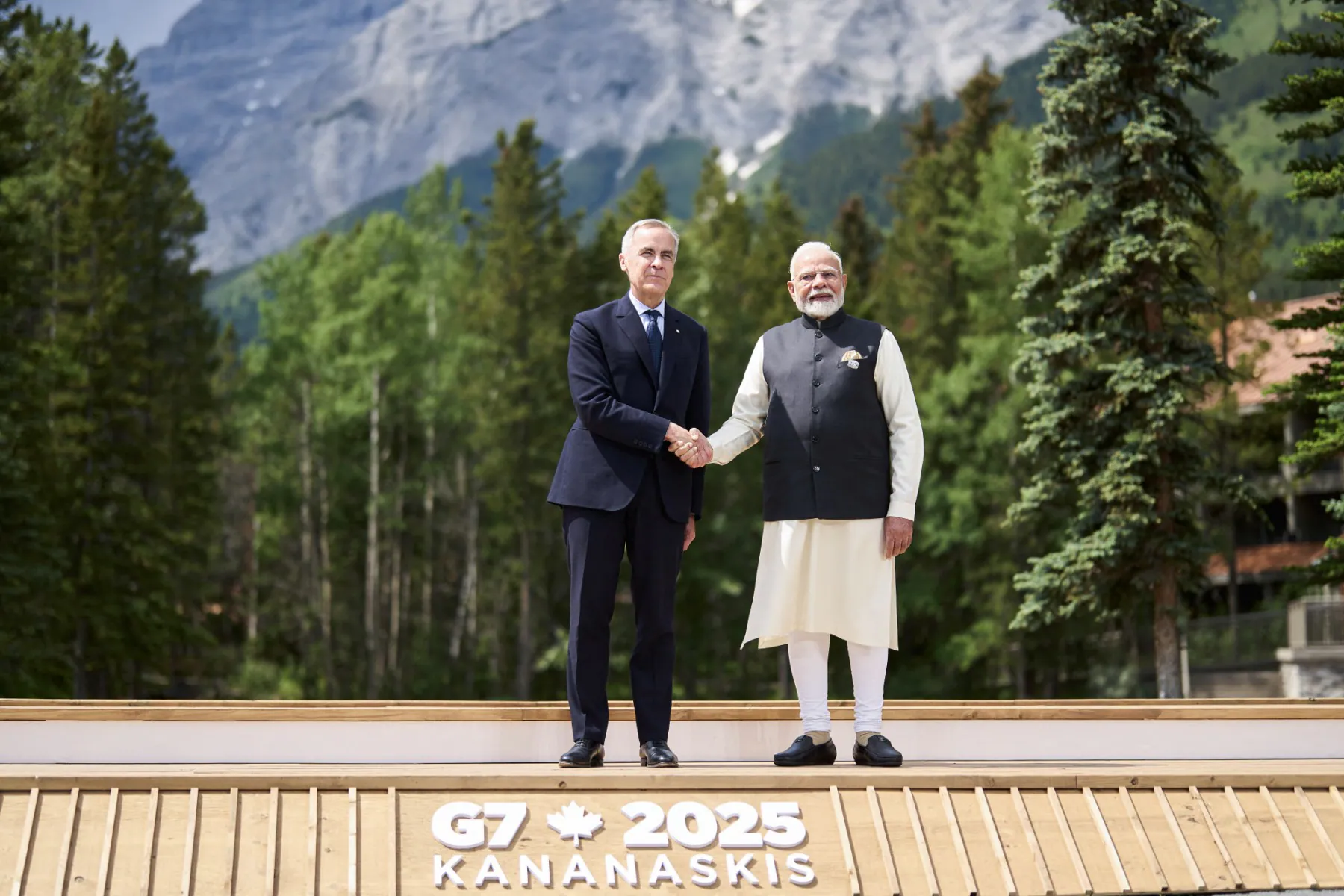
The trip begins in Mumbai before moving to New Delhi for talks with Prime Minister Narendra Modi. Officials describe the visit as part of a broader effort to pursue a more pragmatic foreign policy and deepen economic cooperation with key Indo-Pacific partners.
Discussions are expected to focus on trade, clean energy, artificial intelligence, defence collaboration, talent mobility, and cultural exchange.
The reset comes amid shifting global trade dynamics and uncertainty linked to evolving U.S. tariff policies. Both Ottawa and New Delhi are seeking diversified economic partnerships to reduce reliance on traditional markets.
Economic Stakes Are High
India is Canada’s seventh-largest trading partner, with annual two-way trade exceeding $21 billion. Negotiations toward a comprehensive trade agreement have resumed, with both governments previously expressing interest in boosting bilateral trade to $50 billion by 2030.
More than 600 Canadian companies operate in India across sectors such as information technology, financial services, and health sciences. Meanwhile, India exports pharmaceuticals, seafood, gems, jewellery, and technology services to Canada.
Given India’s status as the world’s fastest-growing major economy, economic collaboration is seen as strategically important for Canadian businesses and workers.
Domestic Context: Diaspora and Diplomacy
Canada is home to approximately 2.8 million people of Indian origin and hosts the largest Sikh population outside India. Nearly 400,000 Indian students study in Canadian institutions, forming the country’s largest international student community.
The presence of Sikh advocacy groups, including fringe separatist elements advocating for Khalistan, has been a longstanding point of sensitivity in India-Canada relations.
The diplomatic freeze that followed the 2023 allegations significantly disrupted engagement. However, relations began improving after Carney assumed office in March 2025, with ambassadors reinstated and formal dialogue resumed.
A Carefully Managed Reset
While unresolved concerns remain beneath the surface, Ottawa’s current messaging indicates a deliberate effort to stabilize ties and prioritize economic cooperation.
The coming days will determine whether this recalibrated tone translates into sustained diplomatic normalization — and whether both nations can move beyond recent tensions toward a more constructive partnership.