

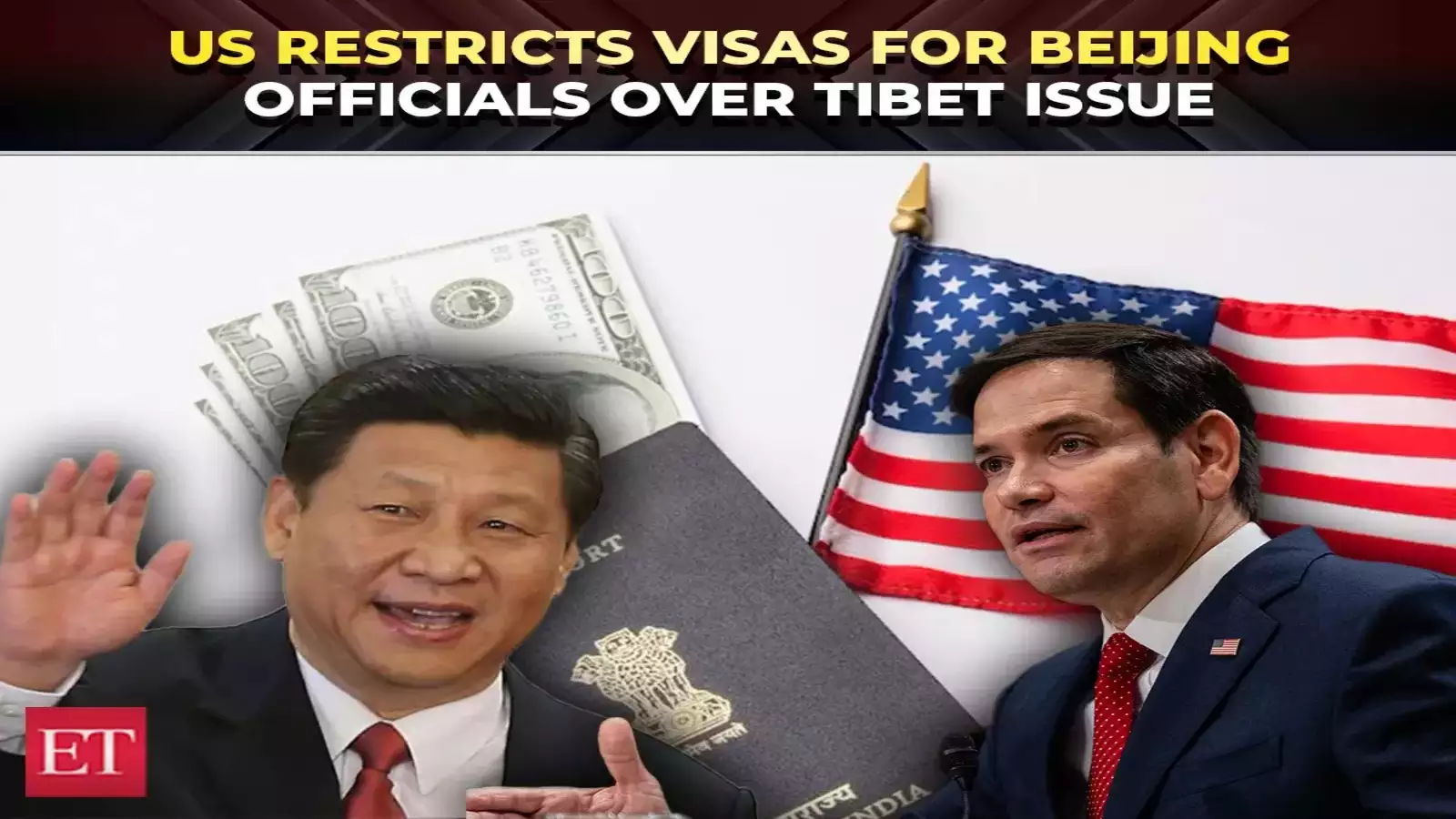
China announced new visa restrictions on U.S. personnel on Monday, intensifying an ongoing diplomatic row over access to Tibet and the treatment of international observers and journalists in the sensitive Himalayan region.
Speaking at a regular press briefing, Chinese Foreign Ministry Spokesperson Lin Jian confirmed that the restrictions target individuals from the United States who have “behaved badly” on Tibet-related issues. The move comes just two weeks after Washington imposed additional visa restrictions on Chinese officials involved in controlling access to Tibet.
The U.S. has repeatedly accused the Chinese Communist Party (CCP) of obstructing access for American diplomats, journalists, and international human rights observers to Tibetan regions, citing an urgent need for “unrestricted access” to monitor religious freedom, cultural preservation, and civil rights.
Responding sharply to Washington’s latest measures, Lin Jian declared Tibet a “purely internal matter” and condemned the U.S. action as a violation of international law and diplomatic norms.
“The U.S. abuse of visa restrictions on Chinese officials over Tibet seriously violates international law and the basic norms governing international relations,” said Lin.
While the Chinese government claims that Tibet is open to foreign visitors, access remains tightly controlled. Tourists must travel in approved groups and obtain special permits. Foreign diplomats and international media require prior authorization from local Tibetan authorities — approvals that are rarely granted.
Despite the stringent conditions, Lin reaffirmed Beijing’s stance:
“Tibet is open. China welcomes friendly people from other countries to visit, travel and do business in Tibet,” he said. “But China opposes the interference of any country or person in Tibetan affairs under the pretext of so-called human rights, religion, and culture.”
The escalating tit-for-tat visa restrictions highlight deepening mistrust between the two global powers, particularly over human rights and regional autonomy. The U.S. government has expressed growing concern over reports of religious suppression, cultural assimilation, and lack of transparency in Tibetan areas.
Tibet, formally annexed by China in 1950 in what Beijing describes as a “peaceful liberation,” has long been the focus of international advocacy. Exiled Tibetan leaders and global human rights organizations have continued to accuse China of eroding Tibet’s cultural identity, enforcing mass surveillance, and denying religious freedom.
The current diplomatic standoff signals a further deterioration in U.S.-China relations, already strained by broader geopolitical tensions over trade, Taiwan, and cyber security.