

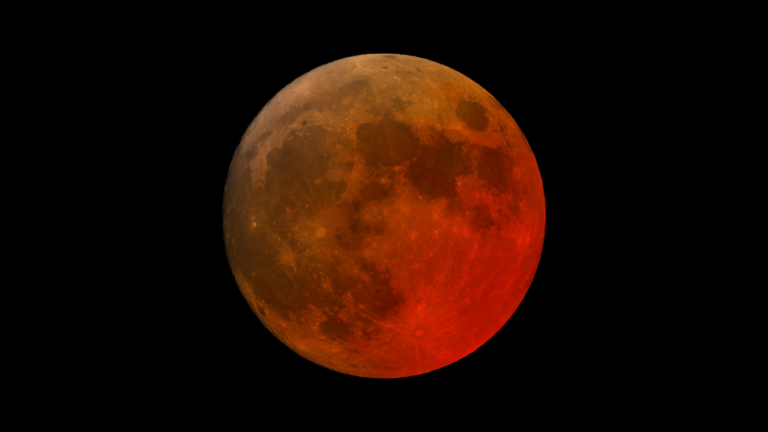
This month, the night sky over Ontario will host a celestial spectacle as March’s full moon aligns with a total lunar eclipse, bathing the lunar surface in a striking red hue. Known as the Worm Moon, this event promises a visual treat for stargazers across the province.
The Worm Moon, succeeding February’s Snow Moon, earns its name from folklore tied to spring’s awakening—either the earthworms surfacing in thawing soil or, as explorer Jonathan Carver noted in the late 18th century, larvae wriggling free from tree bark. It also heralds the season’s first maple sap runs, a sweet sign of spring in Canada.
What sets this full moon apart is its dramatic transformation into a Blood Moon. NASA explains that a total lunar eclipse occurs when Earth slips between the Sun and Moon, cloaking the latter in shadow. The red tint emerges as sunlight bends through Earth’s atmosphere, scattering blue light and leaving a crimson glow to reach the Moon.
Skywatchers in North America, including southern Ontario, can catch the full show with these key times:
- Penumbral shadow starts: March 13, 11:56 PM
- Umbral shadow begins: March 14, 1:09 AM
- Peak totality: March 14, 3:30 AM
- Umbral shadow ends: March 14, 4:48 AM
- Penumbral shadow fades: March 14, 6:02 AM
For the best view, head to a spot free of urban glare after midnight on March 14 to see the Moon at its reddest.
Here’s March’s lunar lineup, courtesy of The Old Farmer’s Almanac:
- First Quarter: March 6 at 11:31 AM
- Full Moon (Worm Moon): March 14 at 2:55 AM
- Last Quarter: March 22 at 7:29 AM
- New Moon: March 29 at 6:58 AM