

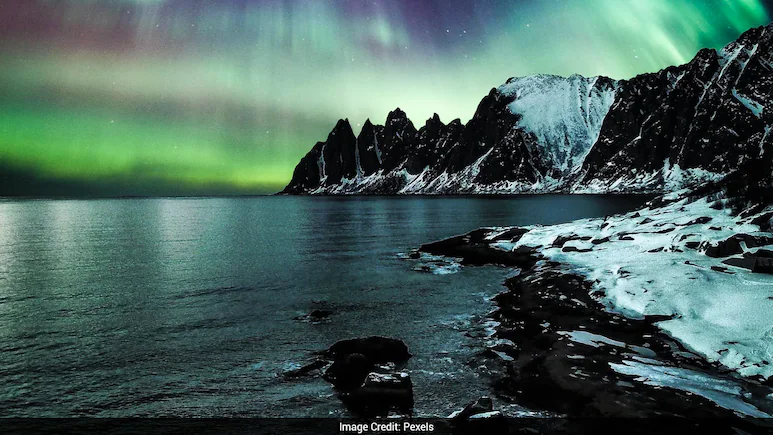
A powerful geomagnetic storm is lighting up the sky, meaning the aurora borealis (Northern Lights) could be visible across Canada and large parts of the northern United States, and possibly even farther south, according to the National Oceanic and Atmospheric Administration.
The forecast comes from NOAA’s Space Weather Prediction Center, which says intense geomagnetic and solar radiation storms are currently affecting Earth’s magnetic field. These storms are driven by strong solar activity and are expected to remain active until sometime Tuesday.
Where might you see them?
- Canada (especially central and northern regions)
- Northern-tier U.S. states such as Alaska, Minnesota, Wisconsin, Michigan, North Dakota, Montana
- Potentially farther south if conditions remain strong
Similar storms in recent months produced auroras as far south as Kansas, Colorado and Texas.
Why these storms matter beyond the sky
While stunning, geomagnetic storms can also:
- Interfere with satellite operations
- Disrupt GPS and radio communications
- Affect some electrical infrastructure
The United States Geological Survey notes these impacts are usually temporary but closely monitored.
NOAA officials say astronauts aboard the International Space Station are not at risk, despite the storm’s strength — which experts say is the most intense in over 20 years.
How to improve your chances of seeing the lights
- Head away from city lights
- Look north after sunset
- Check real-time aurora maps and cloud cover
- Be patient — auroras often come in waves
If skies are clear tonight, you may be in for a rare and memorable show