

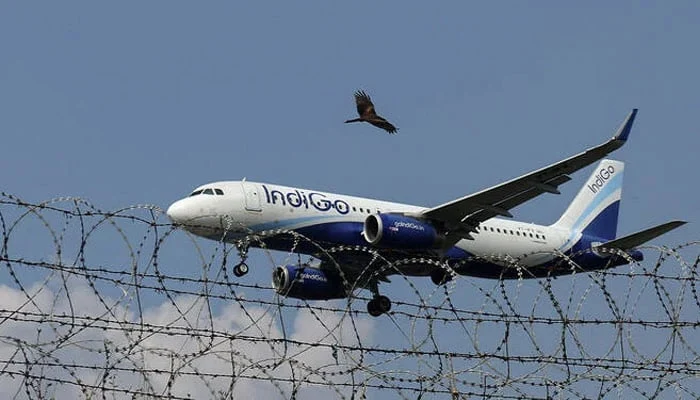
Tensions between India and Pakistan continue to disrupt regional aviation after Pakistan Airports Authority officially extended its ban on Indian aircraft using Pakistani airspace until June 23, deepening the ongoing aviation standoff between the two nuclear-armed neighbours.
According to a fresh Notice to Airmen (Notam) issued Tuesday, the restrictions apply immediately to all Indian-owned, Indian-operated, and Indian-registered aircraft, including commercial airlines, military planes, and even aircraft leased by Indian carriers.
The latest extension comes just days before the previous restrictions were due to expire on May 24. Pakistani authorities stated that all Indian aviation operations will remain prohibited from entering Pakistani airspace during the extended period.
The airspace closure stems from escalating tensions between the two countries following the deadly Pahalgam attack in Indian-administered Kashmir last year. India accused Pakistan of involvement in the incident, allegations Islamabad strongly denied while demanding an independent and transparent investigation.
Relations deteriorated further after India suspended the historic Indus Waters Treaty, prompting Pakistan to respond with retaliatory measures including the closure of its airspace to Indian airlines. India later imposed similar restrictions on Pakistani carriers.
The situation escalated dramatically in May 2025 when India launched military strikes on multiple Pakistani cities following renewed hostilities. Pakistan responded with a large-scale military operation named Operation Bunyanum Marsoos, targeting Indian military installations across several regions.
Pakistan claimed its forces shot down multiple Indian fighter aircraft, including Rafale jets and drones, during the conflict before a ceasefire agreement brokered by the United States brought the confrontation to an end after nearly four days of fighting.
While both countries have faced diplomatic and military fallout, aviation analysts say Indian airlines have borne the heaviest economic burden from the ongoing airspace restrictions. The closures force Indian carriers flying westward toward Europe, North America, and the Middle East to take significantly longer alternative routes, increasing fuel costs, flight times, and operational expenses.
Pakistani aviation, by comparison, has reportedly experienced far less disruption due to lower traffic dependence on Indian air corridors.
This is not the first time Pakistan has imposed such restrictions. Similar airspace closures occurred during the Kargil War and after the Pulwama attack crisis, both of which also resulted in substantial operational losses for Indian airlines.
The latest extension signals that despite the ceasefire agreement, relations between the two South Asian rivals remain deeply strained, with aviation continuing to serve as both an economic pressure point and a symbol of the broader geopolitical standoff.