

Global oil prices soared in early trading Friday after Israel launched a dramatic and deadly series of airstrikes on Iran, igniting fears that the growing conflict could threaten oil supply routes in the Middle East. Within hours of the news, the price of Brent Crude surged more than 10%, hitting its highest level since January, before easing slightly to a still-elevated 5% increase by mid-morning in Europe.
The benchmark Brent crude was trading at $72.80 a barrel, while U.S.-traded Nymex crude stood at $73.20. Analysts say traders are bracing for a worst-case scenario in which the conflict spills over into critical oil-producing regions, potentially disrupting output and transport in the world’s most energy-dependent corridor.
While Friday’s jump represents a sharp market response, oil prices remain over 10% lower than this time last year and far below the record highs of early 2022, when Russia’s invasion of Ukraine briefly pushed crude above $100 a barrel. Still, the sudden volatility has rattled financial markets. Stocks slid across Asia and Europe, with Japan’s Nikkei ending the day down 0.9% and the UK’s FTSE 100 down 0.4% by mid-morning.
Investors have rushed toward traditional safe havens like gold and the Swiss franc. Gold rose 1.2%, reaching its highest price in nearly two months at $3,423.30 an ounce, signaling a flight to security amid geopolitical uncertainty.
The immediate cause of the oil market’s reaction stems from Israel’s unprecedented strike on Iranian nuclear and military sites, which killed top military officials and triggered a counterattack of roughly 100 drones from Iran. With both nations escalating their rhetoric and action, analysts warn that the conflict could quickly spiral into a wider regional war that imperils global energy supply.
“The situation is explosive,” said Vandana Hari of Vanda Insights. “It could deescalate as we’ve seen in past flare-ups, but there’s also a real chance it spirals into a broader war that disrupts oil supply from the Middle East.”
Capital Economics analysts echoed the warning, suggesting that if Iranian oil facilities or exports were directly targeted, Brent prices could spike to $80 or even $100 per barrel. However, they also noted that such a spike would likely prompt other oil producers to ramp up output, easing long-term pressure on global prices and inflation.
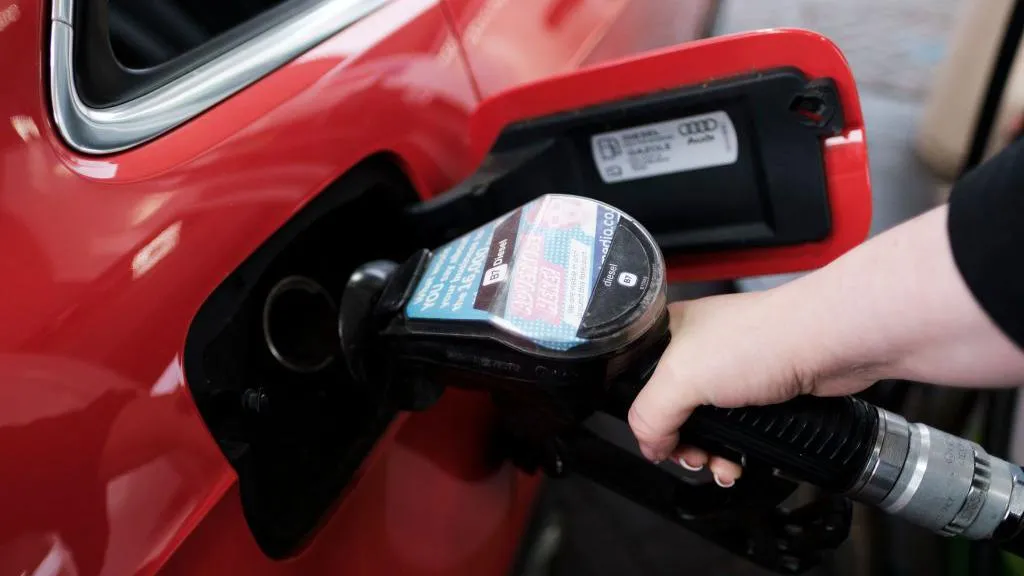
In the UK, the RAC’s Rod Dennis cautioned that it’s “too soon” to predict how much motorists will feel at the pumps. He said the actual impact on fuel prices will depend not only on how long wholesale prices remain high but also on how much profit margins retailers decide to take.
Energy experts are particularly worried about the potential for Iran to disrupt the Strait of Hormuz, a narrow but vital waterway through which nearly 20% of the world’s oil passes daily. If Iran chooses to block or target shipping through the strait, millions of barrels per day could be held up or lost—sending shockwaves through oil markets and global supply chains.
Surrounded by Iran to the north and Oman and the UAE to the south, the Strait of Hormuz is a critical artery for global energy transport. Dozens of tankers transit the route at any given moment, ferrying oil and gas to customers across the globe. Any conflict near or within this zone could have global consequences within hours.
“We’re seeing an initial risk-on reaction,” said Saul Kavonic, head of energy research at MST Financial. “But the market now has to factor in where this could escalate over the next 24 to 48 hours.”
As the world watches and waits, energy markets are bracing for the possibility that this is not just a temporary flare-up—but the beginning of a much broader crisis.