

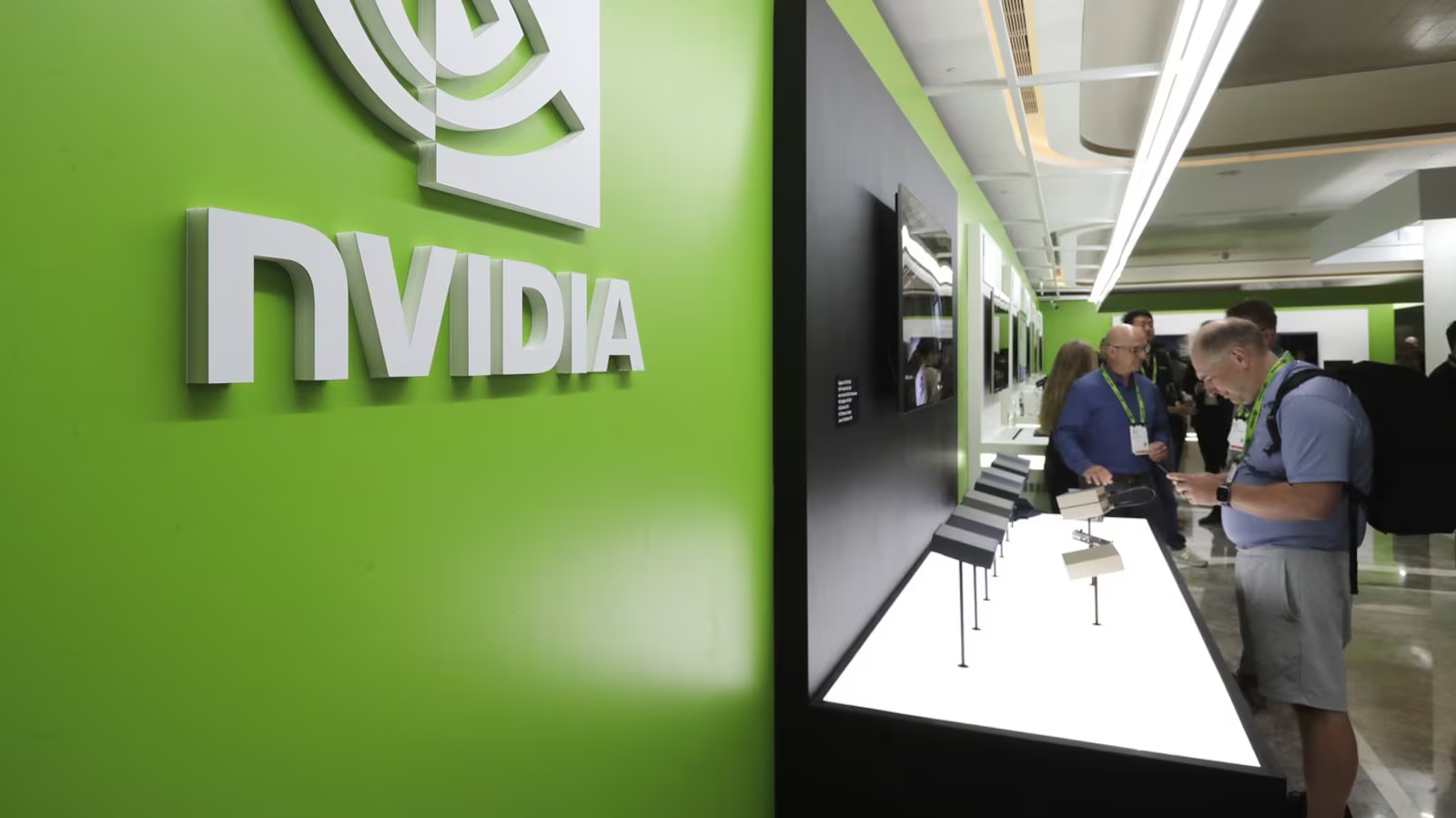
In a rare and controversial move, Nvidia and AMD have agreed to give the U.S. government 15 per cent of revenues from sales of advanced computer chips to China, according to a U.S. official. The arrangement, first reported by the Financial Times, is a condition for securing export licenses for semiconductors, including Nvidia’s H20 AI chips and AMD’s MI308 models.
The deal follows the Trump administration’s April halt on H20 chip sales to China. Last month, Washington signaled it would allow sales to resume, and the Commerce Department has since begun issuing licenses. Shares of Nvidia and AMD fell 1.8 per cent and 3.3 per cent respectively in pre-market trading Monday.
Critics say the agreement blurs the line between national security policy and corporate revenue extraction. “Either selling H20 chips to China is a national security risk, in which case we shouldn’t be doing it, or it’s not, in which case, why impose this penalty?” said Geoff Gertz, a senior fellow at the Center for New American Security.
Nvidia, which earned $17 billion from China in the last fiscal year — about 13 per cent of its total sales — said it follows U.S. government rules for participating in global markets. AMD, which generated $6.2 billion from China in 2024, has yet to comment.
China’s foreign ministry has accused Washington of using trade and technology as tools to “maliciously contain and suppress” China. Meanwhile, U.S. Commerce Secretary Howard Lutnick has framed the resumed chip sales as part of negotiations with China over rare earth supplies, calling it beneficial for Chinese companies to continue using American technology, even if the most advanced chips remain off-limits.
The administration has not disclosed how the collected revenue will be used or when the policy will take effect, but former U.S. officials warn it could signal a trade-off between security concerns and financial gain.