

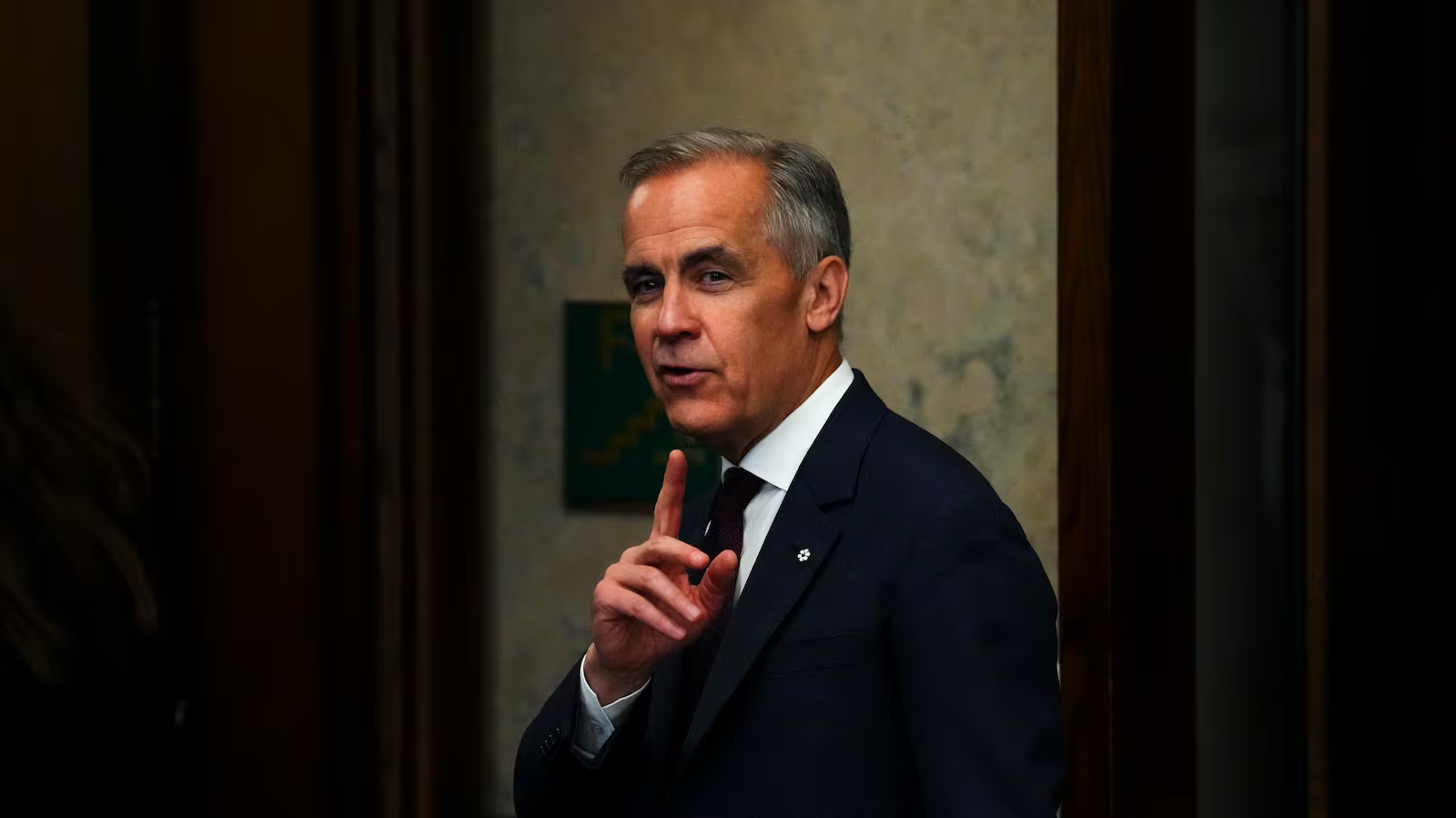
A majority of Canadians believe the country’s politicians should forgo their usual summer break and continue working to deliver the “concrete results” promised by the new Carney government, according to a Nanos Research survey conducted in early June for CTV News.
The poll indicates that 38 per cent of respondents expect to see progress on major Liberal initiatives by the end of this year, while another 12 per cent believe they’ll be waiting until 2026 or 2027. Only a small fraction—just three per cent—are optimistic enough to expect results by the end of the month. Meanwhile, 17 per cent expressed no confidence in seeing results at all under Prime Minister Mark Carney’s leadership, with skepticism especially high among men (23 per cent) and younger Canadians aged 18 to 34 (25 per cent). In contrast, only 10 per cent of respondents aged 55 and older shared the same doubt.
Though the survey didn’t name specific policies, Carney’s campaign platform included promises of middle-class tax cuts, protection against U.S. tariffs, a renewed focus on diversified trade, and what was called the most ambitious housing strategy since the Second World War.
When asked whether Parliament should remain in session through the summer, about two-thirds of Canadians said it was important or somewhat important for the government to keep working. Respondents in Ontario and the Prairies felt most strongly about the need for a summer sitting, while those in Quebec were less concerned—but still mostly in favor of continued parliamentary work.
The Liberal government has already said it will delay the federal budget release until fall, when the House of Commons returns in mid-September. That decision, along with criticism over a throne speech that many described as vague on economic direction, has drawn the ire of opposition parties.
Public opinion appears split on whether the government should table a budget before the fall, with 53 per cent of respondents saying it’s important or somewhat important to do so. Support for an earlier budget was higher among men, residents of the Prairies, and Canadians under 55.
The Nanos poll was conducted between June 1 and 3 and surveyed 1,120 randomly selected Canadians aged 18 and older using a hybrid of telephone and online interviews. The results are considered accurate within ±2.9 percentage points, 19 times out of 20.