

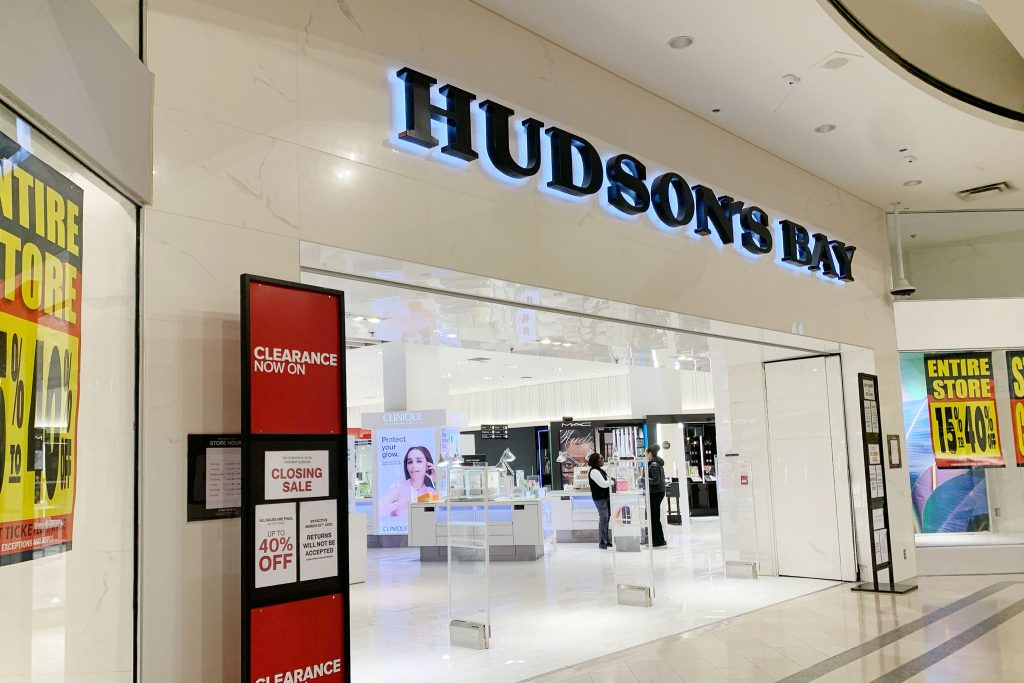
Nearly nine months after Hudson’s Bay Company shuttered its stores across Canada, most former locations remain dark—but that may not last much longer. A new analysis cited by Retail Insider suggests roughly 65 per cent of the vacant retail space could be leased within the next two years, with the majority returning to retail use.
The Bay operated 96 stores when it closed in May 2025. According to an assessment by JLL, about 78 per cent of those spaces are expected to be occupied by retail tenants. Short-term stopgaps, such as pop-up stores, have already appeared in some locations, while a proposed plan by B.C. billionaire Ruby Liu to revive dozens of sites as new department stores was struck down in court.
High renovation costs and a cooling condo market have made mixed-use residential redevelopment unlikely in the near term, keeping many properties in limbo. Still, precedents suggest large-format spaces can be successfully reworked—sometimes split into multiple tenants. Retail Insider points to Toronto’s CF Toronto Eaton Centre, where a former Nordstrom was subdivided for Eataly, Nike and Simons.
Some sites already have clearer paths forward. Primaris Real Estate Investment Trust has taken full control of former Bay stores in five malls across Ontario, Alberta and Quebec, signaling redevelopment plans tailored to local markets. Elsewhere, proposals range from grocery and auto uses to cultural projects, including a plan in downtown Montreal to transform a former Bay into a Cree cultural and heritage hub.
There is no one-size-fits-all solution, Retail Insider notes. The fate of each property will hinge on location, market strength, building layout and access to capital—factors that will determine whether these once-iconic retail boxes are reborn, reshaped or remain empty a little longer.