

Foreign Affairs Minister emphasizes de-escalation while distancing Canada from military action
Canada’s Foreign Affairs Minister Anita Anand declined to say whether Ottawa considers the recent U.S.-Israeli strikes on Iran to be legal under international law, offering a cautious response as tensions escalate in the Middle East.
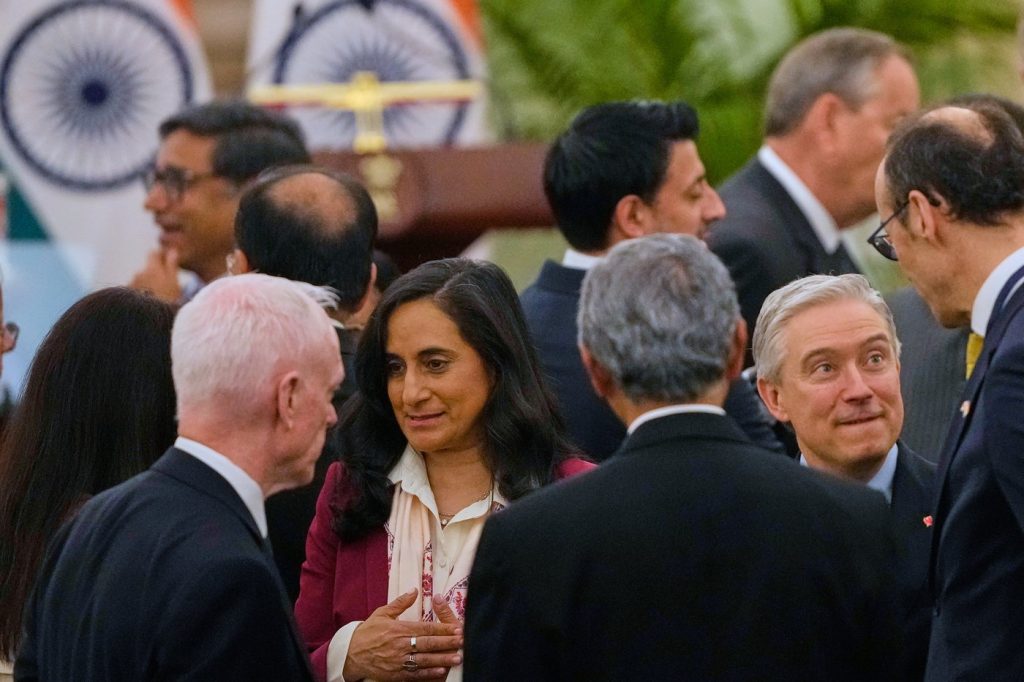
Anand faced repeated questions during a media availability in New Delhi, where she appeared in place of Prime Minister Mark Carney, who cancelled a scheduled press conference.
The United States and Israel launched coordinated strikes on Iran on Saturday, reportedly killing Iran’s Supreme Leader, Ayatollah Ali Khamenei. Iranian officials have said more than 150 people died, including children, after a missile reportedly struck a school in southern Iran.
The United Nations agency UNESCO described the reported bombing of the school as a “grave violation of humanitarian law.”
Anand confirmed that Canada was not involved in the operation and had no advance notice of the strikes. She reiterated that Canada will not participate in any military action related to the conflict.
While avoiding a direct legal assessment of the strikes, Anand emphasized that Canada’s priority remains diplomacy. She said she has spent the past two days speaking with counterparts across the Middle East and the Gulf region — including officials from Jordan, Qatar, Saudi Arabia and the United Arab Emirates — as well as fellow G7 ministers.
According to Anand, international reactions have varied. Some countries believe diplomacy is not possible at this stage, while others are urging that negotiations begin as quickly as circumstances allow. Canada, she said, continues to advocate for a peaceful and diplomatic solution.
In a joint statement released Saturday, Carney and Anand said Canada supports efforts to prevent Iran from obtaining a nuclear weapon and to stop the Iranian regime from threatening international peace and security.
Canada has not maintained formal diplomatic relations with Iran since 2012 and has designated the Iranian government as a state sponsor of terrorism. Ottawa has imposed approximately 500 sanctions linked to the Iranian regime.
Anand noted that despite strained government-to-government relations, Canada continues to stand with the Iranian people.
The federal government’s careful tone reflects the complexity of Canada’s position — supporting non-proliferation efforts while distancing itself from direct military involvement. As the situation evolves, Ottawa’s emphasis on diplomacy underscores its attempt to balance alliance commitments with concerns about regional stability and international law, leaving open questions about how events may shape Canada’s foreign policy in the weeks ahead.