

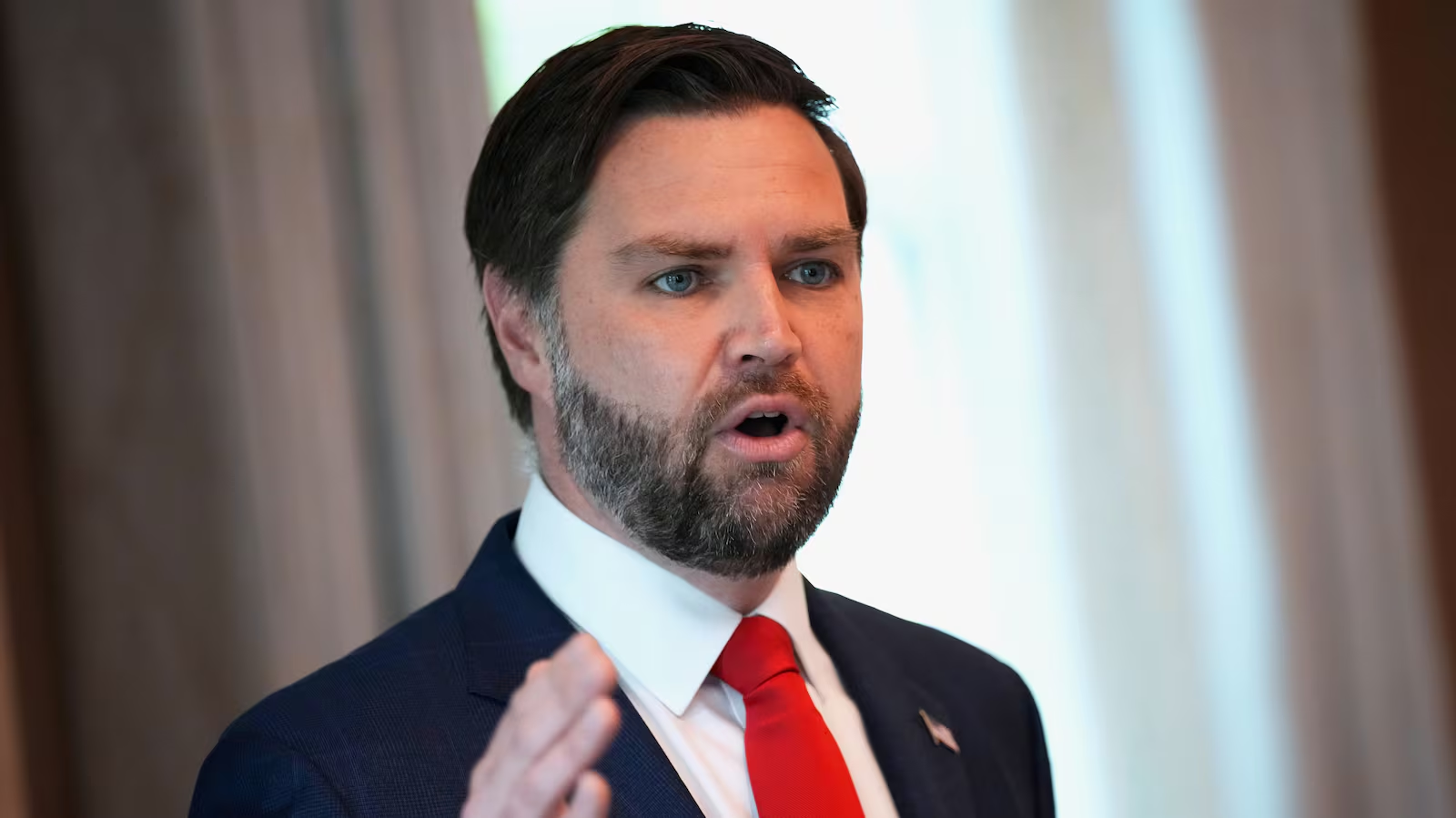
WASHINGTON — U.S. Vice President JD Vance pushed back against claims that Moscow is deliberately stalling peace efforts in Ukraine, insisting Russia has made meaningful concessions in recent talks with former president Donald Trump. Speaking in a pre-recorded interview that aired Sunday, Vance highlighted what he called “very aggressive, very energetic diplomacy” led by Trump following his summit with Russian President Vladimir Putin in Alaska earlier this month.
According to Vance, Moscow has shown flexibility for the first time in the three-and-a-half-year conflict. “The Russians have made significant concessions to President Trump,” he told NBC’s Meet the Press, pointing to Russia’s recognition that Ukraine will retain territorial integrity after the war and its acceptance that a puppet regime in Kyiv will not be installed. He did not specify whether territorial integrity referred to Ukraine’s pre-invasion borders.
While Vance noted progress, he acknowledged that Russia has not made every concession Washington would like to see. He stressed that the United States would remain engaged in securing Ukraine’s safety guarantees but repeated Trump’s pledge that “there are not going to be boots on the ground in Ukraine.”
The remarks came as Russian Foreign Minister Sergei Lavrov accused Western countries of trying to “block” peace talks, while striking a defiant tone in addressing Russia’s recent bombing of a U.S.-owned factory in Ukraine. Lavrov dismissed outrage over the attack, suggesting it was naive to believe the facility was unrelated to Kyiv’s military efforts.
Not everyone agreed with Vance’s optimism. Democratic Senator Adam Schiff, also appearing on Meet the Press, slammed the Trump-Putin summit as a failure that produced no ceasefire and weakened sanctions pressure on Moscow. “They strung him along successfully,” Schiff argued, adding that the talks had “stalled” despite Russian airstrikes continuing.
For now, the White House maintains that negotiations are moving forward, with Vance portraying Russia’s willingness to bend on once-rigid demands as proof of momentum. Whether that leads to a breakthrough or simply more maneuvering remains to be seen.