

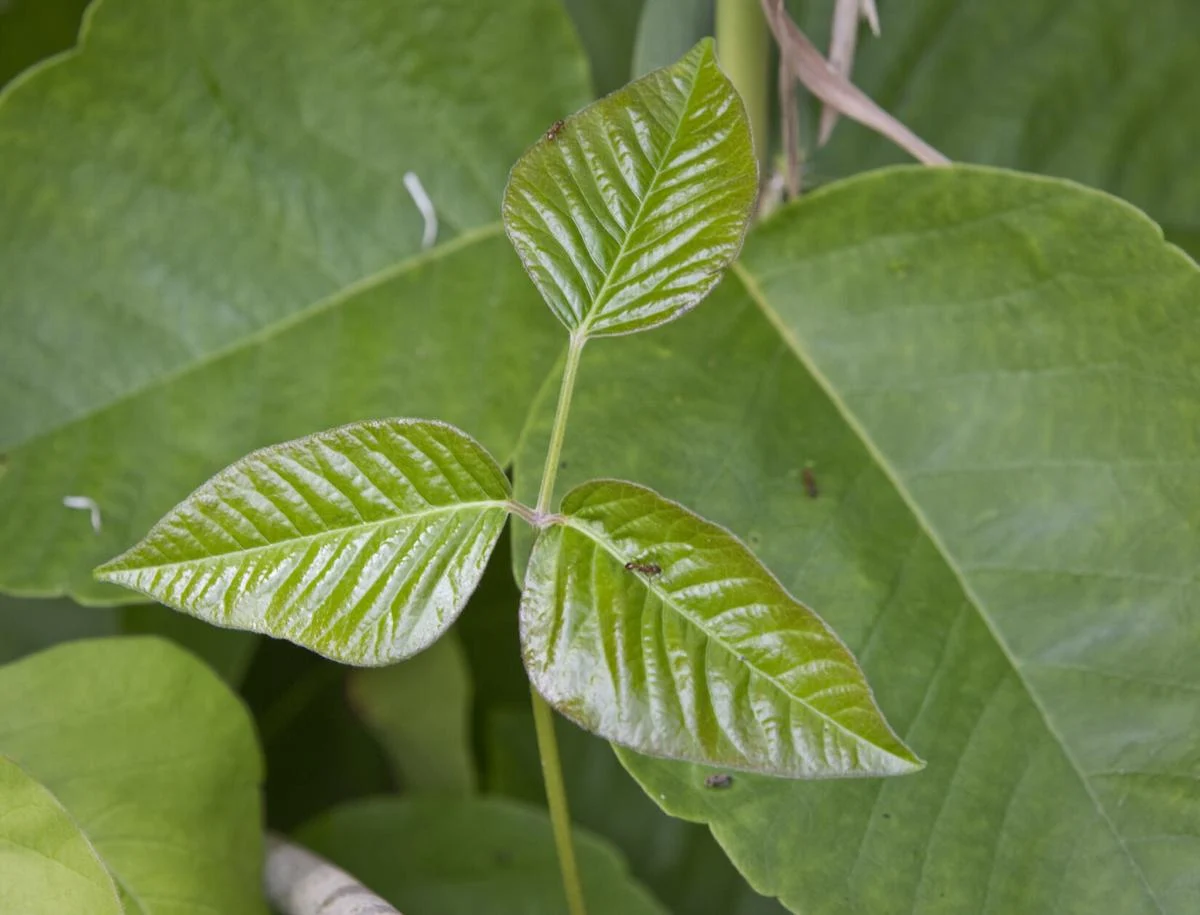
Poison ivy is one of Ontario’s most toxic plants, and a brush with it can lead to a nasty surprise — intensely itchy blisters and skin inflammation that can last for days. While the phrase “leaves of three, let it be” is commonly used to identify it, the plant is far trickier to spot than that simple rhyme suggests. Many plants have clusters of three leaflets, and poison ivy’s appearance changes dramatically through the seasons.
In spring, its leaves can look reddish or bronzy. By summer, they become a bright green, and in the fall they transform into a fiery mix of orange-red or burgundy. In shady spots, the leaves may even appear dull brown. Through winter, its woody stem lingers as a subtle danger in the landscape.
Poison ivy’s leaflets, which form what’s called a compound leaf, vary widely — with smooth or jagged edges, and sometimes with lobes. Though it may resemble harmless plants like raspberry or blackberry brambles, poison ivy stands out by lacking thorns and having a woody stem. Its relatives, like poison sumac, are also found in Ontario but are much rarer.
The plant is native to southern Canada and flourishes in forest edges, meadows, trails, and disturbed areas — often places frequented by hikers and campers. It grows across much of Ontario, even as far north as Cochrane and Kenora, and is especially abundant in popular vacation zones.
All parts of poison ivy — leaves, stems, vines, and roots — contain urushiol, an oily resin that triggers allergic skin reactions in about 60 to 80 per cent of people exposed. The reaction can include redness, swelling, blistering, and intense itching. Alarmingly, you don’t need to touch the plant directly to get the rash. The oil can cling to shoes, clothing, gardening tools, and even pet fur, transferring onto human skin long after the original exposure. Dogs may not react, but they can carry the oils, so it’s crucial to wipe them down or bathe them if they’ve been in high-risk areas — and always wear gloves while doing so.
Urushiol is incredibly persistent and can remain on surfaces for years unless removed with water or rubbing alcohol. The rash itself isn’t contagious, but touching a contaminated item can still spread the oil and trigger new breakouts.
If you suspect exposure, rinse the affected skin immediately with soap and cold water — not hot, which can spread the oil. Using rubbing alcohol or an alcohol-water solution may reduce the severity of the reaction. Keeping the area clean and dry, applying antihistamines or drying creams, and taking oatmeal baths can help relieve symptoms. It’s also important to avoid scratching to prevent infection.
Destroying poison ivy is notoriously difficult. According to Ontario Parks, the plant thrives in disturbed environments. Efforts to pull it out or spray it can actually create ideal growing conditions for it, while harming the delicate native plants that would otherwise compete with it. Poison ivy can spread underground like a vine, meaning you might eliminate one section only to have it reappear nearby.
Despite its danger, poison ivy is sometimes mistakenly called “poison oak” in Ontario — though the true poison oak plant only grows in the U.S. Poison sumac, however, is another urushiol-producing plant found in southern Ontario and Quebec, though it is less common.
Knowing what poison ivy looks like in each season and taking precautions — especially in forests and along trails — is key to avoiding an encounter with this persistent and highly irritating plant.