

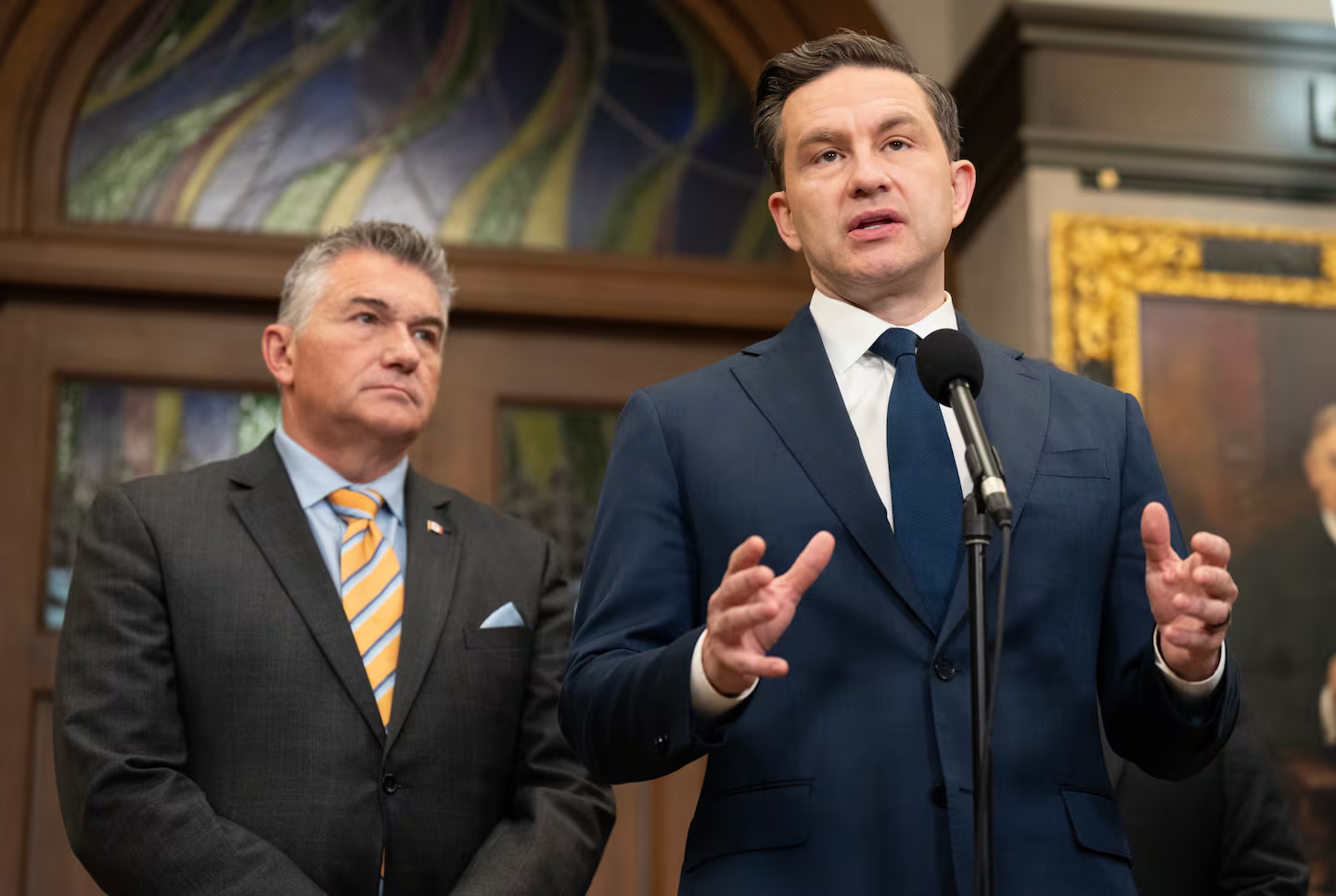
Conservative Leader Pierre Poilievre is pushing back against the federal government’s approach to major infrastructure projects, saying efforts like building pipelines should not be stalled by the need for full consensus from provinces or stakeholders. Speaking to reporters on Parliament Hill on Monday, Poilievre made it clear he supports a more unilateral path forward for what he calls “nation-building” projects.
“We’ve got to get it done. We need a pipe,” he said bluntly. “At the end of the day, if you wait until everybody agrees on everything, nothing will happen.”
His comments come in response to new legislation introduced by Prime Minister Mark Carney last Friday, which aims to promote interprovincial trade, improve labour mobility, and accelerate the approval of select infrastructure projects in the national interest. However, Carney emphasized that no project would move forward without provincial support, signaling that consensus is a necessary component of his strategy.
That position drew criticism from both Poilievre and Alberta Premier Danielle Smith. Smith called on her B.C. counterpart to support a new oil pipeline to tidewater, arguing that it could be a defining piece of Canada’s economic future. However, B.C. Premier David Eby has firmly stated he will not back another pipeline, citing the completion of the Trans Mountain Expansion Project as sufficient for the province’s current needs.
When asked directly whether he believes consensus should be required if premiers are at odds over a major project, Poilievre answered, “No.” He pointed to Canada’s near-total reliance on the U.S. for crude oil exports—almost 100 per cent in 2023—as a reason why diversifying energy routes, especially through the Pacific, is a national priority.
“We can’t wait any longer,” Poilievre said. “We have to get things done, and it’s going to take some backbone. So, we as Conservatives believe in pushing ahead with pipelines, and the shortest route is to the Pacific.”
The clash highlights a growing divide between Carney’s consensus-first approach and Poilievre’s push for bold, expedited action on infrastructure, setting up a key debate over energy and national interest as Canada looks to its future economic and environmental strategies.