

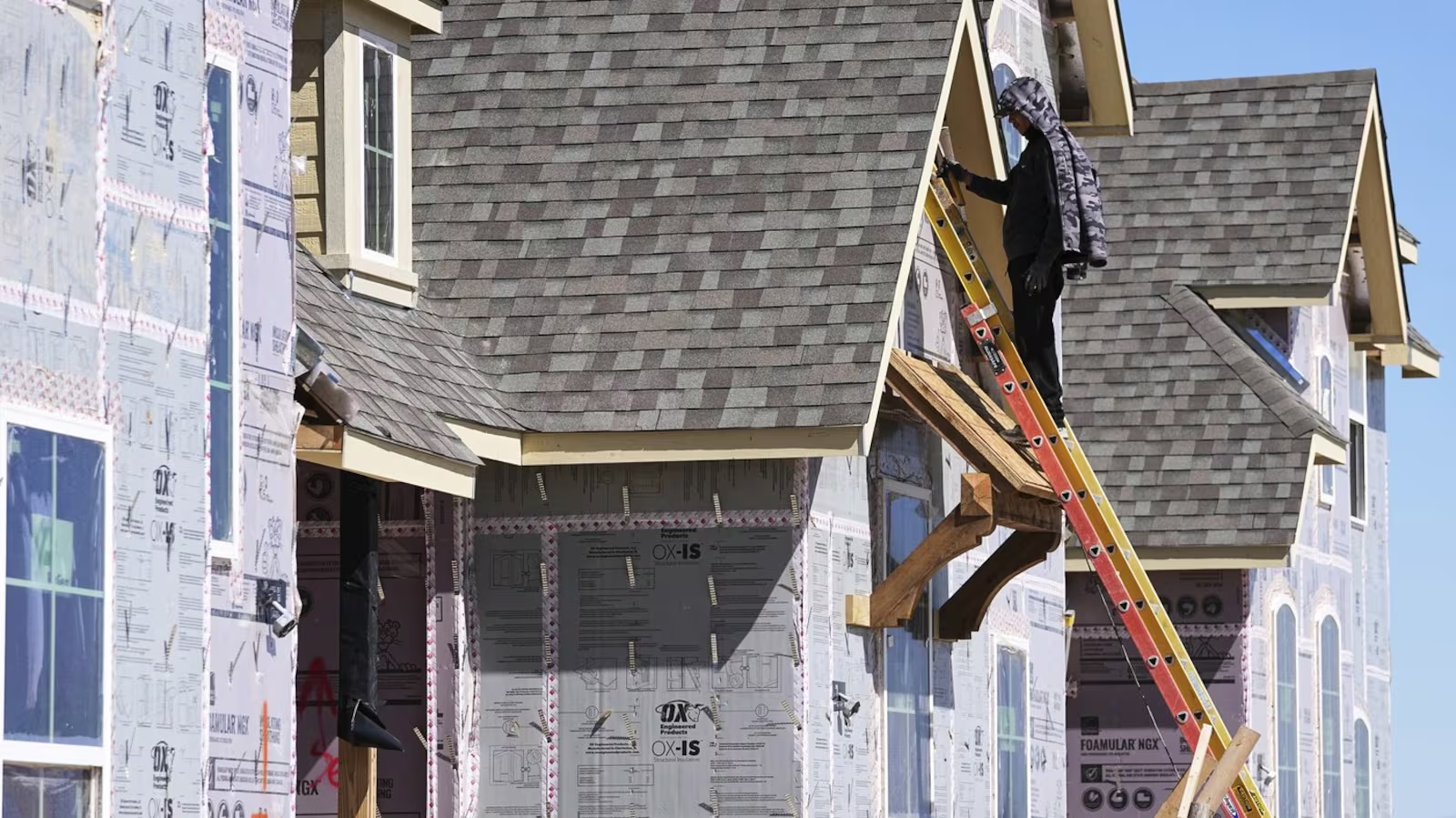
OTTAWA — A new economic analysis says the federal government’s plan to eliminate GST on new homes for first-time buyers could lead to substantial savings, shaving as much as $240 off monthly mortgage payments — but only if market conditions don’t offset the benefit.
Introduced on June 5, the Liberal government’s proposed legislation waives the 5% GST on newly built or substantially renovated homes priced up to $1 million for first-time buyers. This translates to a potential savings of up to $50,000 per qualifying home. The tax break begins to phase out for properties over $1 million and disappears entirely at $1.5 million.
According to a report released Monday by Desjardins Economics, the policy could improve affordability in some of the country’s most expensive markets, including Toronto and Vancouver. The measure expands on the older New Housing Rebate, which had long capped eligibility at homes priced under $450,000 and was not exclusive to first-time buyers.
Desjardins economist Kari Norman, who authored the report, said the impact will be particularly significant in urban centres where housing costs have pushed many would-be buyers to the sidelines. She noted that developers often charge the tax upfront rather than rolling it into mortgage financing, so the elimination of GST could also ease closing costs for buyers.
Norman estimates that 85% of new builds across Canada would qualify for the full GST break. In Toronto, that number rises to 92%, while in Vancouver — where prices are steeper — only about 75% of units would fall within the eligibility range.
However, the report also cautions that the affordability gains could be eroded if developers respond to increased demand by raising prices or if construction costs continue to rise. Desjardins warned that without corresponding policies to expand housing supply, the GST incentive could lead to an uptick in home prices, especially in high-demand markets.
Still, Desjardins sees potential upsides, especially in softer segments of the housing market such as new condo builds in Toronto. The policy could help revive buyer interest at a time when higher interest rates and economic uncertainty have made developers and buyers alike hesitant.
To maintain the policy’s effectiveness over time, Desjardins recommends indexing the $1 million cap to inflation to prevent affordability from slipping further as prices rise.
The government projects the rebate will cost approximately $3.9 billion over five years, while the Parliamentary Budget Officer pegs the cost closer to $2 billion. The difference suggests Ottawa anticipates a significant increase in new construction and home purchases if the policy passes.
The measure, part of a broader affordability package promised by the Liberals during the recent election, is tied to legislation that also includes an income tax cut set to take effect on July 1. If passed, the GST relief would apply retroactively to homes purchased after May 27, 2025. Construction on eligible homes must begin by 2031 and be completed by 2036.