

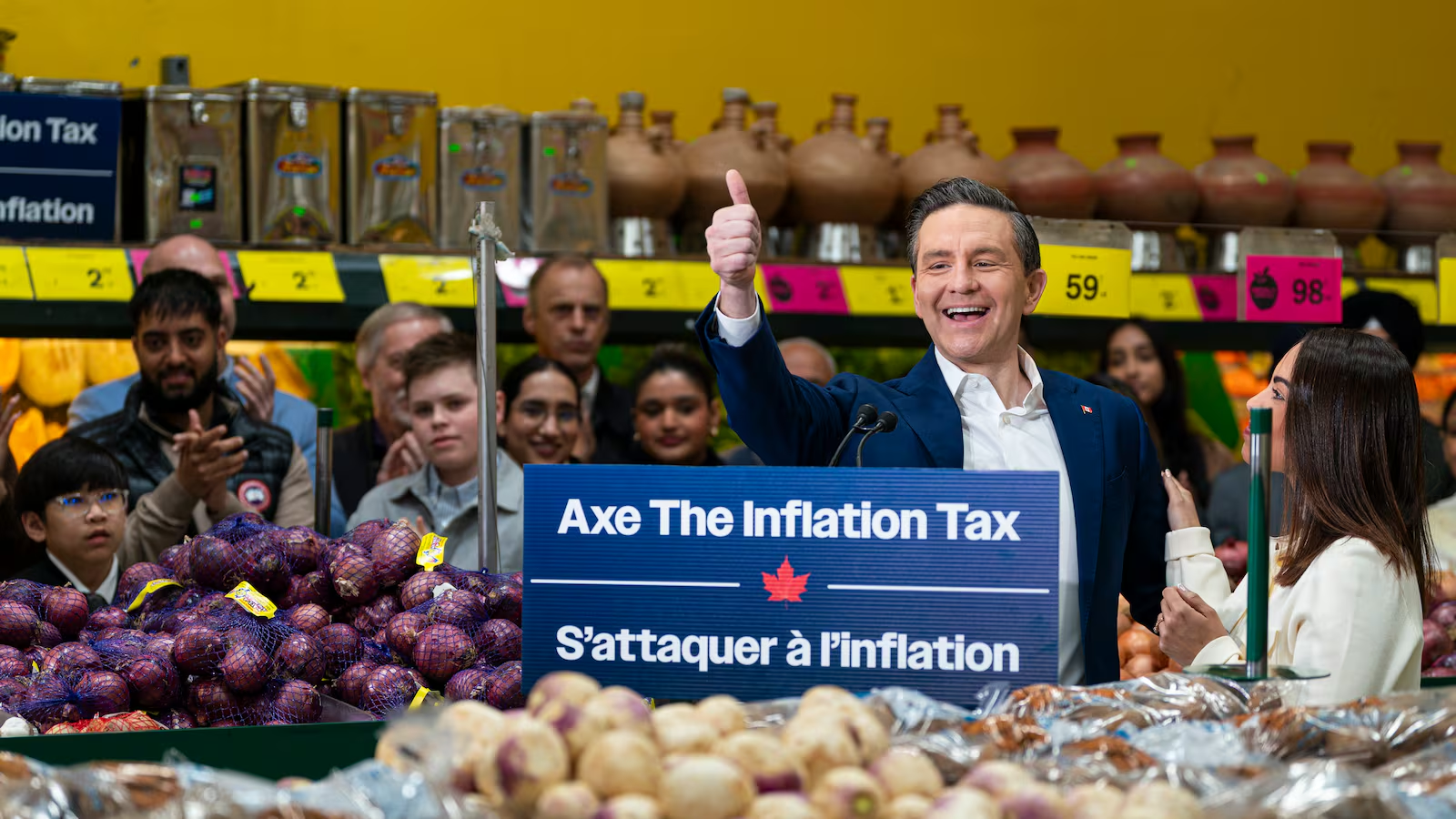
Conservative Leader Pierre Poilievre spent Easter weekend on the campaign trail in British Columbia, using a series of targeted photo-ops and cultural visits to criticize Liberal spending, yet failed to provide a costed platform, which analysts say could be a missed opportunity to sway undecided voters ahead of the April 28 federal election.
On Easter Sunday, Poilievre visited a Fruiticana grocery store in Surrey, standing in front of a pile of onions as he condemned the Liberal platform, which includes $130 billion in new spending commitments. “Mark Carney is worse than Justin Trudeau,” Poilievre said, accusing the Liberals of driving inflation, increasing debt, and raising the cost of living.
He announced that a Poilievre-led Conservative government would cut $10 billion in federal consultant fees, adding to a platform that includes $14 billion in tax cuts, a GST removal on new home construction, and increased defence spending focused on Arctic sovereignty. However, despite these promises, the Conservatives have not released a costed version of their platform—unlike the Liberals, NDP, and Green Party.
Political science professor Lori Williams of Mount Royal University called the delay an “opportunity lost,” noting that Canadians still don’t know what fiscal governance would look like under Poilievre. “We don’t even know who Pierre Poilievre’s finance minister would be,” she added.
With one week until election day, Williams said many voters are locked in, but those still weighing their options may turn away from the Conservatives due to the lack of financial transparency. “If people are looking closer at the alternatives presented by Mr. Poilievre, they’re not getting their questions answered.”
B.C.’s lower mainland, with its high immigrant population from China and India, remains a critical battleground. In 2021, Conservative MP Kenny Chiu lost his seat following a foreign interference campaign linked to activity on the Chinese social app WeChat. The region was also rocked in 2023 by the assassination of Hardeep Singh Nijjar, a Sikh-Canadian linked to the Khalistan movement, which Prime Minister Trudeau later connected to Indian government-linked operatives.
Unlike previous elections, the Conservatives have avoided mass rallies in the Vancouver area this year, opting instead for small, focused events and media engagements. Poilievre greeted crowds at a Vaisakhi festival with over 550,000 attendees and later held a private visit in Langley, decorating Easter eggs with a local family who offered prayers for him and his wife, Anaida.
Meanwhile, Liberal Leader Mark Carney, campaigning in his Ontario riding of Nepean, used the weekend to highlight his international strategy. “The Conservative leader doesn’t like our plan to stand up to President Trump,” Carney said. “He doesn’t have a plan—we’re waiting.”
Former NDP Leader Tom Mulcair, now a political commentator, suggested the Liberals’ strategic Easter weekend release of their $130 billion platform was meant to insulate Carney from direct criticism. “It won’t be on the front page, because there aren’t a lot of front pages on Easter Monday,” Mulcair said, calling the move “clever politics.”
Poilievre’s campaign now heads to Ontario, where the vote-rich ridings of the Greater Toronto Area (GTA) will play a pivotal role in deciding whether Canada elects a majority or minority government.