

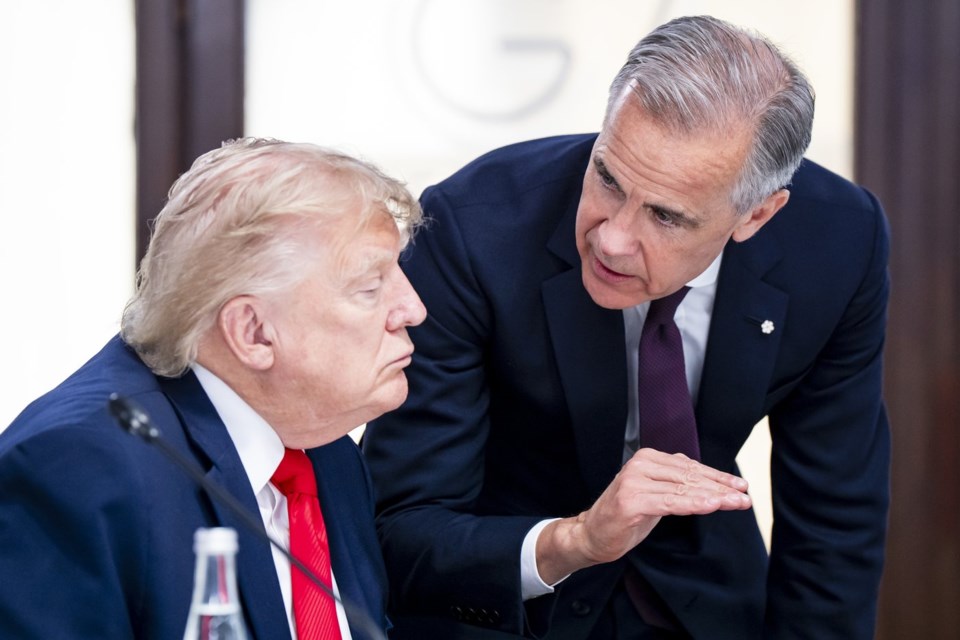
MONTREAL — Canadian businesses are nervously watching the clock as a potentially punishing new round of U.S. tariffs approaches, but instead of rushing goods across the border before the deadline, many companies appear to be betting that U.S. President Donald Trump may ultimately soften, delay or reverse his latest trade threat.
A sweeping 50 per cent tariff on nearly US$20 billion worth of Canadian goods is scheduled to take effect August 19, potentially affecting products ranging from dairy items to clothing and other Canadian exports entering the United States.
The proposed duties are particularly concerning because, unlike many previous U.S. tariffs, they would also apply to products that comply with the Canada-United States-Mexico Agreement, commonly known as CUSMA.
That prospect has raised anxiety across Canadian industries that rely heavily on access to the massive U.S. market.
Despite the looming deadline, however, businesses are not responding with the frantic rush to move shipments that accompanied earlier rounds of tariff threats.

Janine Harker, who heads the Canadian Society of Customs Brokers, says businesses have generally avoided dramatically accelerating shipments and instead adopted what she describes as a strategy of “watchful waiting.”
Behind that cautious approach is a growing belief among some businesses that Trump may not ultimately follow through exactly as threatened.
Repeated tariff announcements, delays, modifications and reversals have even produced a tongue-in-cheek acronym among some market watchers: “TACO,” short for “Trump Always Chickens Out.”
For Canadian exporters, however, betting on another change of course carries significant financial risk.
If the 50 per cent duties take effect as announced, affected companies could suddenly face dramatically higher costs to sell their products in the United States. Businesses would then have to decide whether to absorb those additional costs, pass them along to customers, reduce exports or reconsider their U.S. operations altogether.
The mood is noticeably different from last summer, when businesses and retailers around the world scrambled to move products into the United States before tariff deadlines arrived.
This time, Canadian companies appear increasingly accustomed to the uncertainty surrounding U.S. trade policy. Rather than immediately restructuring their shipping schedules every time a new deadline is announced, businesses are evaluating various scenarios and calculating how much financial damage they could withstand if the tariffs remain in place.
That does not mean companies are unconcerned. The possibility of a 50 per cent border tax on billions of dollars in Canadian exports represents a major threat, particularly for businesses operating on narrow profit margins or those heavily dependent on American customers.
The decision not to rush shipments therefore reflects less confidence than caution. After repeated rounds of tariff threats and shifting deadlines, many companies appear reluctant to make expensive logistical decisions until they know whether the latest measures will actually take effect.
The situation also adds another layer of uncertainty to the Canada-U.S. economic relationship as Prime Minister Mark Carney’s government navigates trade relations with the Trump administration.
Canada and the United States share one of the world’s largest trading relationships, with deeply integrated supply chains connecting manufacturers, farmers, retailers and consumers on both sides of the border. Major tariffs can therefore have consequences extending well beyond the companies directly shipping the affected goods.
With the August 19 deadline rapidly approaching, Canadian businesses are preparing for two very different possibilities: another dramatic escalation in the Canada-U.S. trade dispute, or another last-minute change from the White House.
For now, trucks continue crossing the border without the pre-deadline surge seen during earlier tariff battles.
Canadian companies are watching, calculating and waiting — hoping that patience proves less costly than panic.