

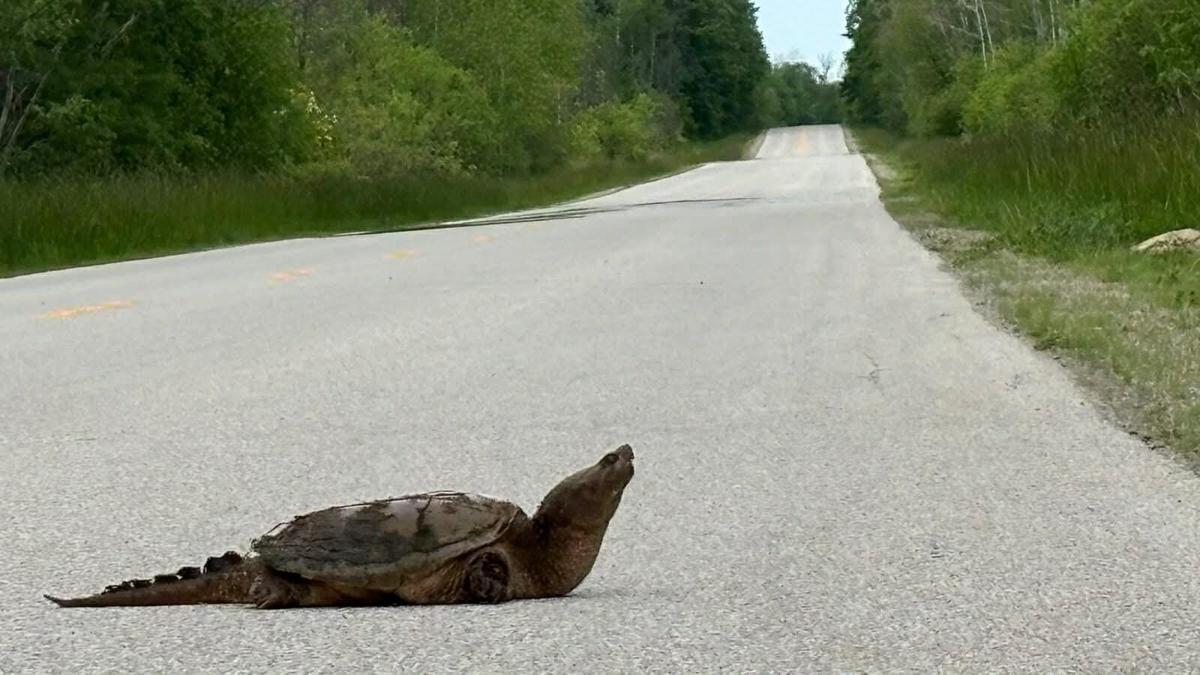
BRAMPTON, ON — Brampton’s environmentally significant Heart Lake wetlands are receiving a major boost, with nearly $1.2 million in provincial funding going toward habitat restoration, safer wildlife crossings and improved stormwater infrastructure along a stretch of Heart Lake Road where more than 100 animal deaths have been documented in recent years.
The funding will help finance the City of Brampton’s Heart Lake Road Wetlands Connectivity Project, an environmental initiative designed to improve the health of the wetland system while making it safer for turtles and other wildlife to move between habitats without crossing busy traffic lanes.
Construction began in June, with the Toronto and Region Conservation Authority serving as construction manager and project partner.
The project will restore and expand wetland habitat, replace an aging culvert to improve water flow and wildlife movement, and install specialized fencing that directs turtles and other animals toward safer passages beneath Heart Lake Road.
Beyond wildlife protection, the improvements are expected to reduce flooding and improve the overall ecological health of the Heart Lake wetland complex and its connection with Spring Creek.

Councillor Michael Palleschi, chair of Brampton’s Planning and Development Committee, described Heart Lake Road as an important corridor for both residents and wildlife.
“This funding will help restore valuable wetland habitat, improve water flow and create safer passage for turtles and other wildlife,” Palleschi said.
“Projects like this demonstrate how thoughtful infrastructure investments can protect the environment while strengthening our community for the future.”
The investment is being welcomed by Heart Lake Turtle Troopers, a local conservation organization that has spent years documenting wildlife deaths and advocating for stronger protection of the area’s turtle population.
Lori Leckie, co-founder of Heart Lake Turtle Troopers, described the funding as an important investment in the long-term protection of one of Ontario’s significant wetland areas.
“The Heart Lake wetlands are home to an incredible diversity of wildlife, including several species of turtles that rely on connected wetlands, clean water and healthy habitats to survive,” Leckie said.
She said improvements involving wetland restoration, habitat connectivity and stormwater management could benefit far more than turtles.
“These measures can have lasting benefits for turtles, amphibians, birds, mammals, pollinators, and countless other species that call the Heart Lake region home,” she said.
The conservation group hopes the funding will now produce tangible improvements on the ground and says it plans to continue working with the City, TRCA, residents and community volunteers.
The urgency behind the project is reflected in years of wildlife monitoring along Heart Lake Road between Sandalwood Parkway East and Mayfield Road.
During the 2025 monitoring season alone, 27 trained volunteers recorded 106 wildlife-related incidents along the corridor, according to the City.
Heart Lake Turtle Troopers has separately documented more than 100 animal fatalities, including turtles, along the same stretch of roadway during the past five years.
The problem, however, has been recognized for considerably longer.
In 2011, the Toronto and Region Conservation Authority, City of Brampton and Ontario Road Ecology Group launched the Heart Lake Road Ecology Volunteer Monitoring Project to collect information about wildlife-vehicle collisions.
Between 2011 and 2016, citizen-science volunteers contributed more than 950 hours of monitoring.
The information helped authorities identify wildlife collision hot spots and eventually led to the installation of a wildlife passage and directional fencing at a key location in 2016.
The latest investment builds on that earlier work.
The Heart Lake Road Wetlands Connectivity Project also supports Brampton’s Road Ecology Program, endorsed by City Council in 2024. The program combines monitoring, research and infrastructure improvements to reduce collisions between vehicles and wildlife while reconnecting habitats fragmented by roads and urban development.
The goal is to allow animals to move more safely between wetlands, forests and waterways while maintaining the ecological connections essential to healthy wildlife populations.
Leckie said the Heart Lake corridor deserves particular attention because of its ecological importance, describing the area as ranking among the most significant wetland sites in Ontario.
“This stretch of road and wetlands is in the top 15 out of 1,500 wetland sites in Ontario with the most significant ecology,” she said.
She also expressed concern about the long-term impact of traffic and development along the corridor, arguing that past development decisions have contributed to the wildlife challenges now facing the area.
With Brampton continuing to grow rapidly, the project illustrates the challenge of balancing urban expansion and transportation infrastructure with the protection of environmentally sensitive areas.
For turtles and other wildlife around Heart Lake, the most visible change will be relatively simple but potentially life-saving: instead of wandering onto a busy roadway, fencing will help guide animals toward protected routes underneath it.
For Brampton, the nearly $1.2-million investment represents a broader attempt to reconnect fragmented natural habitats, improve water management and reduce wildlife deaths while preserving one of the city’s most important natural areas for future generations.