

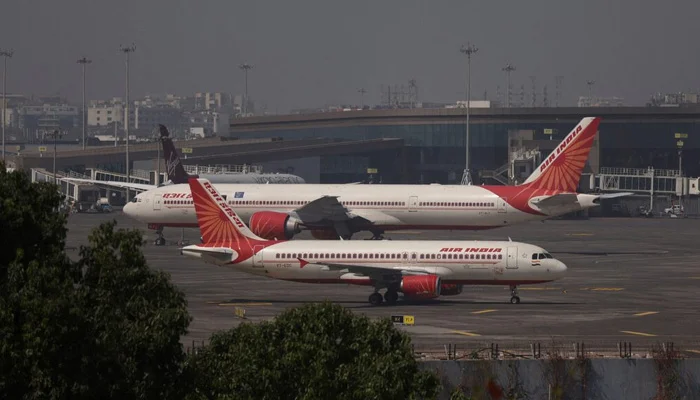
NEW DELHI — An Air India Airbus A320 carrying passengers from Phuket to Delhi suddenly dropped approximately 300 feet after suffering a rapid loss of hydraulic pressure that left critical flight controls temporarily unresponsive, according to a preliminary Airbus assessment reported by Reuters.
The serious August 4 incident aboard Air India flight AI2379 injured 24 people, although the pilots were able to regain control and land the aircraft safely in Delhi.
According to Airbus’s initial technical analysis, the aircraft registered losses of pressure in all three of its hydraulic systems in quick succession. Hydraulic systems use pressurized fluid to operate critical aircraft components, including flight-control surfaces.
For approximately four seconds, the pilots were reportedly unable to control the aircraft through its elevators and ailerons. The elevators control the aircraft’s nose-up and nose-down movement, while the ailerons help control banking and turning.
During the event, the aircraft pitched upward. The first officer reportedly applied a full nose-down control input, but Airbus’s assessment said there was “no direct response” from the relevant flight-control surfaces.

The hydraulic systems recovered within seconds, allowing normal control to return.
The preliminary assessment has not established why hydraulic pressure was apparently lost across all three systems, leaving investigators with a critical technical question to resolve.
Airbus has asked Air India to conduct detailed examinations of the aircraft’s hydraulic systems as well as the sensors and switches responsible for monitoring hydraulic pressure.
Some sensors are expected to be removed for further inspection, while additional checks of electrical wiring may also be required as investigators attempt to determine whether the event resulted from a mechanical, electrical, sensor-related or other malfunction.
The aircraft also experienced forces exceeding specified limits during the sudden altitude change, according to the Airbus assessment.
As a result, the manufacturer has requested inspections for possible structural damage caused by the abrupt movement.
Airbus has additionally sought records of hydraulic-system maintenance performed on the aircraft during the month preceding the incident, along with more detailed accounts from the pilots.
Air India initially described the event as turbulence-related. In a subsequent statement, however, the airline dropped that characterization and said the aircraft had experienced a sudden loss of altitude.
Indian aviation authorities have classified the event as a serious incident.
India’s Aircraft Accident Investigation Bureau is investigating, with Airbus and France’s Bureau of Enquiry and Analysis for Civil Aviation Safety providing technical assistance.
A separate issue involving the flight’s captain has also emerged. According to a source cited by Reuters, the captain tested positive for marijuana in a confirmatory drug test.
Authorities have not established any connection between that test result and the aircraft’s sudden altitude loss or hydraulic-system problems. The technical cause of the incident remains under investigation.
Following the development, Air India began mandatory substance testing for all of its pilots on Thursday, according to an internal airline memo reported by Reuters.
The latest incident comes at a sensitive time for Air India as the Tata Group-controlled carrier works to modernize its operations while facing heightened regulatory and public scrutiny over aviation safety.
The airline continues to deal with the aftermath of the June 2025 crash of an Air India Boeing 787 in Ahmedabad, which killed 260 people.
Air India is also preparing for a leadership transition, with former Ethiopian Airlines chief executive Tewolde Gebremariam expected to take over as CEO as the carrier attempts to improve its financial and operational performance.
Singapore Airlines holds an approximately 25 per cent stake in Air India.
The August 4 A320 incident will now be closely examined because the apparent near-simultaneous loss of hydraulic pressure affected systems essential for controlling the aircraft.
Despite the dramatic 300-foot altitude loss, temporary lack of response from key flight controls and injuries to 24 people, the aircraft recovered and landed safely.
Investigators must now determine the central unanswered question: what caused multiple hydraulic systems to register pressure losses within seconds of one another, and whether the incident points to an isolated malfunction or a broader technical concern requiring further action.