

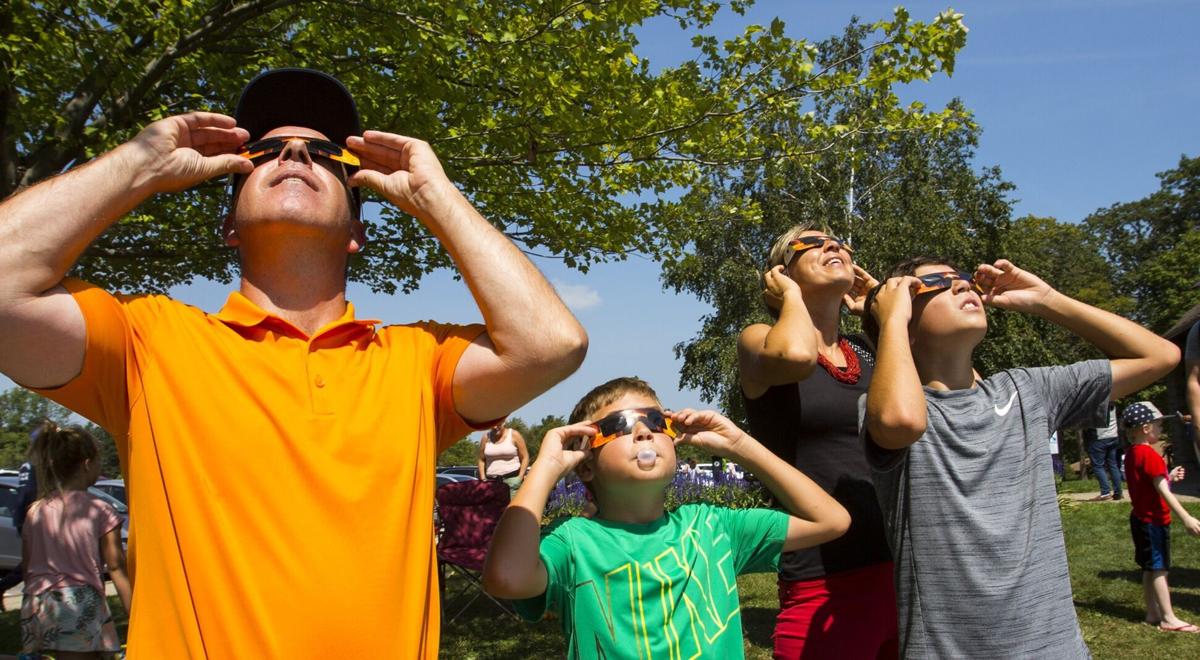
Skywatchers across Ontario are in for a spectacular celestial double event on Wednesday, August 12, when a partial solar eclipse will be visible during the afternoon, followed by the annual Perseid meteor shower, which is expected to peak later that night under favourable new moon conditions.
The partial solar eclipse will occur as the Moon passes between the Earth and the Sun, covering only a portion of the Sun’s surface. While a total solar eclipse will be visible across parts of Europe, Greenland, Iceland and the Arctic, observers in Canada and the northern United States will witness only a partial eclipse.
In Ontario, viewing conditions will vary by location. Communities in eastern and northern Ontario will enjoy the greatest coverage of the Sun, while southern Ontario will experience a smaller but still noticeable eclipse. Toronto is expected to see approximately 8 per cent of the Sun covered, whereas Ottawa will experience about 15 per cent coverage. The most impressive views in Canada will occur in the far north, with the community of Alert, Nunavut, expected to witness more than 93 per cent of the Sun obscured.
For Toronto residents, the eclipse will begin at approximately 12:55 p.m., reach its maximum at 1:40 p.m., and conclude around 2:23 p.m.. Across Ontario, the eclipse will generally be visible between shortly after noon and mid-afternoon, depending on the observer’s location.
Astronomy enthusiasts should also keep an eye on the night sky after sunset as the Perseid meteor shower, one of the year’s most anticipated celestial displays, reaches its peak. The absence of moonlight due to the new moon is expected to create excellent viewing conditions, allowing observers to spot numerous meteors in dark, rural locations away from city lights.

Experts emphasize that proper eye protection is essential throughout the entire partial solar eclipse. Unlike a total solar eclipse, it is never safe to look directly at the Sun during a partial eclipse without certified solar viewing glasses. The Canada Space Agency recommends using eclipse glasses that meet the ISO 12312-2 international safety standard. Ordinary sunglasses, regardless of their darkness, do not provide adequate protection against harmful solar radiation.
Anyone planning to reuse eclipse glasses from previous events should inspect them carefully before use. The lenses should be free of scratches, punctures, pinholes, creases or any other damage that could compromise eye safety. If any defects are present, the glasses should not be used.
While Canadians will have to wait until August 22, 2044, for the next total solar eclipse visible somewhere in Canada, Ontario residents face a much longer wait. The province’s next total solar eclipse is not expected until May 3, 2106, making this year’s partial eclipse a worthwhile opportunity for astronomy enthusiasts to experience another remarkable event in the daytime sky.