

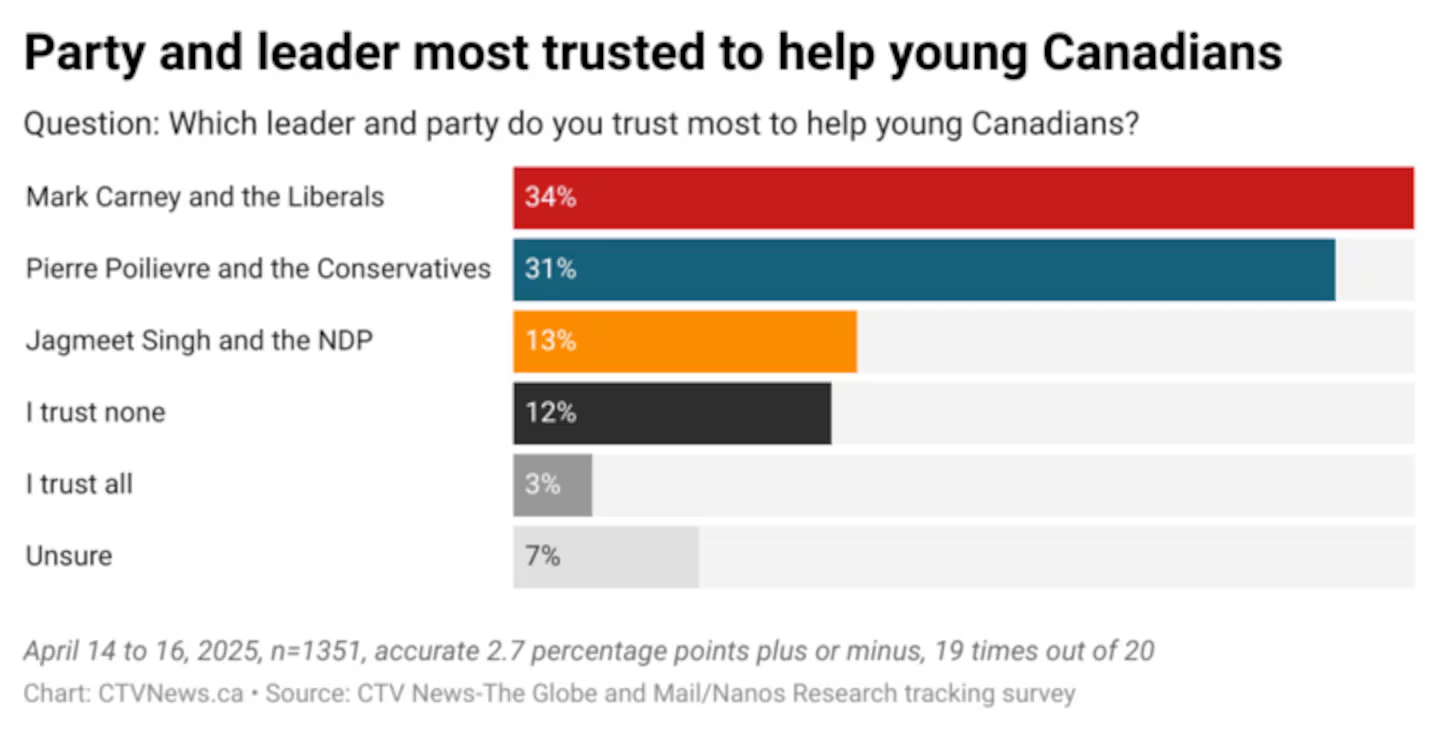
A new Nanos Research poll conducted for CTV News and The Globe and Mail highlights a clear generational divide over which federal party leader Canadians believe is best positioned to support young people. The findings suggest that younger Canadians, particularly those aged 18 to 34, are more likely to trust Conservative Leader Pierre Poilievre, while older Canadians, especially those aged 55 and above, show greater confidence in Liberal Leader Mark Carney.
Nationally, 34 percent of respondents said they trusted Carney and the Liberals the most to help young Canadians. Close behind were Poilievre and the Conservatives at 31 percent, while only 13 percent selected Jagmeet Singh and the NDP. The remaining respondents were either unsure, trusted none of the leaders, or trusted all equally.
When broken down by age, the divide becomes more pronounced. Among those aged 18 to 34, 38 percent said they trusted Poilievre, compared to 26.4 percent who said the same about Carney. In contrast, 41.4 percent of respondents aged 55 and older expressed the most trust in Carney, while 25.8 percent trusted Poilievre. Those between the ages of 35 and 54 were more evenly split, with a slight preference for Poilievre over Carney by 1.8 percentage points.
The poll also showed a difference in gender perspectives. Men were more likely to trust Poilievre on matters concerning youth, while women were more inclined to support Carney.
Among supporters of other political parties, nearly three in five NDP voters and two in five Bloc Québécois voters expressed the most trust in Carney to help young Canadians. Just 2.8 percent of NDP supporters and 12.5 percent of Bloc supporters said they had the most trust in Poilievre.
The poll also explored what Canadians consider the most pressing issue in the current election. Canadians under the age of 55 identified the cost of living as their top concern, whereas those aged 55 and older were more likely to cite the U.S.-Canada trade war as the most important issue.
The survey was conducted between April 14 and 16, 2025, among 1,351 randomly selected Canadian adults via phone and online interviews. The results are considered accurate within a margin of plus or minus 2.7 percentage points, 19 times out of 20.