

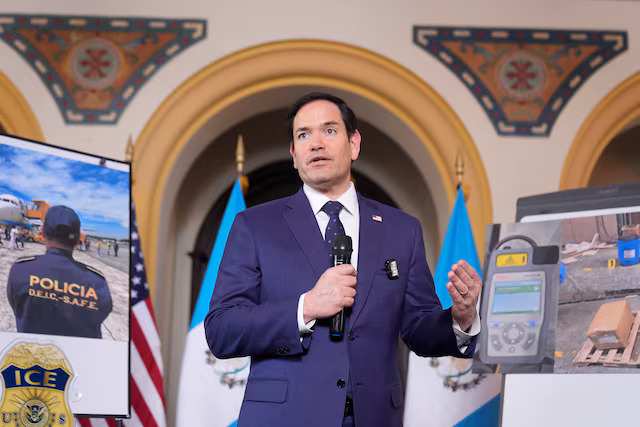
U.S. Secretary of State Marco Rubio will not attend the upcoming G20 foreign ministers’ meeting in South Africa, he confirmed on Wednesday. The decision comes just days after former President Donald Trump threatened to cut U.S. funding to the African nation over allegations of land expropriation and unequal treatment of certain groups.
South Africa, which holds the G20 presidency from December 2024 to November 2025, is set to host the meeting in Johannesburg from February 20-21. The event is expected to focus on global solidarity, sustainability, and climate change, themes that have drawn criticism from Rubio and Trump.
Why It Matters
The controversy stems from Trump’s recent remarks, in which he accused South Africa of confiscating land and mistreating “certain classes of people,” without providing evidence. He vowed to halt U.S. funding until the matter is investigated. South African President Cyril Ramaphosa swiftly defended the country’s land reform policies, stating that no land had been confiscated and that the measures aim to ensure equitable access to land for all citizens.
Rubio echoed Trump’s sentiments in a post on X, criticizing South Africa’s land policies and accusing the country of using the G20 platform to promote “solidarity, equality, and sustainability,” which he equated with diversity, equity, and inclusion (DEI) initiatives and climate change agendas. South Africa’s foreign ministry responded by clarifying that the land reform laws are similar to eminent domain laws in the U.S. and do not involve arbitrary dispossession of private property.
The issue of land ownership in South Africa is deeply rooted in the country’s history of colonialism and apartheid, during which Black citizens were systematically dispossessed of their land and denied property rights. Despite Black South Africans comprising 80% of the population, they own only 4% of the country’s freehold farmland, compared to 75% owned by white citizens, according to a 2017 land audit.
In an effort to address this imbalance, President Ramaphosa recently signed a law allowing the state to expropriate land “in the public interest.” This move has drawn criticism from Trump and his allies, including South African-born billionaire Elon Musk, who has accused the country of enforcing “openly racist ownership laws” without providing evidence.
The Trump administration has consistently opposed DEI programs, labeling them as anti-meritocratic, while rights groups argue that such initiatives are essential to addressing systemic inequities faced by marginalized communities.
The G20 meeting in Johannesburg is expected to highlight global cooperation on pressing issues, but Rubio’s absence underscores the growing tensions between the U.S. and South Africa over domestic policies and international priorities.