

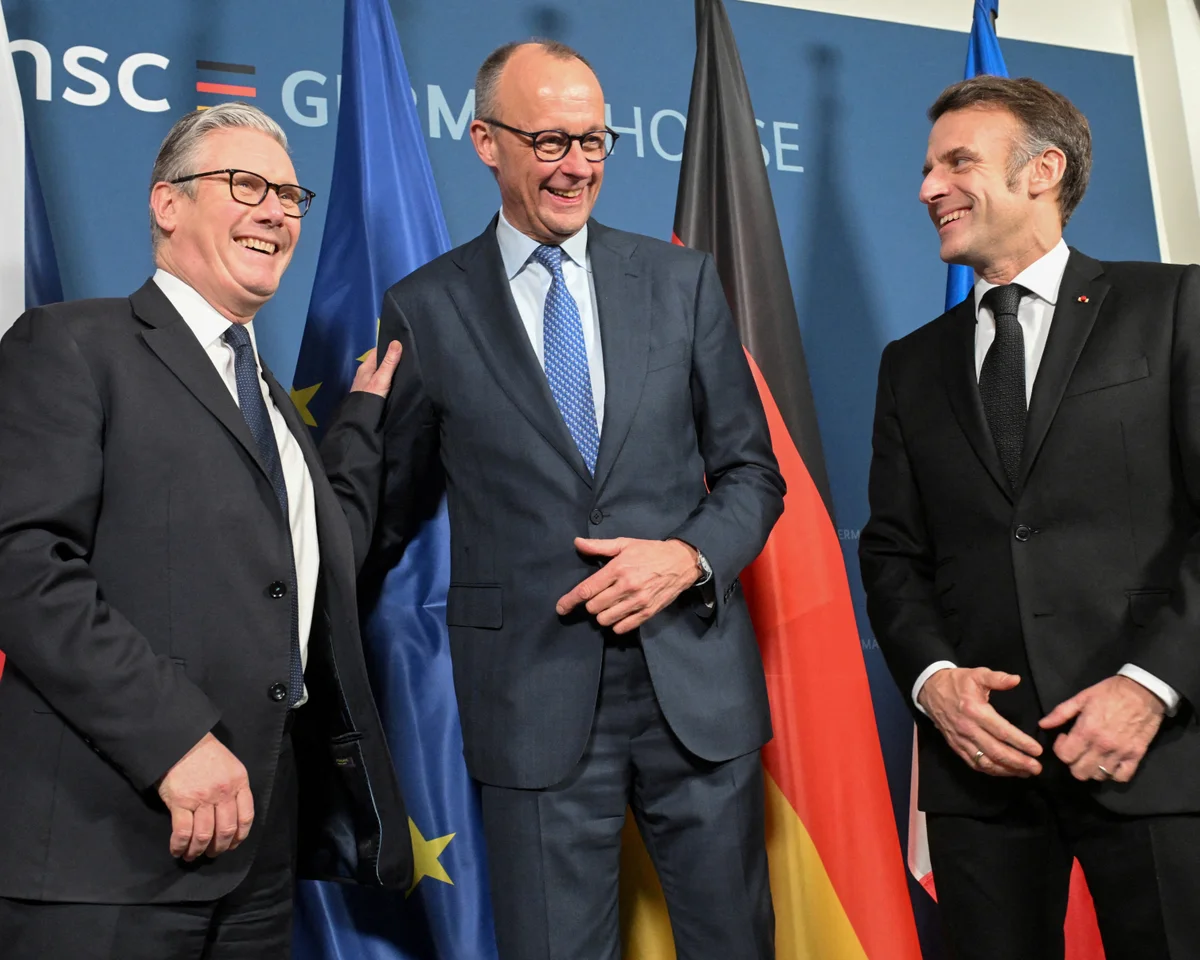
European leaders condemn Iranian strikes as “reckless” and warn they will defend allies and regional interests
Leaders of the United Kingdom, France and Germany say they are prepared to defend their national interests and regional allies as tensions escalate following Iran’s retaliatory attacks in the wake of coordinated U.S.–Israeli strikes that killed Supreme Leader Ayatollah Ali Khamenei.
In a joint statement, British Prime Minister Keir Starmer, French President Emmanuel Macron and German Chancellor Friedrich Merz said they are “appalled” by what they described as Iran’s “reckless” actions targeting allied countries in the Middle East. The three leaders expressed support for the United States and indicated they are ready to work alongside Washington and regional partners to counter further missile and drone attacks.
The statement said the European nations could enable “necessary and proportionate defensive action” aimed at neutralizing Iran’s capacity to launch missiles and drones. They emphasized co-ordination with the U.S. and other allies in the region as the situation continues to unfold.
The comments come amid a rapidly developing conflict that has heightened fears of broader regional instability. The Israeli military said Sunday it was striking central areas of Tehran after Iran launched attacks on targets in Israel and several Gulf Arab states hosting U.S. forces. The U.S. military confirmed that three American service members have been killed and five wounded since the escalation began.
British Prime Minister Starmer said his country was not involved in the initial offensive strikes against Iran but confirmed that U.K. forces are participating in what he described as “defensive” operations. British aircraft are reportedly intercepting Iranian projectiles, and Starmer said he has authorized the U.S. to use British bases to help target missile launch sites and storage facilities.
Starmer said at least 200,000 British citizens are currently in the region and warned that Iranian strikes have hit airports and hotels where they are staying. He also stated that a military base in Bahrain was struck, narrowly missing British personnel. He characterized Iran’s retaliatory actions as putting British citizens and allies at serious risk.
Beyond the immediate military exchanges, the conflict is raising economic concerns. Analysts are warning of potential disruption to global energy markets, particularly around the Strait of Hormuz, a key shipping route for roughly one-fifth of the world’s oil and liquefied natural gas supply. Marine tracking data shows dozens of tankers waiting near the strait amid rising insurance costs and security concerns. Experts predict oil prices could surge when markets reopen, with possible ripple effects on fuel costs worldwide, including in Canada.
Political debate is also emerging in the United States about what comes next. Democratic Senator Mark Kelly questioned whether there is a clear strategy beyond the military operation, asking how the administration plans to address the broader political consequences in Iran. Meanwhile, Reza Pahlavi, the exiled son of Iran’s last shah, said he has a transition plan aimed at steering the country toward democracy, though his role remains controversial among Iranians.
As diplomatic and military developments continue to unfold, European leaders have signalled firm alignment with Washington while framing their actions as defensive. The coming days will test whether coordinated efforts can contain the crisis or whether the conflict risks expanding further, with global security and economic stability hanging in the balance.