

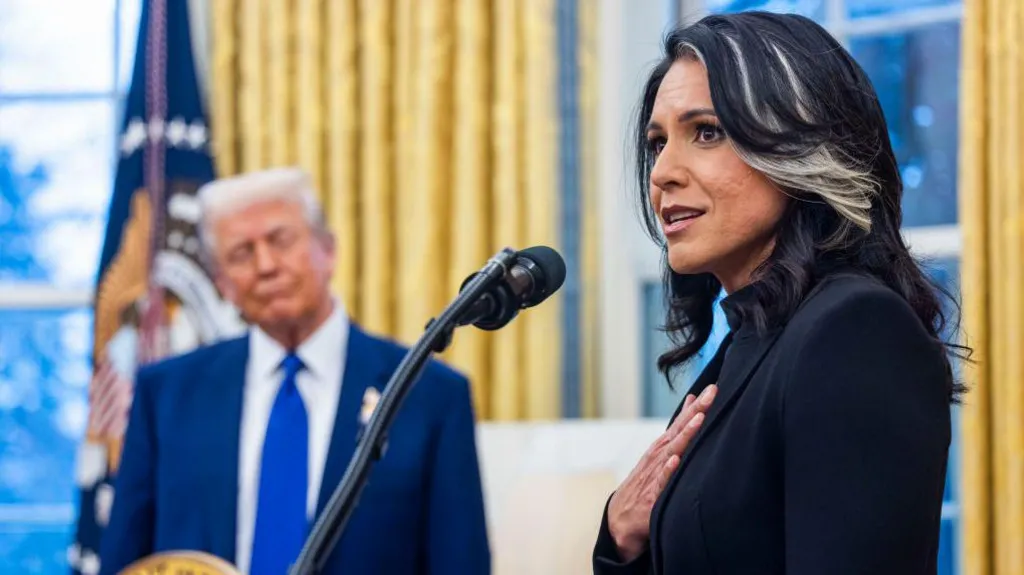
Tulsi Gabbard now says Iran could be capable of producing a nuclear weapon “within weeks,” marking a sharp reversal from her previous testimony before Congress in March, where she stated that Iran was not actively building nuclear arms. Gabbard’s latest comments come as tensions escalate in the Middle East and within the U.S. political sphere, with former President Donald Trump openly criticizing her earlier assessment.
Back in March, Gabbard testified that Iran’s uranium stockpile was growing but that intelligence agencies had found no evidence it was resuming its suspended nuclear weapons program from 2003. At the time, she emphasized that while the quantity of enriched uranium was “unprecedented for a state without nuclear weapons,” the material was not being converted into actual weapons.
In a recent social media post, Gabbard clarified that her earlier comments had been taken out of context by what she called “dishonest media,” and now echoed Trump’s warnings. “US intelligence shows Iran is at the point that it can produce a nuclear weapon within weeks to months,” she wrote. “President Trump has been clear that can’t happen, and I agree.”
Trump, who has repeatedly dismissed Gabbard’s March testimony, claimed that intelligence reports indicate Iran is “very close to having a weapon” and reiterated that the U.S. would not allow that scenario to materialize. He also said he would give Iran a maximum of two weeks to reach a new deal with Washington on its nuclear program, and hinted at possibly joining Israeli airstrikes.
Those Israeli strikes, launched on June 13, targeted what Prime Minister Benjamin Netanyahu described as “the heart” of Iran’s nuclear infrastructure. The attacks have reportedly destroyed military installations, weapons sites, and killed senior Iranian commanders and nuclear scientists.
Iranian officials, meanwhile, maintain that their nuclear program is strictly peaceful. Foreign Minister Abbas Araghchi stated that while Iran remains open to negotiations, it cannot do so “when our people are under bombardment.” Iran has retaliated with missile and drone strikes on Israel, reportedly killing 25 people, including one civilian who suffered a heart attack. According to Iran’s health ministry, at least 430 Iranians have been killed, though human rights monitors claim the number may be as high as 657.
Gabbard’s shift in stance is reflective of deepening divisions within the “America First” political movement over whether the U.S. should escalate involvement in the Israel-Iran conflict. The International Atomic Energy Agency has also raised alarms this month about Iran’s enriched uranium stockpile, which has reached levels that could be weaponized if further processed.
As diplomatic windows close and military tensions rise, Gabbard’s new position underscores the urgency with which Washington—and the wider world—must now confront the specter of a nuclear-armed Iran.