

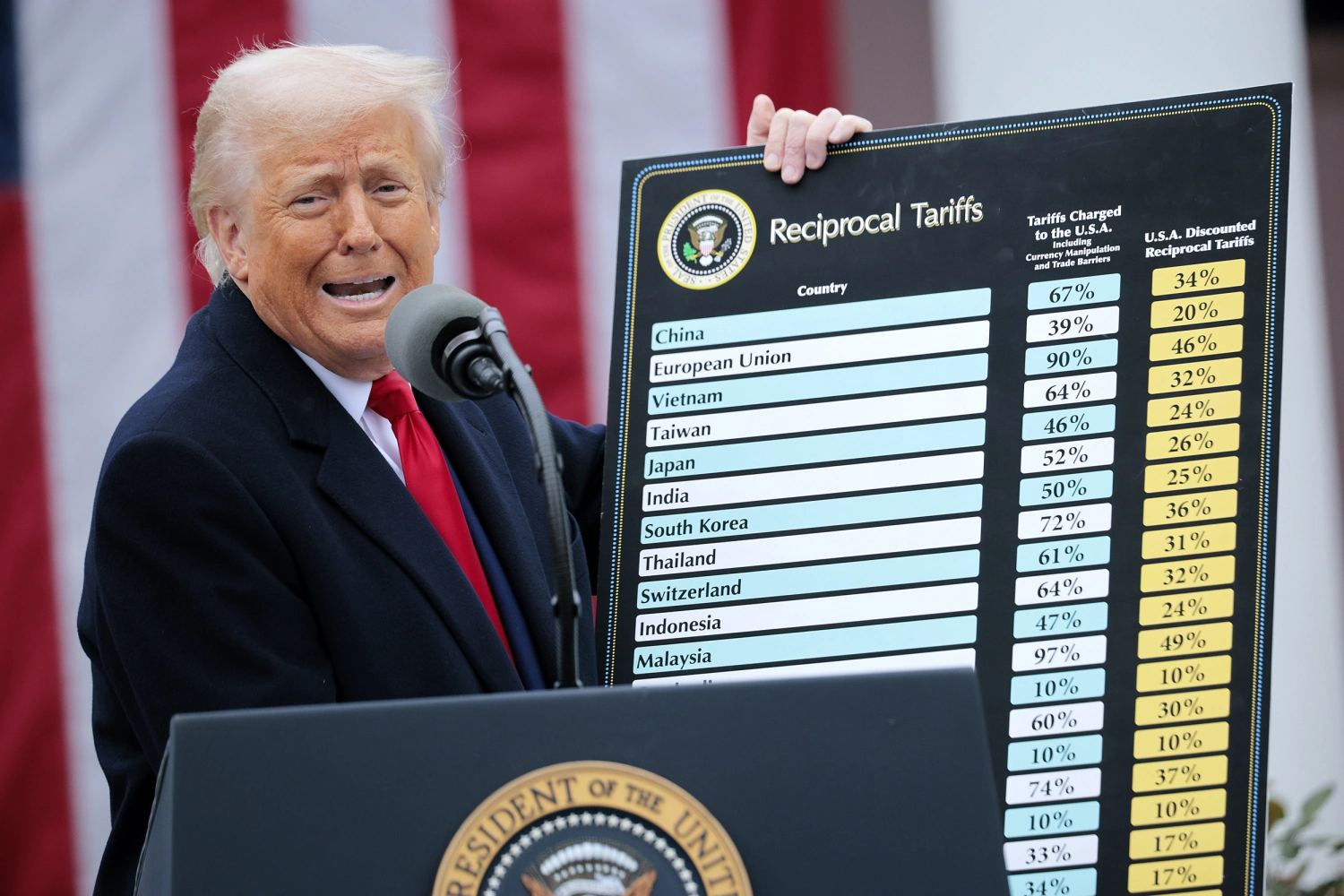
Even after the U.S. Supreme Court struck down President Donald Trump’s use of emergency powers to impose certain global tariffs, a wide range of duties on Canadian industries remain firmly in place.
The Court’s ruling ended the fentanyl-related tariffs that had been applied to Canada under the International Emergency Economic Powers Act. However, Trump quickly announced plans to introduce a new 10 per cent global tariff under Section 122 of the 1974 Trade Act — a measure that can last up to 150 days without Congressional approval. It remains unclear whether that temporary tariff would be layered on top of the existing sector-specific duties.
Despite the legal setback on one front, several major tariffs imposed under Section 232 of the Trade Expansion Act of 1962 continue to affect key Canadian industries.
Steel remains one of the hardest-hit sectors. Trump initially imposed a 25 per cent tariff on steel imports, citing national security concerns. Last June, that rate was doubled to 50 per cent. The scope of the steel tariffs was also expanded to cover the steel content in additional consumer goods, including dishwashers, refrigerators, washing machines and freezers.
Aluminum imports have faced a similar trajectory. Originally set at 25 per cent, aluminum tariffs were increased to 50 per cent last June, again under the justification of national security.
Automobiles have also been targeted. A 25 per cent tariff was placed on finished vehicles under Section 232. However, Canada benefits from a CUSMA exemption because of the highly integrated North American auto industry. As a result, only the non-American components of Canadian-made vehicles are subject to the duty. While auto parts tariffs were imposed on most countries, Canadian auto parts that comply with CUSMA have not been subjected to those duties.
Copper imports were hit starting last August, when a 50 per cent tariff was introduced. Canadian producers received some relief, as raw copper materials are exempt from the measure.
The lumber industry has also felt the pressure. Last October, Trump imposed a 10 per cent tariff on softwood timber and lumber. That move compounded existing trade tensions after the U.S. Commerce Department sharply increased countervailing and anti-dumping duties on Canadian lumber earlier in the year, pushing total combined duties significantly higher.
Furniture manufacturers have been impacted as well. Imports of upholstered wooden furniture, cabinets and vanities were subjected to 25 per cent tariffs beginning last October. A planned increase scheduled for January was later paused.
Heavy-duty and medium-duty trucks face a 25 per cent tariff imposed last November. As with automobiles, Canada benefits from a CUSMA carveout, meaning only non-American components are affected.
In the technology sector, Trump introduced a 25 per cent tariff in January on a limited range of semiconductor imports, adding further complexity to cross-border supply chains.
Beyond these active measures, the administration has floated numerous additional tariff threats. Trump previously threatened to impose 100 per cent tariffs on certain pharmaceuticals, though those duties were never implemented. Commerce officials indicated the delay was intended to allow time for negotiations with major pharmaceutical companies.
Other sectors have also been placed under review or investigation for potential tariffs, including commercial aircraft and jet engines, integrated circuits, medical equipment, critical minerals, semiconductors, robotics, industrial machinery, unmanned aircraft systems and wind turbines.
Canada has also been singled out in some high-profile threats. Trump warned of a potential 100 per cent tariff if Ottawa were to strike a trade deal with Beijing, and floated a 50 per cent tariff on Canadian aircraft until American-made Gulfstream jets receive certification. Neither of those proposals has materialized.
While the Supreme Court ruling removed one layer of tariffs, Canadian industries continue to face significant duties across steel, aluminum, forestry, manufacturing and technology sectors. With additional investigations and temporary tariffs in play, uncertainty remains a defining feature of the cross-border trade relationship.