

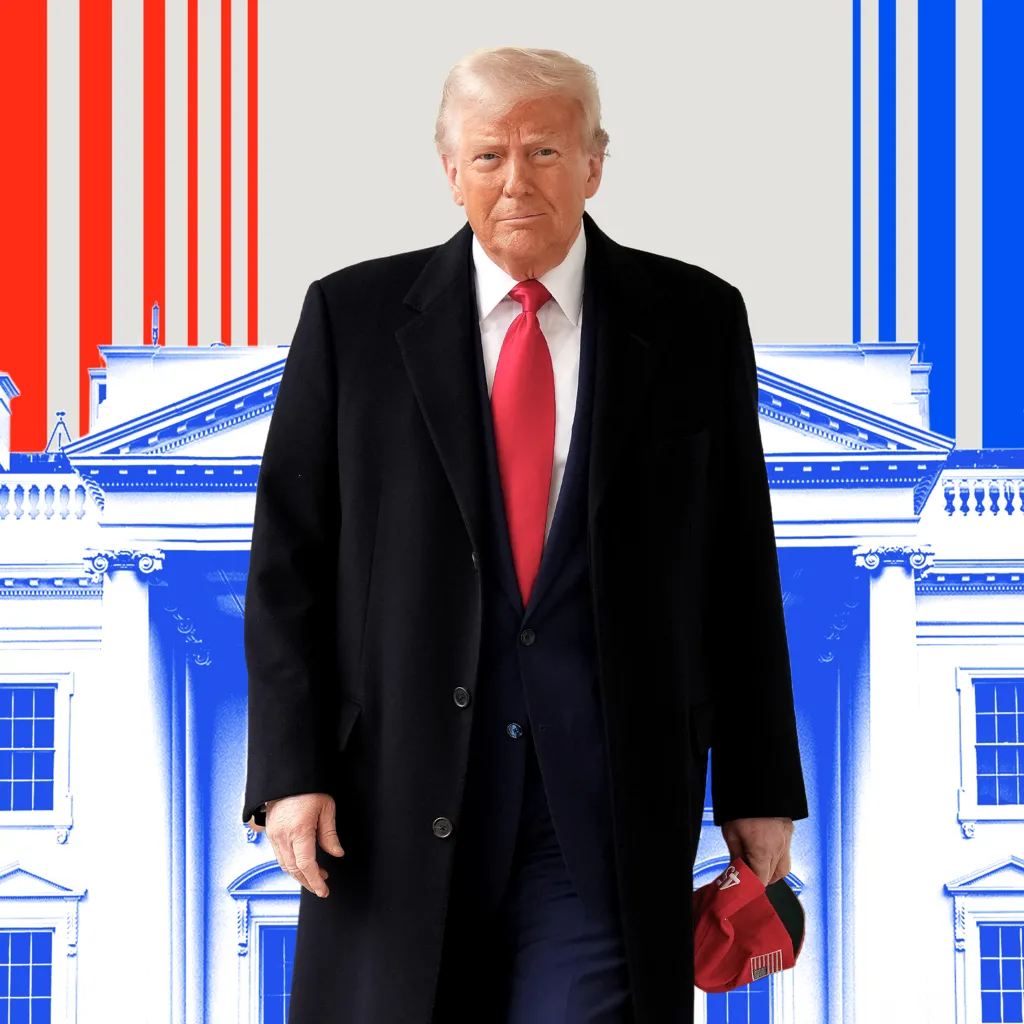
In a whirlwind first 100 days of his second term, President Donald Trump has reshaped the American government and society at a pace few anticipated, unleashing sweeping changes that have touched nearly every corner of American life.
Trump’s presidency, powered by a flurry of executive actions, dramatic public statements, and aggressive policy shifts, has been celebrated by supporters as proof of a leader delivering on promises with unprecedented speed. Critics, however, warn he is doing irreparable harm to institutions, overstepping executive powers, and fundamentally altering the presidency itself.
From early moments, the administration has aggressively challenged the traditional balance of powers. Vice-President JD Vance’s statement that “judges aren’t allowed to control the executive’s legitimate power” sparked a constitutional firestorm, with the White House moving to strip Congress of spending authority and clash repeatedly with the courts. While some judicial rulings have blocked presidential actions, Trump’s administration has pushed the boundaries of executive authority to new extremes.
Meanwhile, the government itself is being rapidly dismantled. Elon Musk, leading the new “Department of Government Efficiency,” has slashed budgets and closed agencies like USAID, wielding symbolic and literal chainsaws against federal bureaucracy. Though framed as a war on waste, the cuts have raised alarm over potential impacts on essential services such as Social Security, veterans’ benefits, and healthcare.
Trump’s economic agenda, while initially welcomed on Wall Street, has sparked financial turmoil. A surprise announcement of sweeping tariffs sent global markets crashing, mortgage rates soaring, and consumer confidence plummeting. Although Trump continues to promise a resurgence in American manufacturing, experts warn of an impending recession.
On immigration, Trump’s crackdown has been forceful and swift. Deportations have surged, including controversial transfers of detainees to prisons abroad. Civil rights groups accuse the administration of sweeping up innocent migrants without due process. Despite concerns, a majority of Americans still back tougher border measures, boosting Trump’s standing among his base.
The president’s war against elite institutions has also intensified. Harvard University and other academic giants have launched legal battles against the administration’s efforts to cut federal funding over alleged political bias. Trump has expanded this campaign to media companies and law firms, using federal contracts as leverage. Even corporations are under pressure to align with the administration’s ideological goals.
Efforts to dismantle diversity, equity, and inclusion (DEI) initiatives across government and the private sector have accelerated under Trump’s directive. While popular with segments of the electorate, the anti-DEI purge has had unintended consequences, including historical erasures at Arlington National Cemetery and missteps in Pentagon records.
Despite the sweeping changes, questions remain about their permanence. Without legislative backing, many reforms could be undone by future administrations. Trump’s narrow Republican majorities in Congress will soon try to codify parts of his agenda, but success is uncertain, and upcoming midterm elections could flip control to Democrats determined to investigate and reverse his actions.
While Trump’s second term has begun with a dramatic show of political force, it remains to be seen whether the first 100 days will be a lasting transformation — or simply a volatile prelude to further national division.