

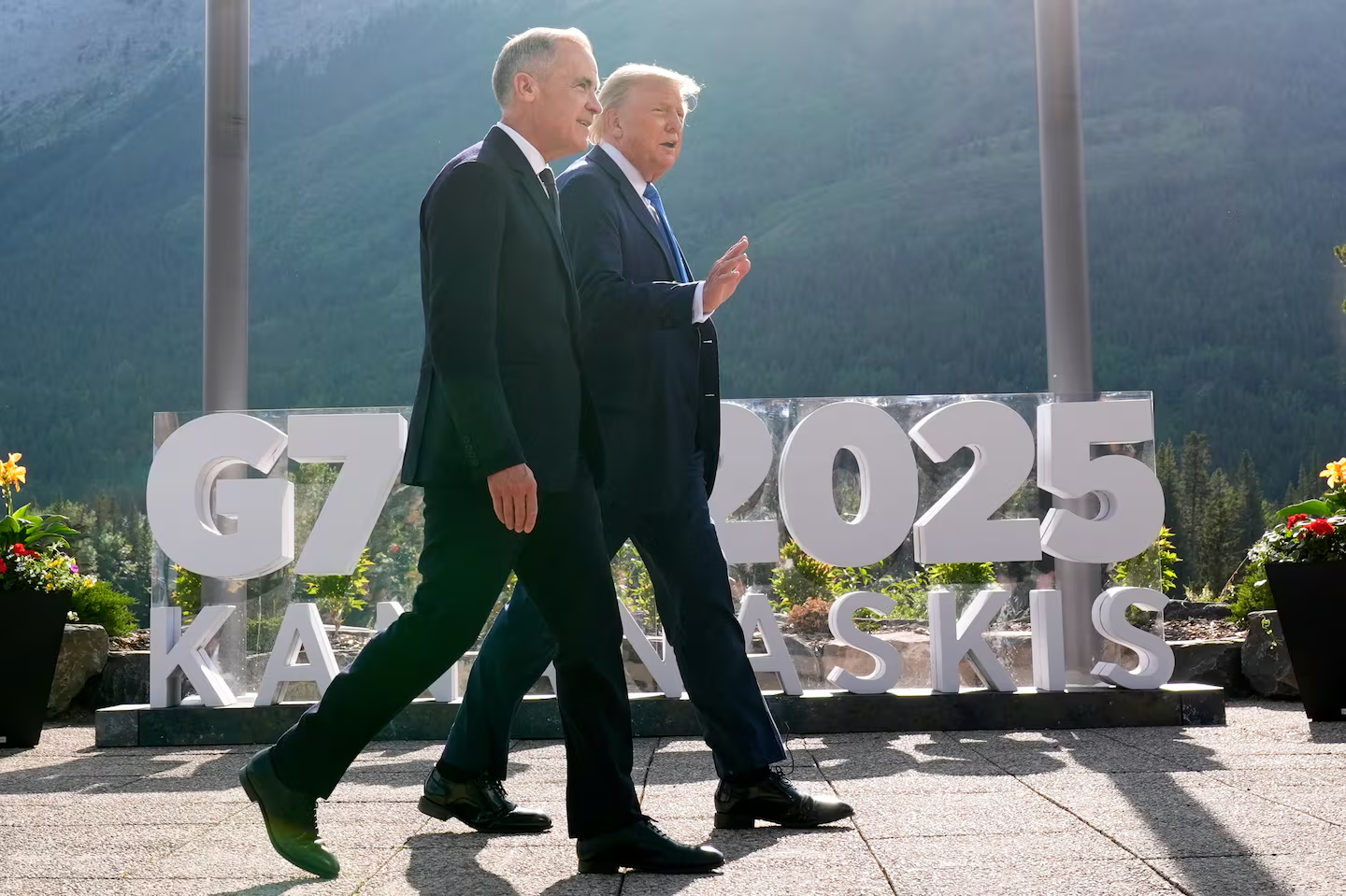
The world’s attention may have been drawn to Donald Trump’s theatrical return and abrupt exit from the G7 Summit in Kananaskis, Alberta, but behind the spectacle, it was Prime Minister Mark Carney who quietly walked away with a major diplomatic and political victory.
Hosting his first G7 as Canada’s newly elected leader, Carney faced a daunting international landscape: a deepening war in the Middle East, Russia’s aggression in Ukraine, and the unpredictable presence of a second-term U.S. President known for his disruptive style and harsh economic policies. Yet amid these tensions, Carney managed to elevate Canada’s standing while carving out a moment of strategic success that defied expectations.
Despite Trump dominating headlines—criticizing former leaders, reiterating grievances about Russia’s removal from the G8, and dropping provocative claims about the origins of the war in Ukraine—the summit delivered a surprise: Carney and Trump announced a commitment to pursue a bilateral trade deal within 30 days. It was a remarkable shift in tone between two leaders who began their relationship with starkly opposing views on tariffs and trade.
According to a statement from the Prime Minister’s Office, the two agreed to collaborate on key issues including critical minerals, border security, and drug smuggling. The symbolism wasn’t lost on observers either. Trump wore a lapel pin bearing both the American and Canadian flags, a rare conciliatory gesture that signaled an openness to reconciliation. For Carney, who had come under fire for Canada’s economic vulnerability to U.S. tariffs, this unexpected breakthrough offered breathing room and a possible path forward.
The G7 gathering also drew major global figures—from UK Prime Minister Rishi Sunak and Japan’s Fumio Kishida to India’s Narendra Modi and Mexico’s Claudia Sheinbaum. Even Ukrainian President Volodymyr Zelenskyy, a frequent Trump critic, sought face time with the U.S. leader. But in a summit where every leader jockeyed for Trump’s attention, it was Carney who emerged with the momentum.
Trump’s presence stirred mixed reactions. His criticism of past U.S. and Canadian leaders for Russia’s exclusion from the G8 and his claim that it triggered the Ukraine war were met with disbelief. Still, the promise of a U.S.-Canada trade deal sparked optimism across both countries’ business communities. The two leaders remain firm in their positions—Trump asserting his fondness for tariffs, and Carney pushing for their removal—but the willingness to negotiate signals a shift from confrontation to cautious collaboration.
Carney further moved the needle by supporting Trump’s “Golden Dome” missile defense program and announcing a boost in Canadian defense spending. These overtures appeared to resonate with Trump and helped cement a working relationship that could lead to the most significant trade reset in recent memory.
Despite the time crunch—30 days to iron out complex trade issues—Carney’s ability to earn Trump’s respect may prove to be the edge Canada needs. The PM not only stood his ground but leveraged strategic gestures to bring the two nations back into conversation after years of strain.
Beyond trade, Carney scored a win on the diplomatic front. G7 leaders agreed to a joint statement calling for de-escalation in the Israel-Iran conflict, a show of unified resolve made possible under his watch. With Trump departing early and unexpectedly, it was Carney who filled the vacuum and guided the summit to a constructive close.
For Carney, Kananaskis was never just a backdrop for photos—it was a calculated opportunity to reposition Canada as a global convener and problem-solver. In 48 hours, he redefined Canada’s role on the world stage, reopened vital dialogue with a volatile neighbor, and helped steer G7 consensus on key global crises.
While Trump may have drawn the cameras, it was Carney who delivered the leadership—and the results.