

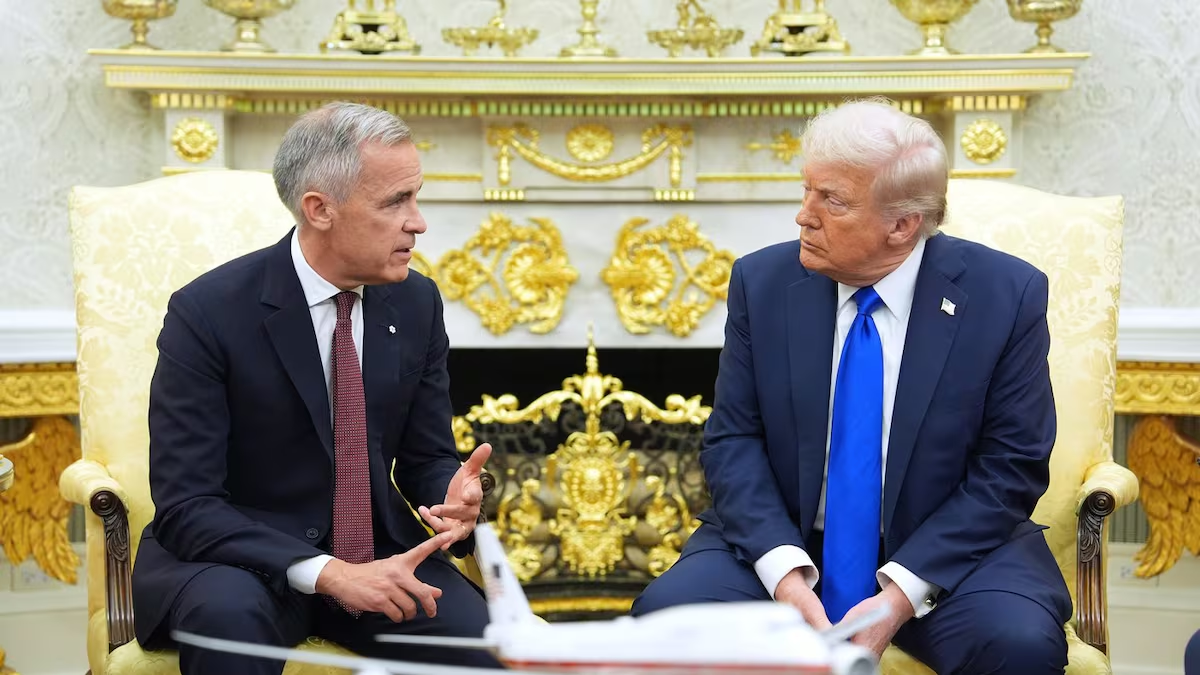
Washington, D.C. -Prime Minister Mark Carney’s latest high-stakes meeting with U.S. President Donald Trump ended without a breakthrough on tariffs, even as Trump once again made headlines by suggesting a “merger” between Canada and the United States.
The two leaders met for two and a half hours at the White House on Tuesday, accompanied by senior cabinet officials and top diplomats, as part of ongoing efforts to renegotiate a new economic and security framework. It was their second in-person meeting since May, amid a protracted trade dispute that has strained cross-border relations.
Speaking to reporters afterward, Canada–U.S. Trade Minister Dominic LeBlanc described the talks as “successful,” “positive,” and “effective,” but offered no concrete progress on tariff relief. “We are leaving Washington very much with the sense that the Trump administration is ready to structure something on steel and aluminum that would be in the economic and security interests of both countries,” he said, adding that he remains “more optimistic today than yesterday.”
Ahead of the meeting, Trump signaled optimism, telling reporters: “I think they’re going to be very happy.” He described Carney as “a very competitive person” and said the talks would cover a range of issues, including trade and the conflict in Gaza.
Trump’s “Merger” Remarks Resurface
During the Oval Office press availability, Carney once again called Trump a “transformative president,” listing his achievements during his second term. Trump interjected: “And the merger of Canada and the United States.”
The president’s repeated hints at annexation — describing Canada as the would-be 51st state — have dominated headlines for months. He has often threatened to use “economic force” to achieve his ambitions, although no serious steps toward such a scenario have been taken.
“From the beginning, I’ve liked him, and we’ve had a good relationship,” Trump said of Carney. “We have some natural conflict, but we will probably work that out. But we’ve had a very strong relationship.”
Tariffs Still the Sticking Point
The meeting took place against the backdrop of a months-long trade war. Since February, the Trump administration has imposed sweeping tariffs on Canadian goods, initially citing border security. Those measures were later narrowed to apply to products not covered by the Canada–U.S.–Mexico Agreement (CUSMA), but new levies have since been layered on steel, aluminum, copper, and autos.
Trump has also announced forthcoming tariffs on lumber and medium- and heavy-duty trucks.
Canadian officials were “cautiously optimistic” that the Washington talks could produce movement on steel and aluminum tariffs, but LeBlanc tempered expectations. “I didn’t have an expectation of a detailed deal today,” he told reporters. “People understandably want to see results, and believe me, so do we. We’re going to continue that work.”
Carney Faces Pressure at Home
Trump praised Carney as a “great prime minister” and “world-class leader,” though he also joked, “He’s a nice man, but he can be nasty.” When asked why a deal hadn’t yet been reached, Trump quipped, “Because I want to be a great man, too.”
Back in Canada, political pressure on Carney is mounting. Conservative Leader Pierre Poilievre issued a public letter urging him to “negotiate a win” in Washington, accusing the government of missing deadlines and failing to deliver tariff relief. “If you only return with excuses, broken promises and photo ops, you will have failed our workers, our businesses and our country,” Poilievre wrote.
Ontario Premier Doug Ford also weighed in, calling the tariffs “a shame” and warning of economic consequences for the U.S. “You rely on aluminum from Canada to build military and aerospace and manufacturing,” Ford said. “The way to reduce inflation and create more jobs is to make a deal with Canada.”
Ford likened the trade standoff to “a kid going in the schoolyard and getting punched in the face every day,” urging Ottawa to “hit back” if a deal isn’t reached.