

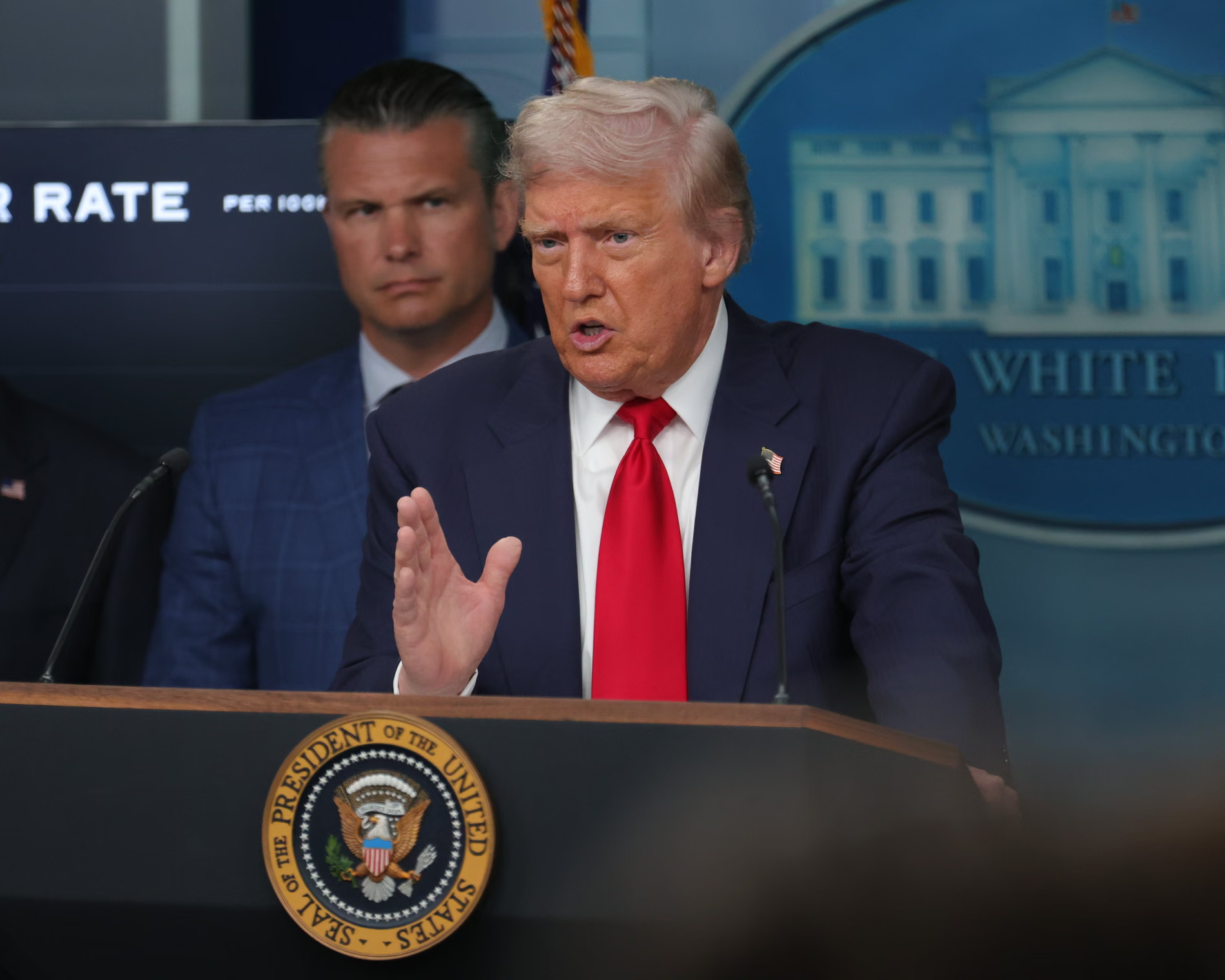
President Donald Trump is pushing ahead with an aggressive law-and-order agenda in Washington, D.C., despite data showing violent crime in the city is at a 30-year low. Speaking at a press conference Monday, Trump described young people “on a rampage” and boasted, “They fight back until you knock the hell out of them … it’s the only language they understand.”
Critics say the president is prioritizing the political optics of force over measured, data-driven crime reduction. Civil rights advocates argue that federalizing the D.C. police force under the guise of an emergency—when crime has been steadily falling—opens the door to abuse, harassment, and unchecked authority. Ryan Downer of the Washington Lawyers Committee for Civil Rights called it “an invitation for abuse” and warned that over-policing often increases police violence, not public safety.
The president’s control over D.C. law enforcement is unique; felony cases are prosecuted by a federally appointed U.S. attorney—currently former TV judge Jeanne Pirro—rather than an elected local prosecutor. This means Trump can pardon convictions, a power already exercised in the aftermath of January 6. Advocates like Monica Hopkins of the ACLU say the move highlights the need for D.C. statehood to secure genuine local control.
The political backdrop is clear: violent crime in D.C. is higher than the national average but well below the most violent U.S. cities, and incidents have been declining for two years. Yet Trump has leaned on outdated 2023 figures to justify hardline measures, while issuing executive orders to roll back federal oversight of police and encourage “high-impact” tactics.
In April, Trump ordered the withdrawal of support for consent decrees on police brutality and moved to unleash local forces. His approach was tested in Los Angeles earlier this year, when he sent nearly 5,000 National Guard troops to guard federal property against the wishes of Governor Gavin Newsom, triggering a legal battle.
D.C. residents have seen this playbook before—most notably during the 2020 protests, when park police used chemical irritants, rubber bullets, and baton charges to disperse demonstrators in Lafayette Park. That incident led to an ACLU lawsuit and policy changes in 2022, but Trump appeared to dismiss those reforms, telling reporters Monday: “You spit and we hit … and they can hit real hard.”
Advocates warn that while the data shows D.C. is safer, the administration’s rhetoric and tactics suggest a willingness to impose similar crackdowns in other cities. “D.C. is being done now,” Hopkins said. “But he is looking at other cities … he can just move more swiftly with D.C.”