

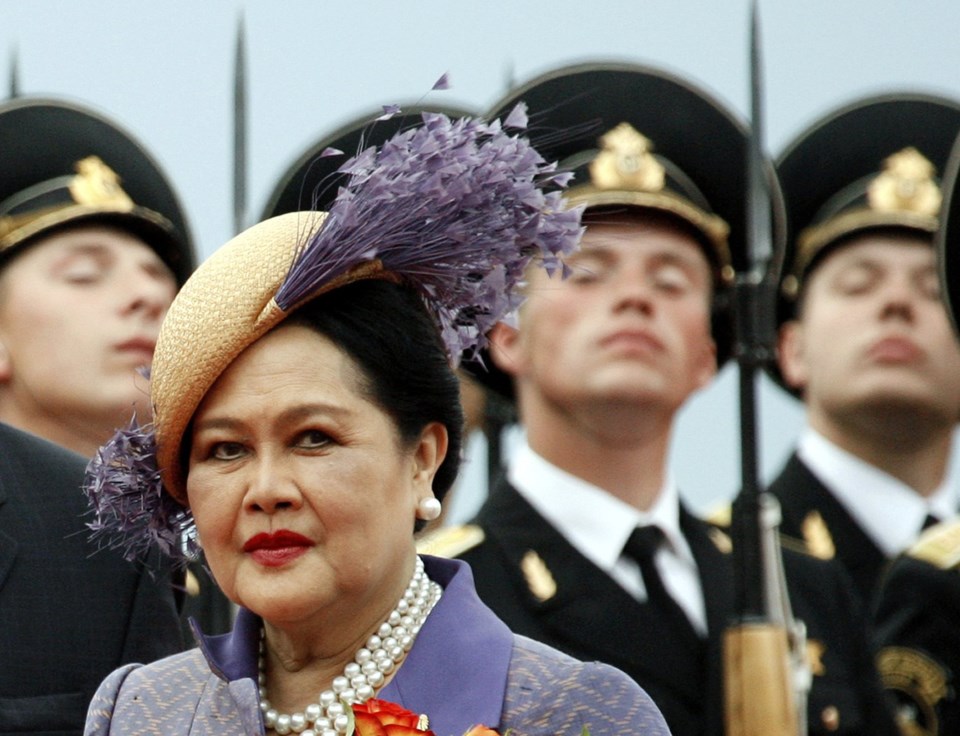
BANGKOK — Queen Mother Sirikit of Thailand, revered for her tireless work uplifting rural communities, preserving traditional crafts, and protecting the environment, passed away on Friday at the age of 93, the Royal Household Bureau announced.
According to the palace statement, Sirikit died at a Bangkok hospital after battling a blood infection since October 17. Despite intensive treatment, her condition did not improve. The Queen Mother had suffered a stroke in 2012, which left her largely absent from public life in recent years.
Her son, King Maha Vajiralongkorn, has ordered a state funeral with the highest honors and a year-long mourning period for members of the royal family and royal household staff. Across Thailand, flags will be flown at half-mast for 30 days, and civil servants will observe mourning for a year, Prime Minister Anutin Charnvirakul announced.
Outside Chulalongkorn Hospital, crowds of mourners gathered early Saturday, many tearful and dressed in black. “It is yet again another great loss for the whole nation,” said Maneerat Laowalert, 67, among those paying tribute. “The whole world seemed to stop when I heard the news.”
Sirikit, who was married to the late King Bhumibol Adulyadej (Rama IX) until his death in 2016, was long regarded as a symbol of grace, compassion, and service. Her portrait adorns homes, offices, and schools across Thailand, and her birthday, August 12, is celebrated nationally as Mother’s Day.
Born Sirikit Kitiyakara in 1932 into a noble family linked to the Chakri dynasty, she was educated in Thailand and later in France, where she met the young King Bhumibol while her father was serving as ambassador. Their courtship blossomed in Europe, and the couple married in 1950, vowing to “reign with righteousness for the benefit and happiness of the Siamese people.”
Over the decades, the King and Queen embarked on royal tours of rural Thailand, addressing issues from poverty and malnutrition to deforestation and opium addiction. Sirikit often traveled to remote villages, listening directly to people’s concerns. “We try to fill the gap between rural areas and the so-called civilized people in Bangkok,” she told the Associated Press in 1979.
Her SUPPORT Foundation, launched in 1976, became one of her most enduring legacies, helping thousands of rural artisans sustain traditional Thai crafts such as silk weaving, jewelry-making, and ceramics. She also championed environmental conservation, founding projects like Forest Loves Water and Little House in the Forest to promote reforestation and sustainable livelihoods.
While her later years were marked by declining health, Queen Sirikit remained an enduring presence in Thailand’s national consciousness — admired for her elegance, devotion to her people, and belief in the monarchy’s unifying role.
“Thailand needs an understanding monarch,” she once said. “At the call, ‘The king is coming,’ thousands will gather. The mere word king has something magic in it. It is wonderful.”
Her passing marks the end of an era for a royal matriarch whose life intertwined deeply with Thailand’s modern history — one defined by compassion, cultural pride, and steadfast duty to her nation.