

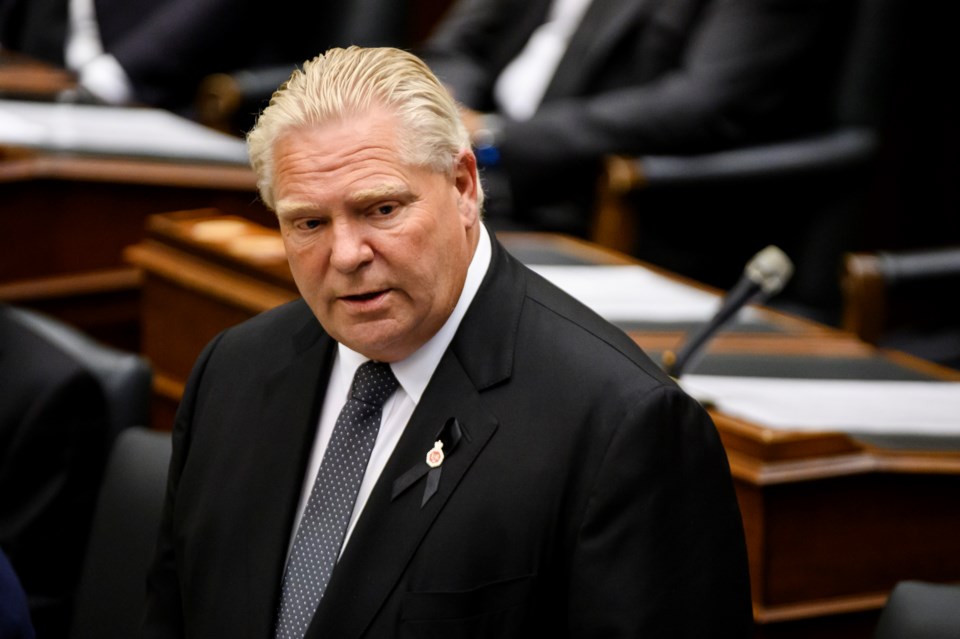
Ontarians may soon be heading to the polls, with Premier Doug Ford signaling the possibility of an early provincial election. Amid looming 25 per cent U.S. tariffs on Canadian goods threatened by President Donald Trump, Ford has argued that he needs a stronger mandate to respond effectively.
On Wednesday, Ford told reporters to “stay tuned” when asked if an election could be called soon. According to Ontario’s Election Act, an election must be called on a Wednesday, and voting would occur on the fifth Thursday after the writ drops. If Ford calls an election on January 29, voters would likely head to the polls on February 27 in all 124 ridings.
Ford has framed a potential election around the need for economic action to counter the impact of tariffs, which he called “devastating” for Ontario’s economy. He has hinted that billions in stimulus spending might be necessary, a move that would delay the government’s promise to balance the budget by 2026/27.
The premier may also want to capitalize on favorable polling numbers, with the PC Party currently leading its competitors.
If an election is called, Ford would lead the Progressive Conservatives for the third time, having secured majorities in 2018 and 2022.
- Marit Stiles, leader of the Ontario NDP, would be contesting her first election as leader, with the challenge of defending the NDP’s role as the official opposition while facing a resurgent Liberal Party.
- Bonnie Crombie, who became leader of the Ontario Liberals in December 2023, has been gaining momentum in the polls and is looking to rebuild the party from its current nine seats.
- Mike Schreiner, leader of the Ontario Green Party, would bring prior election experience, though his party currently holds just two seats in the legislature.
Ford is expected to center his campaign on addressing the tariff threats and stimulating the economy, but his government would also face criticism over its record, including:
- Controversial decisions such as the Ontario Place redevelopment and backtracking on building homes in the Greenbelt.
- Challenges in healthcare, COVID-19 recovery, and the opioid crisis.
The $200 cheques being mailed to Ontarians to offset the rising cost of living are also drawing attention. Opposition parties have criticized the rebates, which cost $3 billion, as a “vote-buying gimmick” in anticipation of an election.
Polling suggests Ford’s PC Party maintains a comfortable lead:
- A Liaison Strategies poll (Jan. 15-16) found the PCs with 41% support, followed by the Liberals at 32%, the NDP at 19%, and the Greens at 5%.
- A Leger survey (Jan. 17-19) showed an even bigger lead for the PCs, at 46% support, with the Liberals at 22%, the NDP at 19%, and the Greens at 7%.
These numbers suggest Ford could retain a majority government if an election were held today.
While the PCs currently lead in polls, holding an early election could come with risks, including:
- Heightened scrutiny of Ford’s government’s record after nearly seven years in power.
- Increased budget costs, with Ontario’s last election costing $145.3 million in 2022.