

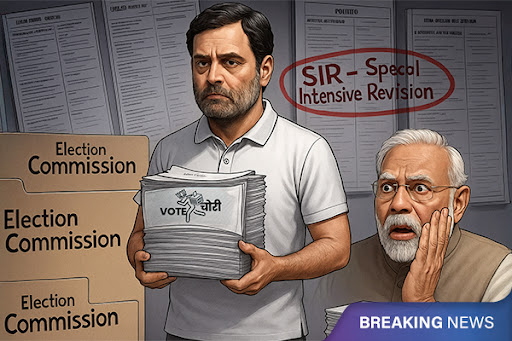
The political storm over alleged electoral fraud has deepened, with Opposition leader Rahul Gandhi escalating his “vote chori” (vote theft) campaign against Prime Minister Narendra Modi’s BJP and the Election Commission of India (ECI). Gandhi claims he possesses undeniable, “black-and-white” proof that mass voter deletions and manipulations have taken place, warning that his forthcoming “hydrogen bomb” revelation will directly expose who benefited — “and the nation will know who stole India’s votes.”
The stakes could not be higher. For Modi and the BJP, these allegations threaten not just their domestic standing but also India’s image on the global stage. For millions of young Indians facing unemployment, rising living costs, and shrinking economic opportunities, the controversy is adding fuel to frustration that the system itself is rigged against them.
llegations and Evidence So Far
Gandhi and Congress have presented several cases they say show deliberate manipulation:
- Aland (Karnataka): 6,018 voter deletions allegedly processed in suspicious batches, many using mobile numbers from outside Karnataka, targeting opposition-leaning booths.
- Rajura (Maharashtra): 6,800 “bogus” voter entries deleted after a complaint — almost double the margin of Congress’s loss.
- Mahadevapura (Bengaluru): Over one lakh duplicate or invalid entries flagged, with Rahul accusing the EC of withholding CCTV footage and critical data.
- Missing Logs & Data: Congress has produced letters from Karnataka CID showing repeated requests to the ECI for IP logs, OTP trails, and technical verification data, which it says remain unanswered.
“These are not isolated incidents — this is a pattern, a systemic theft of democracy itself,” Gandhi said. “And next, the evidence will show exactly who stood to gain.”
BJP and ECI Push Back
The Election Commission has rejected several of Gandhi’s claims as “incorrect and baseless,” insisting that deletions cannot be done online without due process. It has asked Gandhi to submit a sworn affidavit backing up his claims.
BJP leaders have accused Gandhi of running a smear campaign to delegitimize democratic institutions and explain away election defeats. “This is not about saving democracy — this is about saving Congress from political irrelevance,” one senior BJP spokesperson said.
The Coming “Hydrogen Bomb”
Gandhi’s promised revelation is expected to include:
- Technical logs showing time-stamped deletion requests.
- Data analysis showing patterns of deletions targeting Congress-leaning areas.
- Cases where voter roll manipulation exceeded the margin of victory.
- Evidence that key requests by investigators were ignored by the ECI.
Congress sources suggest that multiple states will be covered, turning this from a state-level issue into a national controversy.
Youth, Jobs, and Growing Political Frustration
Perhaps the most volatile impact could come from India’s youth — a demographic that represents over 65% of the population and is increasingly disillusioned.
Youth unemployment remains stubbornly high, with millions of educated graduates unable to find stable jobs. Rising costs of living, housing affordability issues, and a sense of shrinking opportunity have already fueled protests in some states. The perception that elections themselves may be compromised could push this frustration into anger against the ruling establishment.
“India’s young people are being told to work harder, skill up, hustle — but if they believe even their votes don’t matter, you could see a deep collapse of trust in the system,” said a Delhi University political science professor.
For Modi, who has long cultivated an image as a strong, development-focused leader, the risk is that this scandal could merge with the economic grievances of Gen Z and millennials. Rahul Gandhi is already reaching out to younger voters, urging them to “defend democracy” and “prevent vote chori.” If this narrative catches on, it could mobilize youth in ways that no opposition campaign has managed in years.
Global and Political Implications
Internationally, this controversy is beginning to attract attention from foreign media and watchdogs, who see it as a test for the health of India’s democracy. If Gandhi’s data proves credible, Modi’s standing as a global statesman could take a hit, complicating India’s diplomatic messaging as a democratic counterweight to authoritarian regimes.
Domestically, the BJP could face more difficult elections ahead. A narrative that the system is unfair could backfire, energizing the opposition and dampening the BJP’s appeal among first-time voters. The risk for Modi is not just a one-off controversy but a slow erosion of the moral authority that has been central to his dominance.
The Road Ahead
With Gandhi promising fresh disclosures in the coming days, and the ECI demanding legal proof, India is heading toward a high-stakes confrontation over the integrity of its elections.
If Gandhi delivers compelling evidence, the fallout could include judicial inquiries, mass protests, and renewed calls for electoral reform — potentially shaking Modi’s prospects for a third term. If the allegations fail to stand up, however, BJP may consolidate its position, framing the episode as an opposition stunt and using it to rally its base.
Either way, the controversy is exposing a generational fault line: a restless young electorate demanding jobs, fairness, and accountability — and willing to challenge even the most powerful leaders if they believe their future is being stolen along with their votes.