

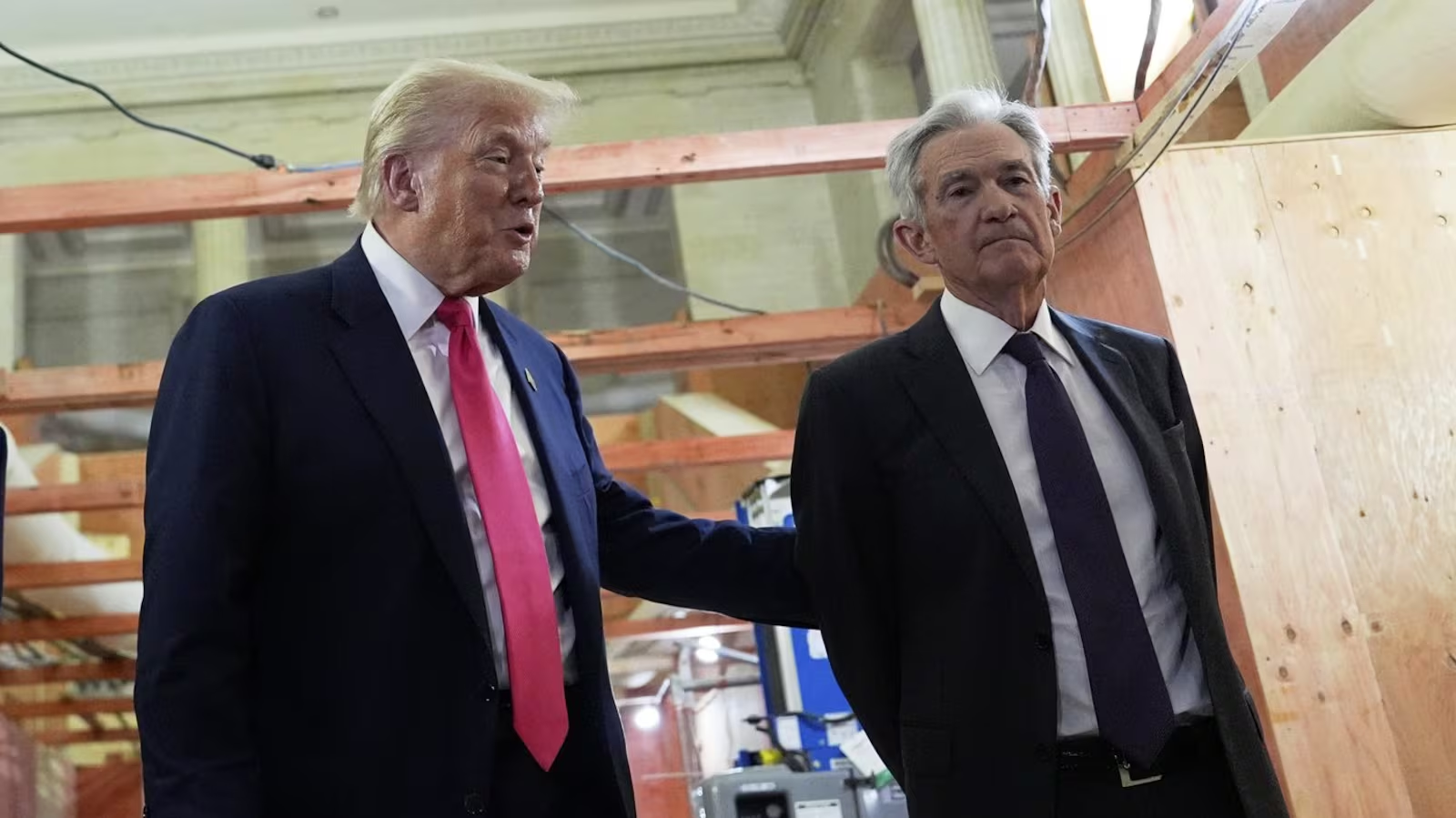
JACKSON HOLE, Wyoming — All eyes are on U.S. Federal Reserve Chair Jerome Powell as he prepares to deliver his Jackson Hole address, caught between investor expectations, presidential pressure, and stubbornly high inflation.
President Donald Trump has made no secret of his demand for steep rate cuts — as low as one per cent — while financial markets are betting on at least one reduction at the Fed’s September meeting. But mixed signals from the economy may push Powell toward a cautious middle ground.
On one hand, signs of softening in the job market have led two Fed governors to dissent at the last policy meeting in favor of cuts, arguing that risks to employment are mounting. On the other, inflation remains above the Fed’s two per cent target, with Trump’s import tariffs expected to push consumer prices even higher in the coming months.
Kansas City Fed President Jeffrey Schmid warned this week that cutting rates now could erode the central bank’s credibility. “The credibility of our anchoring in on that inflation number is very important,” he said, stressing that premature easing could feed inflationary expectations.
Powell is expected to outline a revised policy framework and may hint at a compromise: leaving the door open to a September rate cut without committing to a deeper round of easing. That approach may frustrate Trump and investors hoping for aggressive action but could help preserve the Fed’s inflation-fighting reputation.
Beyond economics, Powell’s speech comes in a highly charged political climate. Trump has repeatedly attacked the Fed chair, urged his resignation, and even floated removing him “for cause.” His administration has also escalated pressure on other Fed governors, including calls for Governor Lisa Cook to step down over contested mortgage filings — an allegation she has dismissed as political bullying.
Observers warn that the independence of the central bank, long considered a cornerstone of global financial stability, is at stake. William English, a former senior Fed official, said Powell has so far held the line: “The board and the Reserve Bank presidents are sticking to their guns. Congress created the Fed to maintain independence from the administration — it works as long as the rules aren’t changed.”
But with vacancies opening and Trump seeking to reshape the Fed’s leadership, analysts fear a “Trumpification” of monetary policy could arrive as early as 2026. That would tilt the central bank toward looser policy regardless of inflation trends, raising questions about the long-term stability of U.S. monetary governance.
For now, Powell’s words at Jackson Hole will be parsed for any signal — yes or no — on whether relief is coming soon for borrowers, or if inflation worries will keep rates higher for longer.