

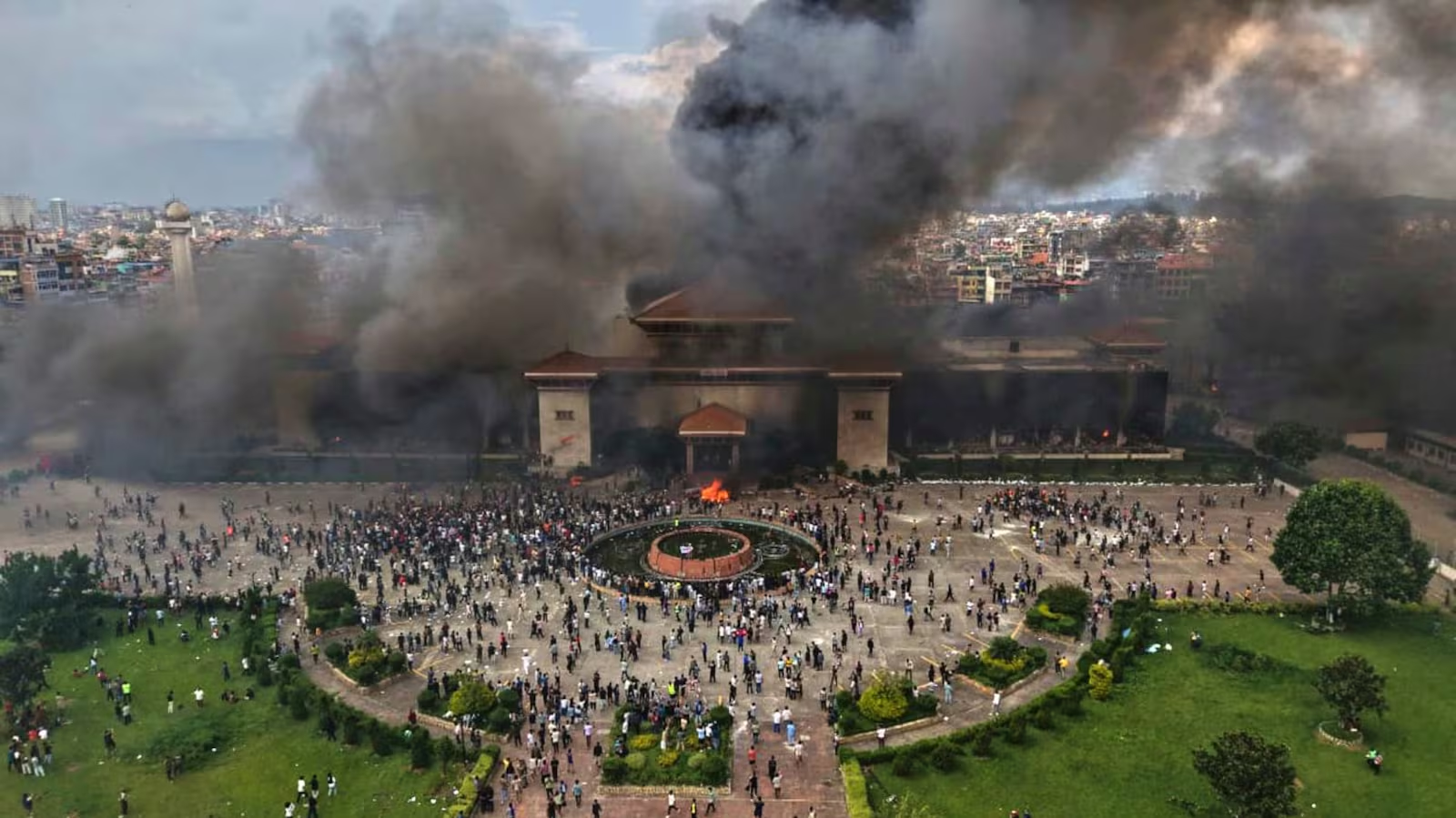
KATHMANDU — Nepal’s capital remained under lockdown on Wednesday as soldiers patrolled the streets, enforced curfews, and tried to restore order after violent protests over a social media ban and corruption engulfed the country. Tens of thousands of demonstrators stormed and torched government buildings, attacked political leaders, and clashed with security forces in scenes described as some of the worst unrest in years.
Armed troops guarded key intersections in Kathmandu, checking vehicles and warning residents about the strict curfew. The army, rarely mobilized in Nepal, had initially stayed in its barracks while police struggled to contain the chaos, but was forced into action after protests escalated. In a statement, the military said 27 suspected looters had been arrested, while soldiers fired into the air Wednesday to stop a jailbreak after prisoners set fire to guard houses and tried to flee the central jail.
The violence began earlier in the week, when young people outraged over the blocking of social media platforms — including Facebook, X, and YouTube — took to the streets. The government said the companies failed to register under new rules, but the ban triggered outrage. Police opened fire on crowds Monday, killing 19 people. Though the ban was lifted on Tuesday, the anger deepened, fueled by the deaths and widespread accusations of corruption within Nepal’s ruling class.
Prime Minister Khadga Prasad Oli resigned in the wake of the protests, but his departure has done little to calm the unrest. President Ram Chandra Poudel accepted his resignation and appealed for peace, tasking Oli with leading a caretaker government until a successor is named. Despite this, protesters continued to block roads, storm parliament, and set fire to homes and offices of senior politicians. Helicopters were seen airlifting some ministers to safety.
Videos circulating online showed former prime minister Sher Bahadur Deuba and his wife, current foreign minister Arzu Rana Deuba, being beaten and bloodied by demonstrators before being rushed to safety. Smoke still rose from parliament, the presidential house, the central secretariat, and the prime minister’s residence on Wednesday. Nepal’s largest media outlet, Kantipur publication, was torched, while luxury car showrooms and vehicles were reduced to ashes.
The protests, dubbed the “Gen Z uprising,” reflect deeper frustrations with entrenched corruption and nepotism. Many youths accuse political leaders’ families of living lavishly while unemployment runs rampant — nearly 20 percent last year, according to the World Bank. The government itself estimates that more than 2,000 young people leave the country every day in search of work in the Middle East or Southeast Asia.
The government’s push to regulate social media has been at the heart of the crisis. A proposed bill would force platforms to register locally and appoint liaison offices, which critics say is a tool for censorship and punishment of government opponents. While TikTok, Viber, and a handful of others complied, major platforms were blocked, sparking the wave of protests that have since morphed into a broader anti-government revolt.
With 19 people already killed and scores wounded, Oli has ordered an investigation into the police shootings and pledged compensation to families of victims. But for now, Nepal remains tense, its streets guarded by soldiers, its government in turmoil, and its youth demanding systemic change.