

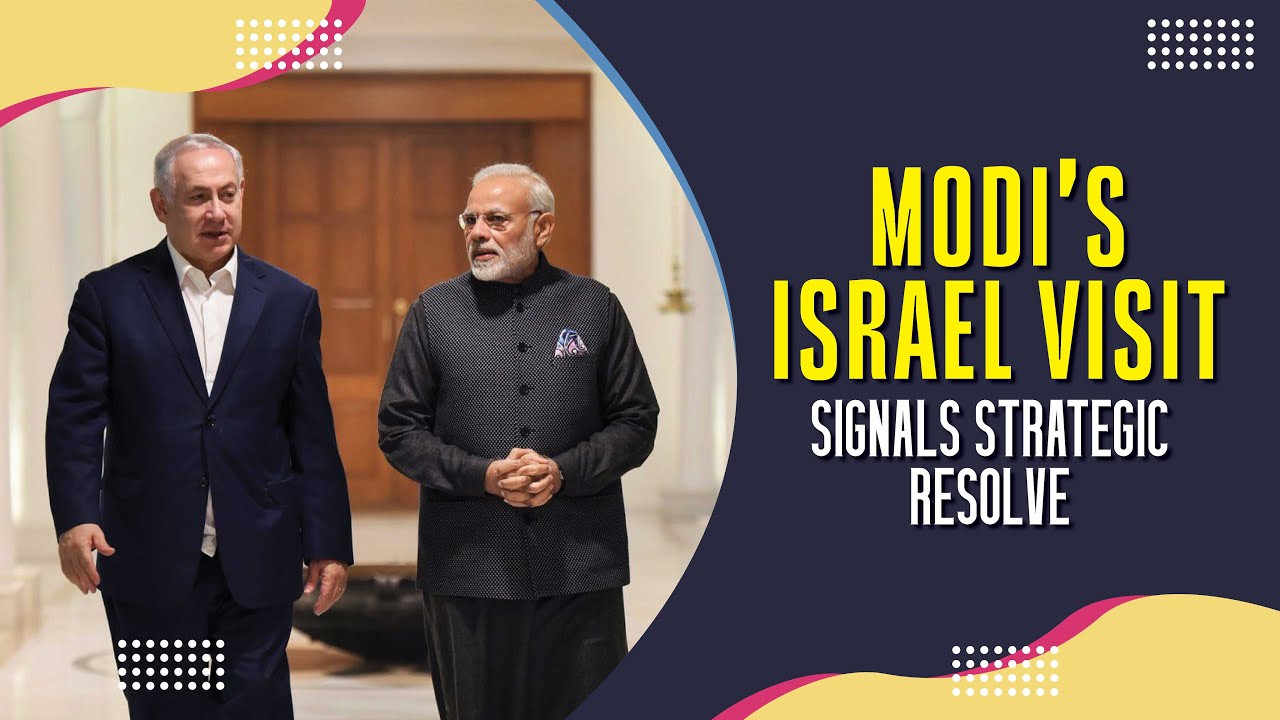
Indian Prime Minister Narendra Modi concluded a high-profile visit to Israel this week, marking one of the most strategically significant engagements between the two nations in recent years. The trip focused on defence cooperation, technology partnerships, trade expansion and regional security, while also placing India squarely within ongoing diplomatic discussions surrounding the Gaza conflict.
During meetings with Israeli Prime Minister Benjamin Netanyahu, both leaders reaffirmed what they described as a deepening strategic partnership. Defence collaboration remains at the core of bilateral ties, with Israel being one of India’s key suppliers of advanced military systems, surveillance technology and counter-terrorism expertise. Officials signalled new agreements aimed at joint development in defence manufacturing, cybersecurity and artificial intelligence.
In his address to the Israeli parliament, the Knesset, Modi emphasized cooperation against terrorism and highlighted shared democratic values. At the same time, he reiterated India’s support for a “just and durable peace” in Gaza, endorsing efforts toward a ceasefire and reconstruction process that balances Israel’s security concerns with humanitarian protections for Palestinians.
Purpose of the Visit
The primary objectives of the visit were threefold:
- Strengthening defence and security cooperation amid heightened regional instability.
- Expanding trade and technology partnerships, particularly in clean energy, agri-tech, water management and digital innovation.
- Positioning India diplomatically as a country capable of engaging both Israel and the broader Arab and Muslim world without formally aligning with any single bloc.
India’s outreach reflects its broader foreign policy strategy of “multi-alignment” — maintaining strategic autonomy while building strong ties across competing geopolitical spheres.
Results and Agreements
Preliminary outcomes include:
- Expanded defence procurement and co-production discussions.
- Increased collaboration in artificial intelligence, drone systems and cybersecurity.
- Commitments to boost bilateral trade and investment flows.
- Support for humanitarian reconstruction initiatives linked to Gaza, though without direct mediation commitments.
The visit also reinforced India’s growing role in Middle East diplomacy, particularly at a time when global powers are recalibrating their positions in the region.
Impact on Gaza Peace Talks
Modi’s endorsement of international efforts toward a Gaza ceasefire was seen as significant. While India is not directly mediating negotiations, its support adds diplomatic weight to calls for stability and reconstruction.
However, analysts note that real progress in Gaza depends primarily on negotiations between Israeli authorities, Palestinian representatives and regional stakeholders. India’s involvement is more symbolic and strategic — signaling support for a peaceful resolution while protecting its expanding partnership with Israel.
Reaction from the United States
The United States broadly welcomed the visit. Washington views closer India-Israel ties as aligned with broader strategic interests, especially in counter-terrorism and defence technology cooperation. Modi’s support for a U.S.-backed peace framework for Gaza was interpreted as diplomatic reinforcement of American-led efforts.
Reaction from Europe
European responses were measured. Several European governments continue to maintain close economic ties with India while navigating internal divisions over Israel’s military actions in Gaza. Modi’s balanced messaging — emphasizing both Israel’s security and Palestinian rights — appeared designed to avoid friction with European partners.
Reaction from the Muslim World
Reactions across the Muslim world were more mixed. While some governments maintained diplomatic restraint, public opinion in parts of the Middle East and South Asia criticized the optics of India strengthening ties with Israel amid ongoing tensions in Gaza.
At the same time, India’s longstanding energy partnerships and diaspora ties in Gulf countries appear stable. New Delhi has carefully avoided language that would alienate Arab partners, reiterating support for humanitarian relief and a two-state solution.
Political and Strategic Significance
Domestically, the visit strengthens Modi’s image as a global statesman actively shaping India’s foreign policy footprint. Internationally, it reflects India’s confidence in navigating complex geopolitical terrain — balancing relations with Israel, Arab nations, the United States and Europe simultaneously.
The trip underscores India’s growing weight in global diplomacy. Whether it materially influences Gaza peace negotiations remains uncertain, but it clearly signals that India intends to play a visible role in shaping regional stability while advancing its own economic and security interests.