

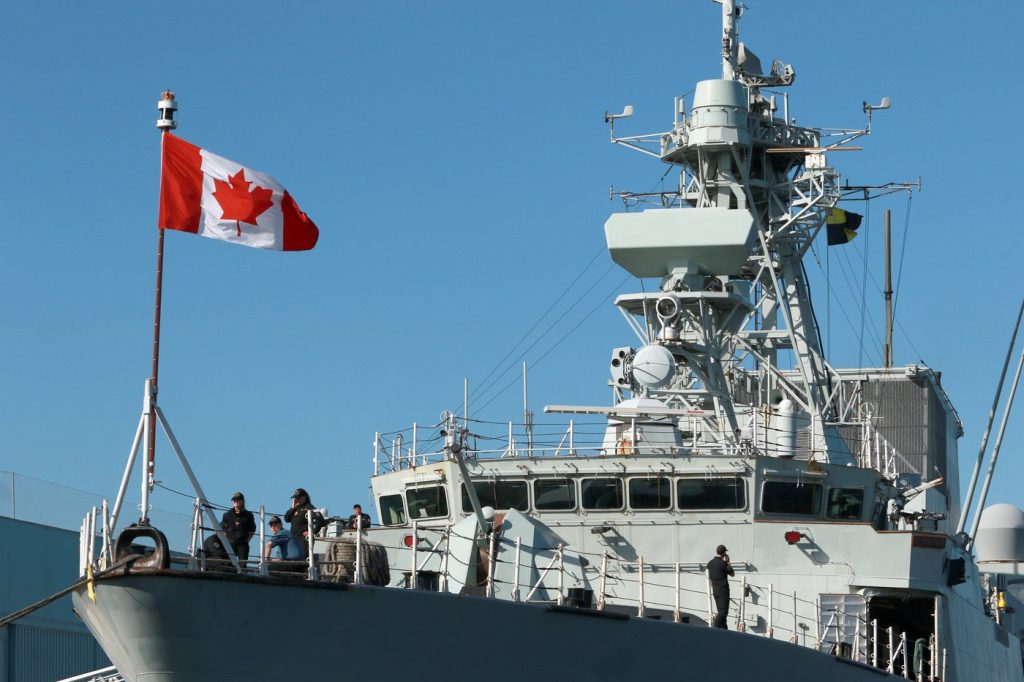
The Royal Canadian Navy is setting its sights on a new generation of warships that Vice-Admiral Angus Topshee insists must be “Canadian from the core.” Ottawa is in the early stages of planning a fleet of corvettes designed to defend the continent by the mid-2030s, with requirements that reflect Canada’s unique geography and security needs.
Topshee says the navy is seeking vessels that combine long range, significant combat power, and the ability to withstand Arctic ice—features that no ready-made international design can fully deliver. “We want to be beholden to no one,” he said. “Absolutely built in Canada, Canadian combat management system, Canadian bridge integration, Canadian acoustics—all of the systems that make that ship, turn it from a ship into a warship.”
The new corvettes are expected to be smaller than frigates but capable of mine-sweeping, Arctic operations, and combat duties, filling the gap between Canada’s lightly armed Harry DeWolf icebreaker patrol ships and its powerful River class destroyers. With the aging Kingston-class coastal defence vessels scheduled for retirement by 2029—eight of them coming out of service this fall—the navy faces both an operational gap and an opportunity to ease recruitment pressures by phasing out older ships.
Topshee acknowledged the challenge: northern European navies need ice capabilities but operate closer to home, while Australian fleets need range without ice-hardening. Only Canada requires both. “That package is probably going to be something that is a relatively unique Canadian requirement,” he explained.
The project is currently in “options analysis,” weighing technical trade-offs such as ship length and capability. Topshee noted that a vessel under 105 meters would simplify infrastructure needs, but if a larger design delivered significantly more combat power, he would consider it.
David Perry, president of the Canadian Global Affairs Institute, said the proposed corvette class would also serve as an essential training ground for crews, offering leadership and sea-time experience without immediately throwing sailors into high-threat environments aboard complex destroyers. He added that the timing aligns with Ottawa’s political priorities. “Given everything that the prime minister has said about ‘Buy Canadian,’ I can definitely see that direction being taken.”
With a procurement likely worth tens of billions of dollars, the corvette program is poised to become one of Canada’s most significant military projects after the long-anticipated submarine replacement. For Topshee, however, the goal is clear: ships that embody Canadian innovation, industry, and independence, ready to defend the Arctic and the Atlantic alike.