

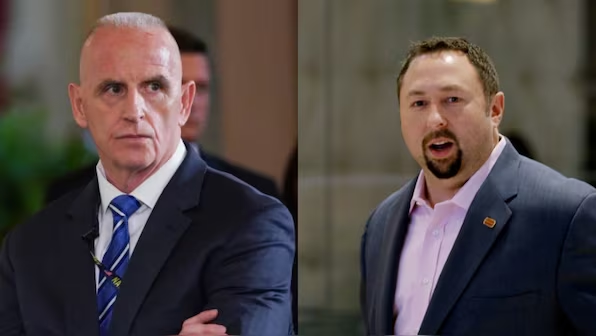
With Donald Trump back in the White House, India and Pakistan have turned to high-profile “Trump whisperers” to navigate Washington’s power circles — but with mixed results. India has hired Republican strategist Jason Miller’s firm, SHW Partners, in a $1.8 million deal to manage congressional relations and provide strategic guidance. Pakistan, meanwhile, pays $50,000 a month to Keith Schiller’s Javelin Associates, betting on the former NYPD detective’s two decades of personal loyalty to Trump.
Recent events suggest Schiller’s personal access may be outpacing Miller’s political credentials. Pakistan’s army chief, Asim Munir, was invited to a White House luncheon — widely seen as a diplomatic win — while India faced a steep 50% tariff penalty tied to continued Russian oil purchases. Pakistan’s tariff rate stands at 19%, and Trump’s aides have publicly criticised India’s stance.
Trump’s preference for direct, personal diplomacy — golf outings, private calls, face-to-face engagement — contrasts with Prime Minister Narendra Modi’s more formal, team-led approach, which some say has cooled ties. Modi even declined a White House invitation on the day Pakistan’s military leader was hosted.
In Washington’s high-cost lobbying market, Miller offers political acumen and messaging discipline, while Schiller trades on trust and proximity. Yet success under Trump often hinges less on lobbying contracts and more on personal engagement with the president himself. For now, Pakistan appears to be gaining softer treatment on tariffs, while India’s investment in Miller has yet to deliver tangible wins.
The broader lesson: in a Trump-era capital where access is currency, traditional lobbying models are under strain, and the balance of influence between these two operatives could subtly shape South Asia’s diplomatic and trade landscape.