

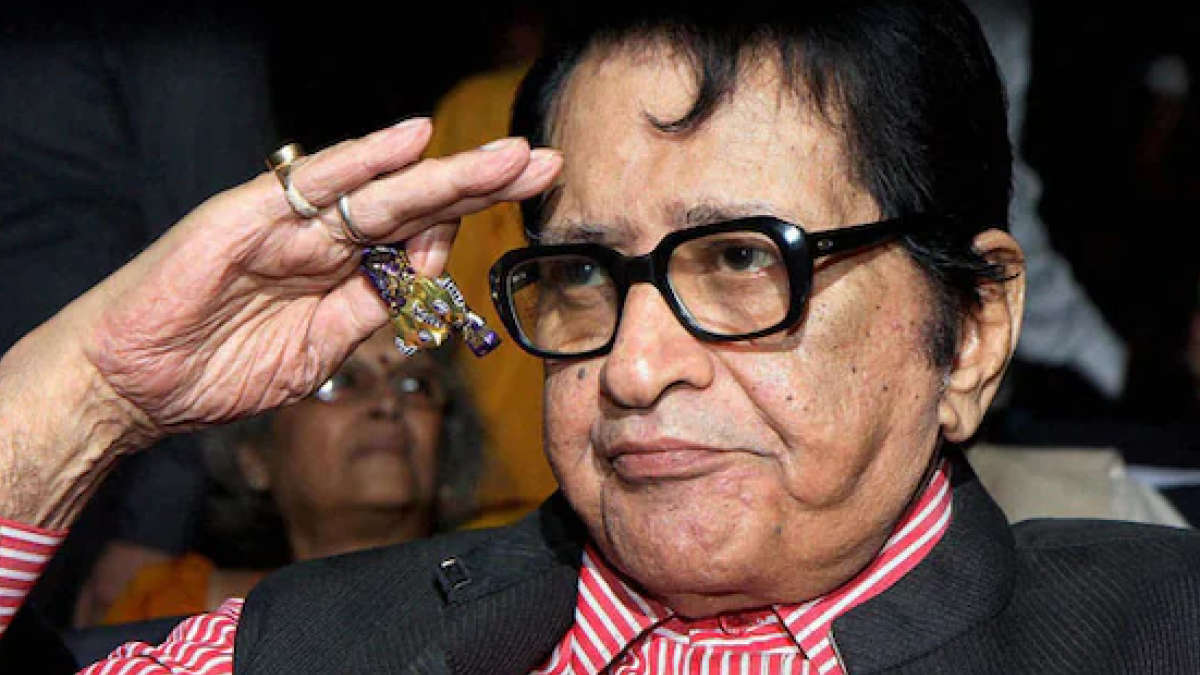
India mourns the passing of veteran actor, director, and national icon Manoj Kumar, who passed away today at the age of 87. The recipient of the prestigious Dadasaheb Phalke Award and multiple National Awards, Manoj Kumar leaves behind a legacy defined by cinematic brilliance, unwavering patriotism, and an indelible impact on Indian popular culture.
Born on July 24, 1937, in Abbottabad (now in Pakistan), Manoj Kumar’s journey in cinema spanned decades and defied the constraints of genre and era. Best known for his powerful patriotic roles, he earned the title “Bharat Kumar”—a name that became synonymous with his portrayal of national pride, cultural values, and unwavering love for India.
From Shaheed (1965), based on the life of Bhagat Singh, to Upkar (1967), set against the backdrop of the Indo-Pak War, to Purab Aur Paschim (1970) and Kranti (1981), Kumar’s work was rooted in the spirit of nationalism, yet always cinematic in scope. Songs like “Mere Desh Ki Dharti” became more than film music—they became anthems of a generation.
In an era when patriotism was a sentiment rather than a slogan, Manoj Kumar carried it as his identity, fearlessly voicing concerns even during politically sensitive times such as the Emergency. He challenged policy decisions like the early telecast of films on Doordarshan, yet remained largely respectful of leaders across party lines, embodying grace and principle.
Though known for his stirring monologues and heartfelt nationalistic messages, Manoj Kumar also brought grace and versatility to a wide range of roles, from suspense thrillers like Gumnaam and Woh Kaun Thi, to romantic and dramatic performances that showcased his deep emotional range.
Despite a slow start to his career in the late 1950s, he went on to redefine the contours of Indian cinema. His directorial works like Kranti not only broke box-office records but ignited nationalistic pride in generations of Indians.
In one of his last public appearances at the International Film Festival of India (IFFI) in Goa, Kumar questioned the nation’s obsession with global accolades like the Oscars and called instead for India to create its own standard—an award the world would aspire to win. That remark reflected not only his pride in Indian culture but also his vision for Indian cinema to stand tall globally on its own terms.
“Manoj Kumar was more than an actor—he was a movement. A man who personified patriotism, whose films reflected India’s soul, and whose contributions will forever echo in the history of Indian cinema.” — Statement from [Ministry of Information and Broadcasting/Relevant Film Body]
His signature gesture—covering his face with his hand—is now etched in the collective memory of Indian audiences. But more than the gesture, it is the values he stood for, the characters he brought to life, and the pride he instilled in a nation that will remain unmatched.
Manoj Kumar is survived by his family, countless admirers, and a body of work that will continue to inspire.
As the curtain falls on one of Indian cinema’s most iconic lives, the nation bows in respect to the thespian who lived and breathed the idea of India, both on-screen and off.