

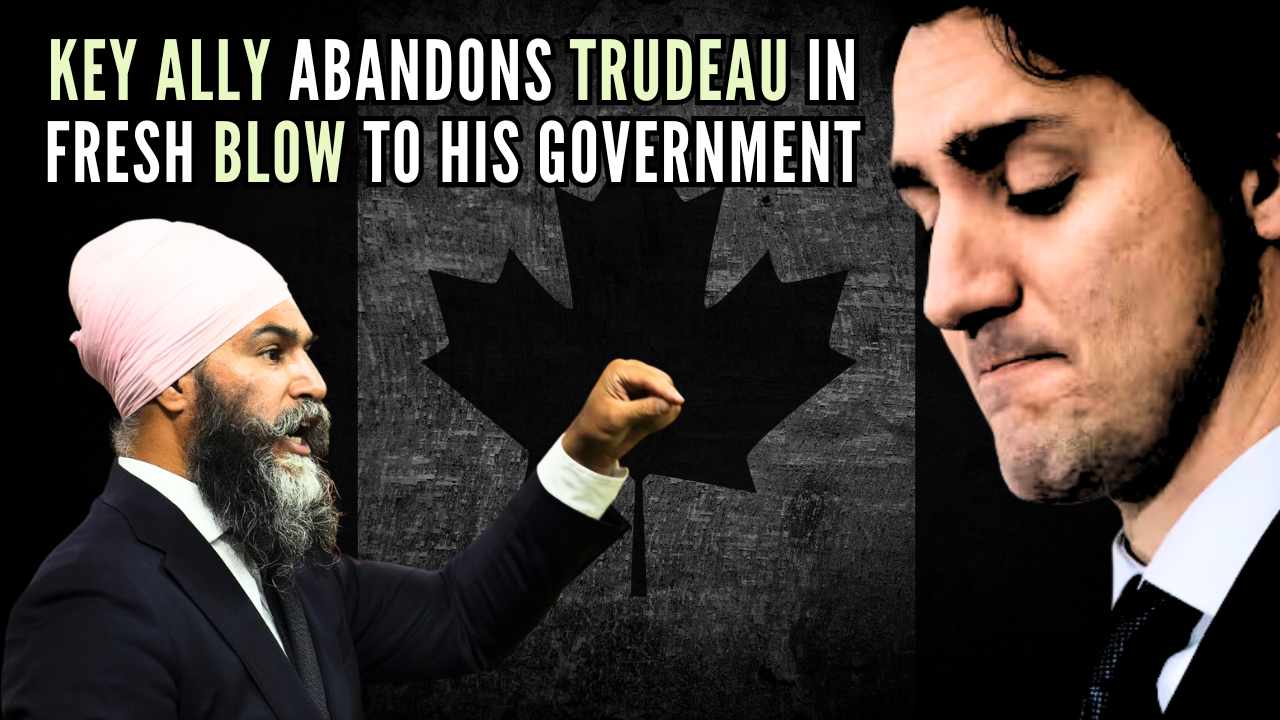
Canadian Prime Minister Justin Trudeau faces the potential collapse of his government as New Democratic Party (NDP) leader Jagmeet Singh announced plans to table a no-confidence motion in January, signaling a pivotal political showdown in the new year.
Singh, whose party has been a critical ally in supporting Trudeau’s minority Liberal government, made the announcement in an open letter, stating that the government’s time had run out. The motion will be presented when Parliament resumes after its winter break on January 27. If successful, this could trigger a federal election, potentially ending Trudeau’s nine-year tenure as prime minister.
The Liberals have been battered by voter discontent, stemming from a housing crisis, surging prices, and allegations of favoring corporate interests. Recent polls suggest Trudeau’s party could face a significant defeat to the opposition Conservatives, led by Pierre Poilievre, in a potential election.
“No matter who is leading the Liberal Party, this government’s time is up,” said Singh, citing dissatisfaction with Trudeau’s leadership.
The Bloc Québécois has already pledged its support for the no-confidence motion, leaving the Liberals with slim chances of survival if opposition parties unite.
The Conservatives, calling Trudeau’s leadership a “chaotic clown show,” have urged Governor General Mary Simon to recall Parliament for an expedited confidence vote. However, constitutional experts suggest such a move is unlikely before the scheduled parliamentary session.
“Justin Trudeau does not have the confidence of Parliament,” Poilievre told reporters, emphasizing the urgency of new leadership.
As Singh announced his intentions, Trudeau presided over a cabinet shuffle but avoided addressing reporters—a rare move that comes days after Finance Minister Chrystia Freeland’s abrupt resignation. Trudeau has also canceled his usual end-of-year media engagements, fueling speculation about his future.
Despite growing calls from some Liberal MPs for Trudeau to step down, his cabinet remains publicly supportive. Sources close to Trudeau suggest he may use the holiday period to decide his next steps, although his resignation would leave the party scrambling to find a new leader in time for an election.
While Singh’s decision to push for an election is seen as a bold gamble, it carries risks for the NDP. Polls indicate that both the Liberals and the NDP could suffer in an election dominated by surging Conservative popularity.
Darrell Bricker, CEO of polling firm Ipsos-Reid, described Singh’s move as a strategic attempt to position the NDP as the leading progressive choice. “Waiting gives Trudeau time to recover—acting now is Singh’s best shot,” Bricker said.
The timing of this crisis is critical, coinciding with U.S. President-elect Donald Trump’s inauguration in January, which could further complicate Canada’s political and economic environment.
With the Liberals facing internal dissent and Singh staking his party’s future on bold action, Canada is poised for a turbulent political chapter in the months ahead.