

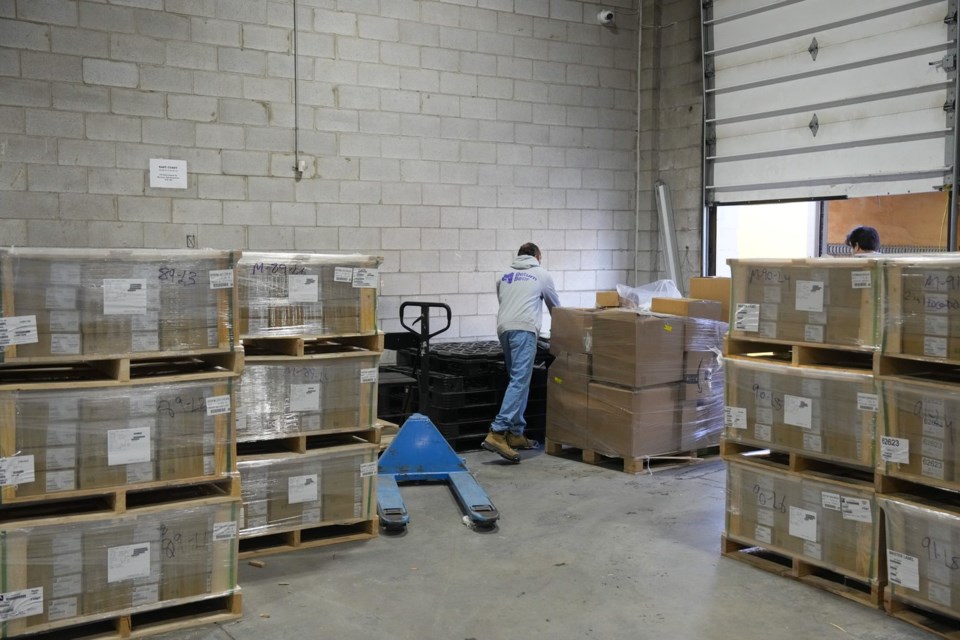
MISSISSAUGA, Ont. — As Christmas ends, activity is just beginning at a busy Mississauga warehouse preparing to handle thousands of unwanted holiday gifts.
At ReturnBear, a Canadian company that processes returns for retailers including Skims and Suzy Shier, workers scan boxes filled with clothing and merchandise as delivery trucks arrive in steady waves. The operation ramps up sharply after the holidays, when shoppers send back items for refunds.
“Right now we start at 8 a.m. and go to 5 p.m., but we’re going to push it from 9 a.m. to 9 p.m., and it will go on like that until February,” said Ahmed Saeed, head of operations.
Founded in 2021, ReturnBear is part of the rapidly growing “reverse logistics” industry — the business of moving returned goods back through the supply chain. Research firm Grand View Horizon values the market at more than US$882 billion, with projections topping US$3 trillion by 2033.
The growth is driven by generous return policies that have become standard in online shopping, said Elisa Swern, PwC Canada’s national consumer markets leader. Retailers now deal not only with ill-fitting clothes but also items used once, ordered in bulk sizes or colours, or returned damaged.
Each return can cost companies about $33 to process, according to ReturnBear, factoring in shipping, labour and restocking.
At the warehouse, workers open every package to verify contents, inspect items for damage and confirm sizes. Some returns turn out to be empty boxes or mismatched items, while others contain forgotten personal belongings. Items in good condition may be resold, repackaged and shipped directly to new customers, while flawed products are often donated to charity.
On a typical day, the Mississauga facility processes about 300 returns. During the January–February rush, ReturnBear’s five warehouses together handle roughly 1,200 items daily, a figure that grows each year as new clients sign on.
Retailers increasingly turn to third-party processors like ReturnBear rather than running their own return operations or selling goods to liquidators. Still, many are tightening policies to limit losses. Some have shortened return windows, added fees, or made certain items final sale.
Jenna Jacobson, director of the Retail Leadership Institute at Toronto Metropolitan University, said retailers face a “delicate balance” between controlling costs and keeping customers happy.
“You don’t want to be the retailer with very strict return policies, because shoppers may not come back,” she said.
ReturnBear’s rapid expansion reflects that reality. Since 2023, the company has grown from a small Toronto office to warehouses across the U.S., Europe and Australia, and is looking to expand further in Mississauga.
“We’re onboarding new brands literally every day,” Saeed said, noting one potential client alone could bring in 20,000 returns a month. “It definitely doesn’t feel seasonal anymore.”