

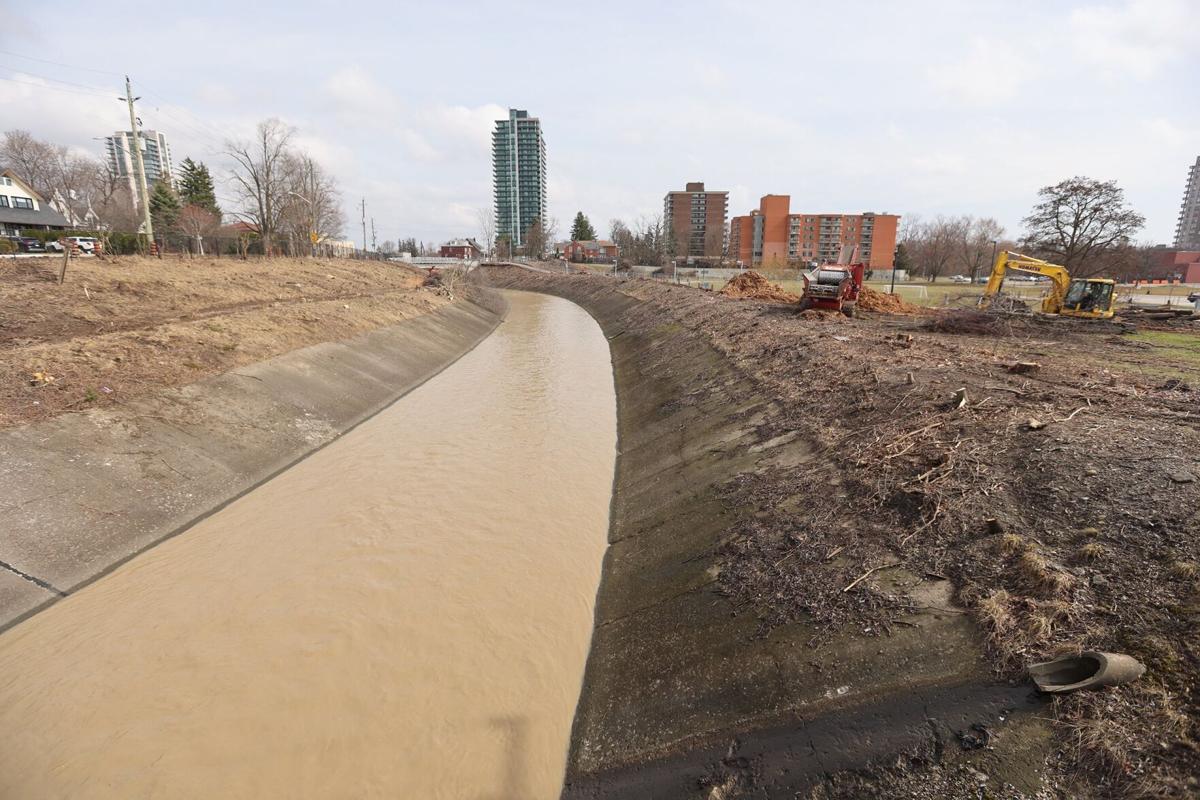
Residents in downtown Brampton are voicing frustration and sadness after hundreds of mature trees were cut down as part of the city’s massive Riverwalk Project currently underway along Etobicoke Creek.
The controversial tree removal is tied to the city’s long-awaited flood mitigation initiative aimed at protecting downtown Brampton from future flooding and unlocking development opportunities restricted for decades under provincial floodplain regulations.
Downtown Brampton remains designated as a Special Policy Area due to its history of severe flooding, including the devastating 1948 flood that led to the construction of a concrete bypass channel in the 1950s. The Riverwalk project is intended to deepen and widen that flood channel to reduce long-term flood risks and potentially remove development restrictions in the downtown core.
However, the environmental cost of the project has upset many local residents who say the once lush and heavily treed creek corridor has been transformed into what some describe as a “construction wasteland.”
Resident Rhonda Collis said the scale of the tree removal came as a shock, especially after seeing earlier project renderings that appeared to preserve much of the area’s natural canopy.
Looking out from her apartment overlooking the creek corridor, Collis described the landscape transformation as heartbreaking.
“It used to be a beautiful canopy of trees, and now it feels like an apocalypse,” she said, adding she had hoped the city would attempt to relocate at least some of the mature trees rather than remove them entirely.
Residents argue that while flood protection is necessary, environmental preservation and urban greenery should also have been prioritized.
Ward 1 and 5 Councillor Paul Vicente acknowledged the concerns and confirmed that instead of attempting costly tree preservation efforts, the city plans to plant three new trees for every tree removed.
Most replacement trees are expected to have trunks approximately four inches in diameter, though officials acknowledge it will take decades before the new plantings restore the mature canopy that previously existed.
The Toronto and Region Conservation Authority approved the tree removals following consultations with the city.
Another resident, Karen McCallion, questioned why Brampton could not follow examples set by other Canadian cities in preserving historically significant trees during infrastructure upgrades.
“A 200-year-old willow cannot simply be replaced,” McCallion said, expressing concern over the permanent ecological loss to the downtown area.
Residents also report noticeable impacts on local wildlife since the removal began. Coyotes, squirrels and birds that once used the wooded creek corridor as habitat are now being seen more frequently in nearby residential neighbourhoods.
Collis noted growing concerns among pet owners and families, particularly during coyote pupping season when animal behaviour can become more aggressive.
The Riverwalk project remains one of Brampton’s largest infrastructure undertakings and is expected to reshape the downtown core over the next decade.
Phase one of construction, which includes channel widening, road modifications and bridge work, is expected to continue until spring 2028. A second phase will later introduce trails, parks, greenspaces and extensive reforestation efforts.
City officials maintain the project is essential for long-term flood protection, economic growth and revitalization of downtown Brampton, but many residents say they hope future planning will place greater emphasis on balancing infrastructure needs with environmental preservation and community character.