

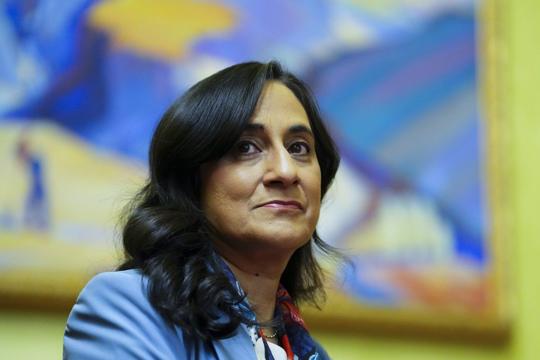
Canada is strengthening international efforts to reunite Ukrainian children allegedly taken by Russian authorities during the ongoing war, with Foreign Affairs Minister Anita Anand saying Ottawa is focused on achieving practical humanitarian outcomes for affected families.
Ahead of a major international summit in Brussels on Monday, Anand emphasized that Canada’s priority is securing the safe return of children separated from their families rather than debating legal terminology surrounding the conflict.
“We are focused on what we can do here and now to bring Ukrainian children home,” Anand said, stressing that questions regarding genocide and war crimes will ultimately be determined through international courts and legal processes.
Canada and Ukraine jointly launched an international coalition in 2024 dedicated to returning Ukrainian children allegedly deported or transferred into Russian-controlled territory. The Brussels summit will review progress, discuss new funding mechanisms and strengthen global co-operation around identification, documentation and family reunification efforts.
According to Ukrainian officials and allied governments, approximately 20,000 Ukrainian children are believed to have been taken since the war began, though research by Yale University Humanitarian Research Lab estimates the number could be closer to 35,000 across Russia, occupied Ukrainian territories and Belarus.
Roughly 2,000 children have reportedly been reunited with their families so far.
The International Criminal Court issued arrest warrants in 2023 for Russian President Vladimir Putin and another senior Russian official over allegations involving the unlawful deportation and transfer of children.
Human rights organizations and international investigators have documented cases in which Ukrainian children were allegedly placed with Russian families, subjected to ideological indoctrination and pressured to abandon their Ukrainian identity, language and culture.
Anand described the issue as deeply disturbing, saying many children are reportedly forced to adopt Russian customs and beliefs while separated from their families and communities.
The coalition’s work remains complex due to the challenges of tracking displaced children during an active conflict, maintaining communications and collecting evidence that may eventually support future prosecutions.
Countries including Qatar have played an important intermediary role between Moscow and Kyiv to facilitate some returns, while nations from outside Europe — including Chile and Argentina — have also supported the humanitarian initiative despite differing political perspectives.
Anand said the coalition reflects Canada’s growing “network diplomacy” strategy, where Ottawa works with both traditional allies and non-traditional partners to achieve shared humanitarian goals.
While in Brussels, Anand will also participate in discussions with the European Union Foreign Affairs Council and meet Mark Rutte to discuss Arctic security and continued support for Ukraine.
Canada is also continuing to advocate for the seizure of frozen Russian state assets abroad to help finance Ukraine’s reconstruction and defence efforts, although some European countries remain cautious about permanently confiscating Russian reserves.
Following her meetings in Brussels, Anand is expected to travel to Oman and Qatar to continue diplomatic discussions on regional stability and humanitarian co-operation surrounding the war in Ukraine.
The ongoing international campaign underscores growing global concern over the humanitarian impact of the war and the long-term trauma faced by thousands of displaced Ukrainian children and families.