

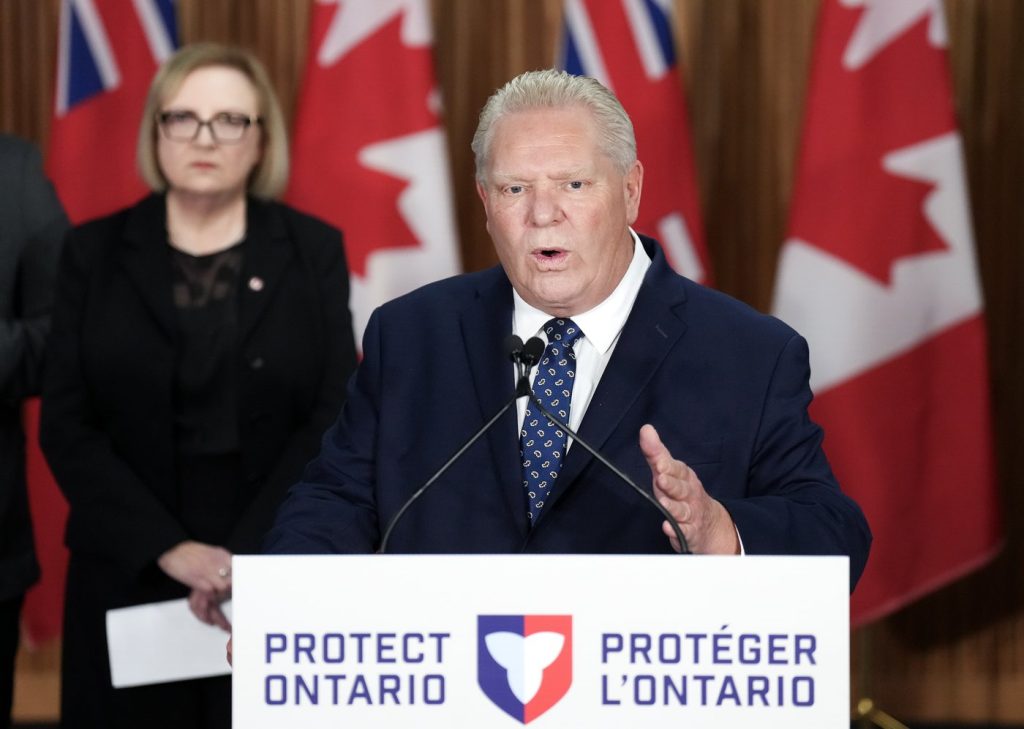
Ontario Premier Doug Ford is urging Canadians to boycott Chinese-made electric vehicles once they are permitted back into the country under a recent trade deal negotiated by Prime Minister Mark Carney.
Ford criticized both the substance of the agreement and the lack of consultation with Ontario, arguing the deal will hurt the province’s auto sector. Speaking Wednesday, he called on consumers to support manufacturers with operations in Canada rather than buying imported Chinese vehicles.
“Boycott the Chinese EV vehicles,” Ford said. “Support companies that are building vehicles here.”
Under the agreement reached during Carney’s visit to China, Canada will effectively roll back its 100 per cent tariffs on Chinese electric vehicles and allow annual imports of up to 49,000 units. In return, China will reduce tariffs on Canadian canola.
Ford said he does not believe Chinese automakers will establish manufacturing operations in Canada and warned the deal puts domestic auto investment at risk.
The premier made the remarks alongside industry and labour leaders, including Brian Kingston, president and CEO of the Canadian Vehicle Manufacturers’ Association; Flavio Volpe, president of the Automotive Parts Manufacturers’ Association; and Lana Payne, national president of Unifor.
Volpe said the original 100 per cent tariffs were meant to protect Canada’s emerging EV industry while major investments took hold. Allowing tens of thousands of Chinese vehicles into the market now, he said, undermines that strategy.
“Fifty-thousand cars is about a shift at an auto plant,” Volpe said, noting the potential impact on thousands of manufacturing and supplier jobs.
Carney has argued the agreement could benefit Ontario by attracting Chinese investment to build more affordable EVs in Canada. Payne said those expectations come with no assurances.
“Canada has given market access without guarantees,” Payne said, adding that even where Chinese firms invest abroad, supply chains often remain in China, supported by state subsidies, low wages and weak labour protections.
Ford and the industry leaders called on the federal government to introduce stronger measures to support Canada’s auto sector, including reducing the cost of plant investment, machinery, and research and development.
“We are in the fight of our lives fending off Trump’s tariffs,” Payne said. “That fight just got harder.”