

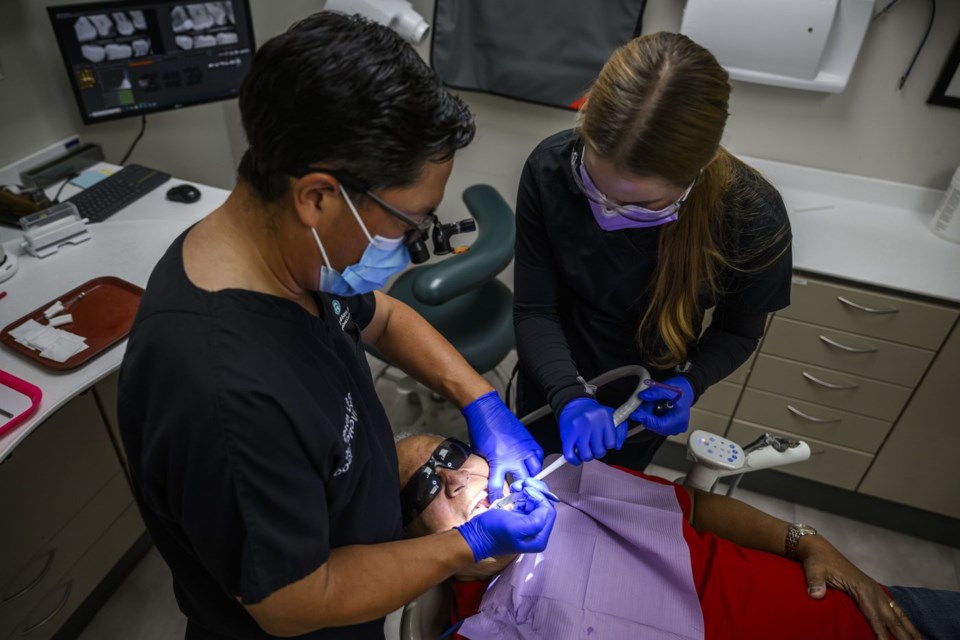
Ottawa, ON – Canada’s national dental care program is seeing improved rollout and growing participation from providers, but dental industry leaders say public misconceptions about “free dental care” are still causing frustration for patients and clinics alike.
“When the plan was initially announced, the government continually talked about free dentistry, free dental care,” said Dr. Bruce Ward, president of the Canadian Dental Association. “In fact, patients’ co-pays can be as high as 60 per cent.” Ward and other dental professionals say they have repeatedly urged the federal government to adjust its messaging to avoid confusion and disappointment for patients who receive bills after treatment.
The Canadian Dental Care Plan (CDCP) launched in phases, starting in May 2024 with children and seniors, and later expanding to cover all Canadians with household incomes under $90,000 who lack private insurance. While those earning under $70,000 are fully covered, individuals in the $70,000–$90,000 bracket must pay between 40–60 per cent of treatment costs. Clinics can also charge fees above the CDCP’s set rates, creating further variability in out-of-pocket expenses.
David Brown, president of the Ontario Dental Association, said the combination of unexpected costs and early administrative issues created headaches for clinics, forcing many to hire extra staff just to handle program-related paperwork. “There has been a lot of extra work, front desk people hired, time spent explaining to patients,” he noted.
Data tabled in Parliament shows that pre-authorization claims — required for complex or higher-cost procedures — are still being denied more than half the time, though Health Canada says the process is improving. Between November 2024 and May 2025, just 29 per cent of pre-authorization requests were approved, while 42 per cent were deemed incomplete. Health Canada now provides more feedback to clinics to help avoid repeated rejections.
Some aspects of the plan have also raised concerns among dental hygienists, particularly coverage limits. “The plan covers only four units of scaling — one hour of a hygienist’s time — which is not sufficient for the majority of adult patients,” said Donna Wells of the Canadian Dental Hygienists Association.
Despite these challenges, uptake from dental providers is rising, with more than 25,000 participating and only 17 fully withdrawing from the program. Ward highlighted the positive impact for patients who previously could not afford comprehensive dental care. “I love that I can finally treat some of my patients who would normally only come in and get something extracted. Now they have the option of saving that tooth,” he said.
Conservative health critic Dan Mazier has argued that the high denial rates and administrative costs — which Health Canada reported at $472.9 million as of March — show that Canadians were “misled” about the program’s scope. The federal government has budgeted $13 billion over the first five years of the plan, with $4.4 billion in ongoing annual funding.