

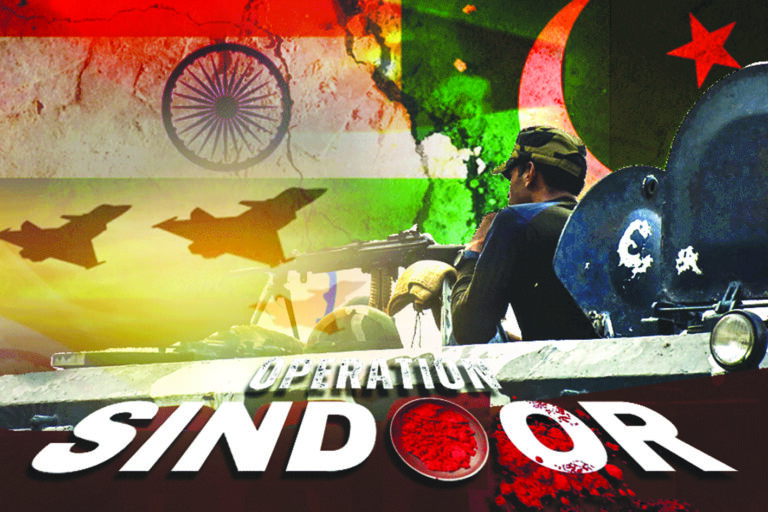
Sadaf Nadeem’s critique of Mohammad Kunhi’s opinion piece argues that the “Operation Sindoor” narrative is less a factual account and more a political construction designed to feed India’s nationalist agenda. She points out that the operation itself, framed as a retaliatory strike against an alleged Pakistan-sponsored attack, is a fictional premise used to justify a familiar pattern in Indian politics — shifting attention from internal crises and unrest in Kashmir by blaming Pakistan and rallying nationalist sentiment.
The choice of the operation’s name, “Sindoor,” is seen as a deliberate nod to Hindutva ideology, using a sacred cultural symbol to cloak military aggression, which Nadeem warns risks inflaming regional tensions. She criticises Kunhi’s disappointment with Western nations — particularly the United States — for urging restraint rather than endorsing India’s actions. To Nadeem, such calls for dialogue are responsible diplomacy consistent with the UN Charter, not a betrayal of friendship.
Kunhi’s portrayal of France, Russia, and Israel as “true friends” based on arms sales and sympathetic statements is, Nadeem argues, a naive reading of international relations. For these countries, India is a valuable arms market, not a special ally, and commercial ties should not be mistaken for strategic loyalty. Similarly, she calls Kunhi’s dismissal of Turkey, Azerbaijan, and China as “friends of the enemy” an oversimplification that ignores the independent historical, cultural, and economic factors shaping their relationships with Pakistan.
Nadeem concludes that Kunhi’s piece is propaganda dressed as analysis — one that favours militarism over diplomacy and commerce-driven alliances over genuine peace-building. She contends that lasting regional stability will come only by breaking with decades of politically convenient narratives and addressing the Kashmir issue within the framework of international law and UN resolutions.