

Experts Say U.S. Annexation of Canada is Legally and Politically Improbable
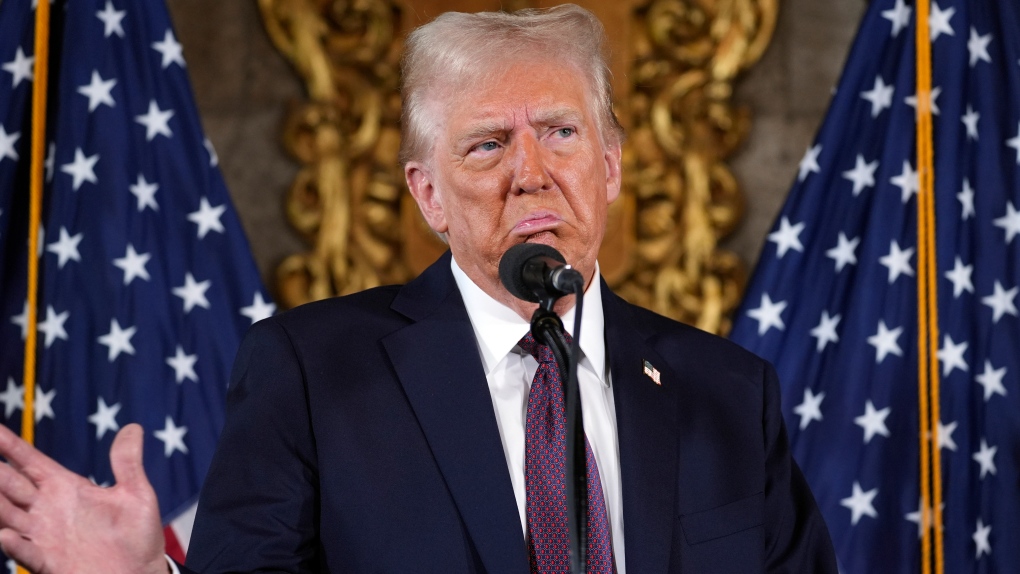
Recent remarks by U.S. president-elect Donald Trump about using “economic force” to bring Canada into the United States as its 51st state have sparked heated discussions on both sides of the border. But according to experts, while theoretically possible, the path to such an outcome is fraught with insurmountable roadblocks—legal, political, and constitutional.
“If the Americans wanted to conquer us militarily, I guess so,” said Adam Chapnick, professor of defence studies at the Canadian Forces College in Ontario. “Otherwise, not really—and certainly not in the amount of time the president-elect thinks it would take.”
Constitutional Hurdles on Both Sides
For Canada to join the United States, the process would require dismantling its political structure entirely. This would involve a constitutional amendment requiring approval from the House of Commons, the Senate, and all 10 provinces. Moreover, Canada’s Indigenous Nations would also need to be consulted, and there is no guarantee they would agree to join the U.S.
South of the border, the process would also face significant resistance. Annexation would need approval from both the U.S. Congress and Senate. Experts like Chapnick point out that Republicans, wary of Canada’s population potentially adding Democratic seats, might block the move.
“Based on our 40 million population, we would get approximately the same number of seats as California,” Chapnick said. “Many of those seats could lean Democratic, which is not in Republicans’ interest.”

Military Action? An “Absurd” Idea
If Trump were to consider military action, Chapnick calls the idea “absurd.” Canada and the U.S. share deep intelligence and military ties, and military conflict would jeopardize decades of trust between the two allies. Additionally, international law and Canada’s diplomatic ties to other G7 nations would come into play.
“It is so silly for anyone to contemplate doing that,” Chapnick said, adding that Trump has explicitly stated he would not resort to actual force.
Frederic Berard, a lawyer and professor at Université de Montréal, notes that Canada’s diplomatic options would be limited in such a scenario. As a permanent member of the UN Security Council, the U.S. holds significant sway over international law. “It would probably be a matter of diplomacy,” Berard said, suggesting that Canada could appeal to European allies for support.
A Negotiation Tactic?
Some experts believe Trump’s comments are more of a strategic maneuver to provoke reactions within Canada. Veteran political analyst John Parisella emphasized the importance of calm and unity in the face of such rhetoric.
“Canada must not panic right now,” Parisella said. “The Council of the Federation has to get together, find common ground, and decide what is in our best interest as Canadians, without focusing on issues designed to push buttons.”
Canada’s Identity Stands Strong
While the debate has reignited questions about Canada’s sovereignty, the overwhelming consensus among experts is that annexation is neither feasible nor realistic. The country remains steadfast in its identity as a strong and independent nation—a True North that is, as former Prime Minister Stephen Harper put it, “strong and free.”
As Canadians push back against Trump’s musings, the focus shifts to strengthening Canada-U.S. relations while preserving the values and independence that define the nation.