

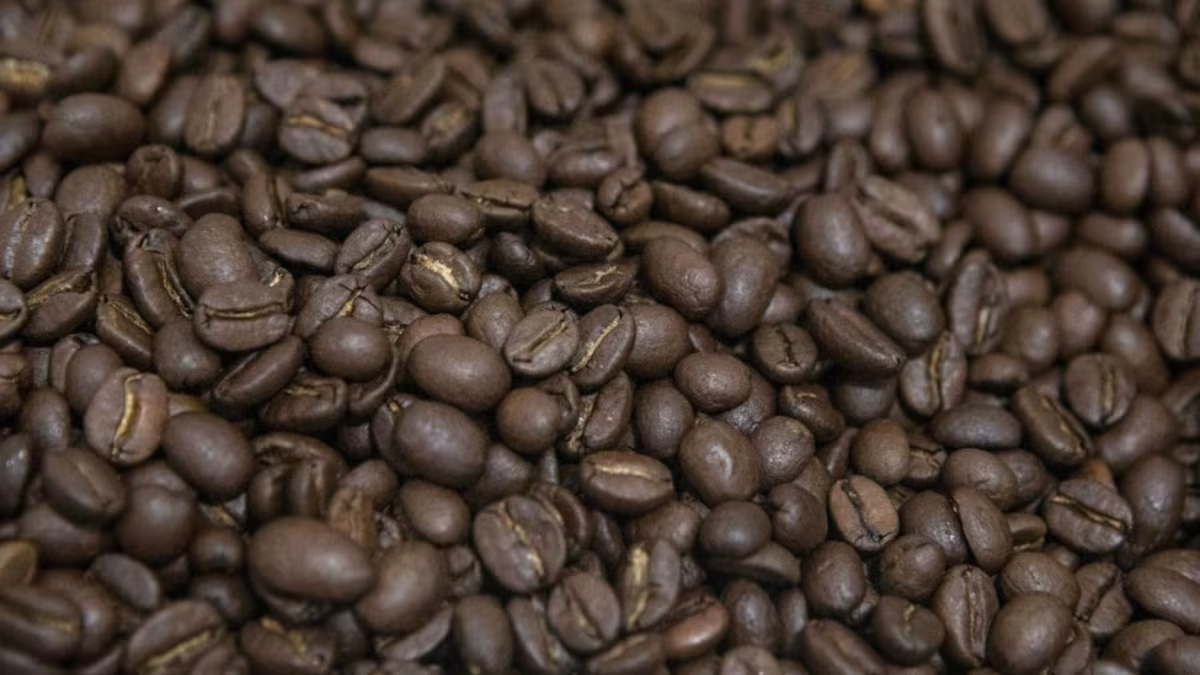
The cost of coffee in Canada has surged dramatically over the past five years, nearly doubling in price, and industry experts say consumers shouldn’t expect a reversal anytime soon.
Statistics Canada data shows Canadians paid almost 28 per cent more for store-bought coffee this August compared to a year earlier. Between 2020 and 2025, the average retail price for a 340-gram bag jumped from $5.36 to $9.30 — a 73.5 per cent increase. Over the longer term, coffee prices have risen more than 81 per cent since 1979.
Despite the steep climb, Vik Singh, an associate professor in Toronto Metropolitan University’s Global Management Studies department, says demand remains strong enough that retailers have little incentive to bring prices down.
“I don’t think I really see a way out of it,” he said. “The only thing I can see is coffee prices might not increase as much as they are right now.” With a few major companies dominating the market, Singh noted, “If I’m Starbucks, why do I need to reduce my coffee prices?”
Climate pressures are also reshaping global supply. University of Toronto marketing professor David Soberman said extreme weather — from unpredictable rainfall and heat waves to severe storms — has disrupted harvests in major coffee-producing countries such as Brazil and Vietnam in recent years. Those supply shocks are likely to become more frequent as climate change intensifies.
“Global warming is disturbing our weather pattern and it actually increases the likelihood of things that would cause destruction to supply,” Soberman said. Because major coffee brands rely on specific bean varieties to maintain their signature taste, switching suppliers isn’t always an option. “You may not be able to get exactly the quality of coffee that you want,” he said.
Soberman expects growers to innovate as conditions evolve, improving efficiency to cope with harsher climates. But for consumers, he suggests looking for lower-cost options such as brewing at home rather than relying on more expensive coffee shop purchases.
The rising cost of coffee comes as Canadian households face broader food inflation. Dalhousie University’s latest Food Price Report reveals that one in four households is now food insecure, and a family of four is expected to spend up to $994 more on groceries next year. Singh says essentials like coffee have “inelastic demand” — meaning buyers are unlikely to reduce consumption even as prices rise.
“If you’re used to drinking coffee in the morning and it goes from $2 to $3, you’re going to suck it up,” he said, noting that consumer prices for most commodities rarely fall. “When you look at the long-term trajectory, it’s always an increase.”