

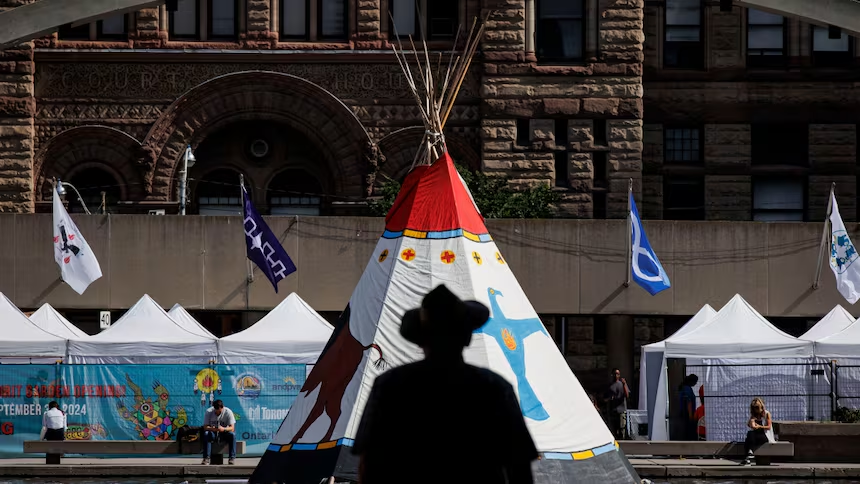
The Greater Toronto Area is marking the fifth annual National Day for Truth and Reconciliation with a full slate of events that honour the children who never returned from residential schools, as well as the survivors and families who continue to carry the trauma. Known also as Orange Shirt Day, the commemoration grew from the story of Phyllis Webstad, a residential school survivor whose new orange shirt was taken away on her first day at St. Joseph Mission Residential School in 1973.
In Toronto, Nathan Phillips Square is the heart of the Indigenous Legacy Gathering, a two-day celebration of culture, tradition, and community running from sunrise to nightfall. The gathering features Inuit throat singing, traditional drumming, youth workshops on teepee design and orange shirt colouring, and an Indigenous marketplace. Organized in partnership with the Toronto Council Fire Native Cultural Centre, it draws thousands who come to learn, listen, and participate in ceremonies.
Across the city in Kempton Howard Park, the annual Truth and Reconciliation Fire Ceremony brings neighbours together in a circle of prayer. Co-organized by Métis knowledge keeper Lorraine Theed, the ceremony includes smudging with sage or cedar, and participants offer tobacco to the fire after personal prayers. “You can partake or just light a candle at home,” Theed said. “Pray for them to have peace.”
In Mississauga, the Bradley Museum is offering tours on Indigenous history and presence in the region, while in Brampton the Toronto and Region Conservation Authority is hosting an evening commemoration at Heart Lake Conservation Park. That event features children’s activities, a round dance, and ceremonies led by the Four Colours Drum Circle, creating a space for healing and remembrance.
Beyond local gatherings, national observances are unfolding across the country. CBC is dedicating live programming throughout the day, culminating in a commemorative gathering on Parliament Hill. Hosted by Indigenous leaders and artists, it will feature music and reflections from First Nations, Inuit, and Métis voices, alongside live coverage with CBC’s Adrienne Arsenault and Anishinaabe author Niigaan Sinclair.
While the events differ in tone and setting, the purpose is shared: to remember the children lost to residential schools, to honour survivors, and to continue the work of reconciliation. For many, it is also a call to reflect on the responsibilities of settlers and communities today, and to move forward in the spirit of truth, healing, and justice.