

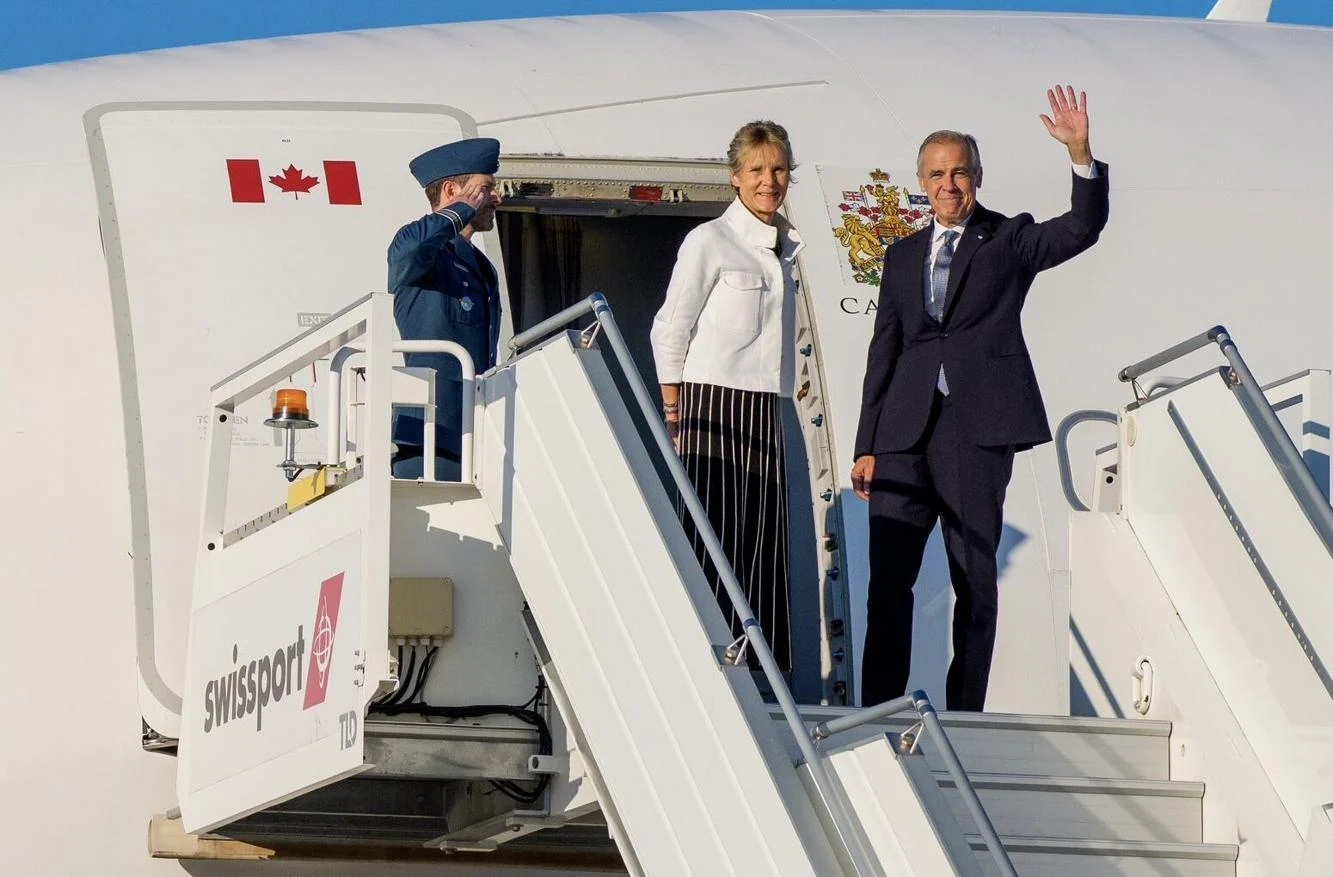
WASHINGTON — Prime Minister Mark Carney left the White House on Tuesday with cautious optimism after meeting with U.S. President Donald Trump on trade and security issues, but both leaders signaled that any new agreement is unlikely to eliminate all tariffs on Canadian exports.
“I think they’re going to be very happy,” Trump told reporters when asked whether Canada would secure a tariff deal. He offered few specifics, but suggested progress was made on several fronts. “We have a lot of things that we’re working on that people are talking about,” he said.
Carney emphasized the depth of the Canada–U.S. economic relationship, noting Canada is America’s second-largest trading partner and the largest foreign investor, with $500 billion invested over the last five years. “There are areas where we compete, and it’s in those areas where we have to come to an agreement that works,” he said. “But there are more areas where we are stronger together, and that’s what we focused on. We’re going to get the right deal.”
Despite the positive tone, Trump made it clear that some tariffs are here to stay. Calling the United States the “king of being screwed by tariffs,” he claimed that Canadian duties on certain agricultural goods have historically reached as high as 250–400 per cent — though Canadian officials and former ministers have challenged those figures.
James Moore, a former Conservative industry minister, has pointed out that such tariffs only apply beyond strict import quotas that have never been exceeded, calling Trump’s numbers misleading.
The Trump administration is moving forward with new U.S. tariffs set to hit Canadian exporters starting October 14, including:
- 10% tariffs on wood products, including softwood lumber (rising to 30% in 2026)
- 25% tariffs on upholstered wooden products (rising to 50% in 2026)
- 50% tariffs on aluminum and steel imports from all countries
- 25% tariffs on all non-U.S.-made cars and trucks
- 50% tariffs on copper
- Removal of the U.S. de minimis exemption, meaning goods under $800 are now fully taxed
Canadian softwood lumber exporters already face combined duties of over 35% due to anti-dumping and countervailing measures layered on top of these tariffs.
Trump also used the press conference to touch on other security issues. He credited Canada for “working hard” to reduce cross-border fentanyl trafficking, while Carney noted that less than 1% of fentanyl entering the U.S. originates in Canada. Both leaders said efforts to combat the deadly drug trade will continue.
On immigration, Trump claimed border flows have improved, saying, “We have very few people coming in through our southern border too. We’ve worked with Canada and Mexico and it’s much better.”
The talks are part of broader consultations launched in September by both countries in preparation for the first joint review of the Canada–U.S.–Mexico Agreement (CUSMA). According to the Canadian government, 85% of Canada’s trade with the U.S. is already tariff-free — the lowest average tariff rate among all U.S. trading partners.
While no formal deal was announced Tuesday, both sides struck an upbeat tone. Trump’s promise that Canada would be “very happy” remains vague, but it sets the stage for what could become a defining round of North American trade talks — one in which tariffs will likely continue to play a central role.