

Prime Minister Mark Carney’s Liberal government is under intense scrutiny for attempting to rush Bill C-5 through the House of Commons—a sweeping piece of legislation that would give the federal cabinet broad powers to fast-track major infrastructure and resource projects deemed in the national interest.
Government House Leader Steven MacKinnon put forward a motion on Thursday to advance the bill for final approval by the end of next week, leaving just one day for consultation with stakeholders, experts, and civil society groups. The move triggered sharp criticism from opposition parties and Indigenous leaders who say the bill undermines democratic process and constitutional rights.
Bloc Québécois House Leader Christine Normandin slammed the move during question period, accusing Carney of trying to “govern by decree.” She said the bill, which significantly expands cabinet authority, is being steamrolled through Parliament without sufficient scrutiny. “Is that the prime minister’s intention—to bypass Parliament and govern like Donald Trump?” she asked.
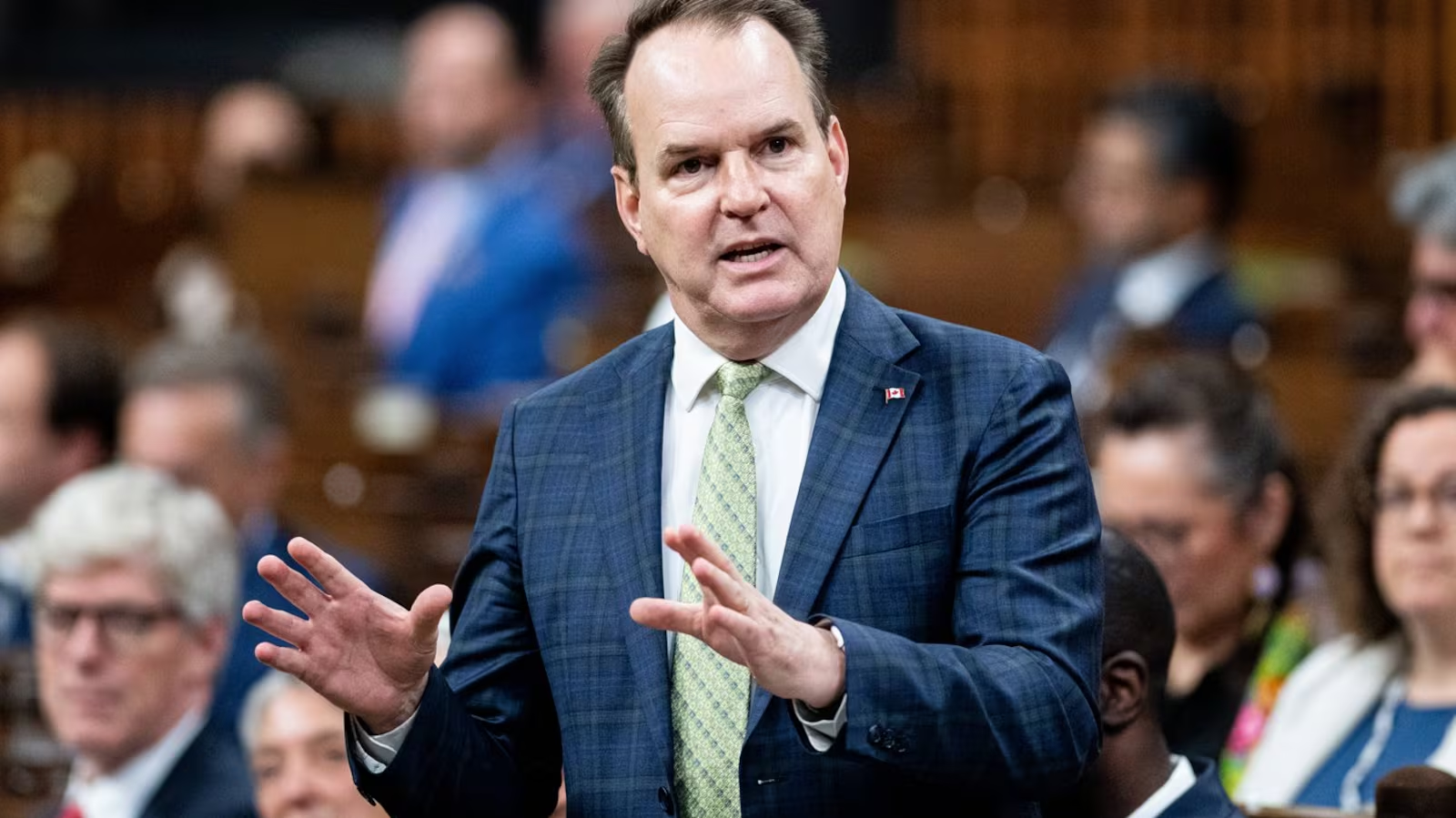
MacKinnon defended the approach, stating that the government is acting on its electoral mandate to bolster the economy, especially in the face of rising protectionism from U.S. President Donald Trump. “Canadians and Quebecers voted for decisive action,” he said, calling the bill a necessary tool to support jobs and investor confidence amid an escalating trade war.
Bill C-5 proposes to consolidate and streamline federal review processes for large projects, cutting approval times to two years. It also enables cabinet to bypass existing regulations under the guise of national interest, a provision that has drawn major pushback.
Critics say the bill could trigger legal challenges and severely damage relations with Indigenous communities. NDP MP Leah Gazan called on the government to delay the process and allow for proper engagement. “This bill cannot be rushed in five days. It disrespects the legal and moral obligations we have to Indigenous Peoples,” she said.
While Energy Minister Tim Hodgson insisted the bill is a response to urgent economic threats posed by American tariffs, and cited private consultations with stakeholders, Indigenous organizations expressed strong opposition. The Union of B.C. Indian Chiefs passed a unanimous resolution rejecting the bill, with Grand Chief Stewart Phillip calling it a betrayal of Indigenous rights under the UN Declaration on the Rights of Indigenous Peoples.
“This legislation, as currently written, would be a complete betrayal of our constitutionally protected title and rights. It will not stand unopposed,” Phillip said.
Indigenous Services Minister Mandy Gull-Masty acknowledged the criticism and said a meeting with First Nations leaders is planned but has been delayed due to ongoing wildfires affecting several communities.
Environmental groups also raised red flags. West Coast Environmental Law lawyer Anna Johnston said the bill allows cabinet to approve projects without completing environmental assessments. “This is deeply concerning. It could let governments green-light projects based solely on the proponent’s submission, without the checks and balances Canadians rely on,” she warned.
Stuart Trew of the Canadian Centre for Policy Alternatives said the bill is “likely to face court challenges” and undermines the government’s reconciliation agenda. “Claiming a national emergency to rush through legislation with this kind of environmental and constitutional impact is reckless,” he said.
The bill also includes provisions to break down interprovincial trade barriers and make it easier for workers to relocate for jobs across provinces—measures that are less controversial. The Bloc Québécois proposed splitting the bill to allow quicker passage of the consensus items, but the Liberals rejected that idea.
Carney has repeatedly vowed to eliminate internal trade barriers by Canada Day—just weeks away. Parliament is currently scheduled to adjourn on June 20, and MacKinnon admitted there are no plans to extend the session.
With tensions rising and pressure mounting from all sides, the future of Bill C-5 could prove a defining test of Carney’s leadership and the Liberals’ ability to deliver on their ambitious economic promises without sacrificing democratic integrity and Indigenous rights.